 EN
EN
 Nederlands
 Français
The main things to do in Cluj-Napoca are St. Michael’s Church and Unirii Square at the center, the Ethnographic Museum and the open-air village museum, Central Park and the Botanical Garden, the view from Cetățuia Hill, and two trips out of town to the Turda Salt Mine and the Hoia-Baciu forest. Cluj-Napoca is the second most populous city in Romania and the unofficial capital of Transylvania, sitting in the Someșul Mic valley in the northwest of the country, roughly equidistant from Bucharest at 445 km (277 miles), Budapest at 461 km (286 miles) and Belgrade at 483 km (300 miles).
The city was first recorded as Clus in 1213, on the site of the Roman town of Napoca, and it was the capital of the Grand Principality of Transylvania for much of the 19th century. Today it runs on students and software: six major universities and around 20,000 non-resident students each year, plus the technology industry that earned the city its nickname as the Silicon Valley of Transylvania. That mix is why a medieval Gothic center has the cafe scene, the festival calendar and the restaurant prices that it does.
The seven sights that give you Cluj-Napoca in a single day are listed below.
- St. Michael’s Church (Biserica Sfântul Mihail). St. Michael’s is the Roman Catholic Gothic church in the middle of Unirii Square, begun in the 14th century, and its neo-Gothic tower of 1860 is still the tallest church tower in Romania.
- Unirii Square (Piața Unirii). Unirii Square is the largest square in the city, ringed by Baroque, Renaissance and Neoclassical facades, with the equestrian statue of Matthias Corvinus in front of the church.
- Ethnographic Museum of Transylvania. The Ethnographic Museum holds more than 40,000 objects of Transylvanian peasant culture in the Reduta Palace on Memorandumului Street, with an open-air section on the edge of the city.
- Central Park Simion Bărnuțiu. Central Park is the 13-hectare park along the Someșul Mic, opened in the 1830s, with a lake, pedal boats, a casino building and the Chios summer cinema.
- Alexandru Borza Botanical Garden. The Botanical Garden runs to 14 hectares and over 10,000 plant species, with a Japanese garden, a Roman garden and glasshouses of tropical plants.
- Cetățuia Hill. Cetățuia Hill carries the remains of the Habsburg fortress of 1715 to 1735 and gives the panoramic view of the city, reached by a couple of hundred steps from the river.
- Turda Salt Mine. The Turda Salt Mine, 30 km (19 miles) south, is a medieval salt mine reopened in 2010 as an underground attraction, with a Ferris wheel, a boating lake and halls the height of a 25-story building.
1. “Saint Michael” Church (Biserica Sfântul Mihail)
St. Michael’s Church is the Roman Catholic Gothic church standing free in the middle of Unirii Square, and it is the oldest and most complete Gothic building in Romania. Construction ran through the second half of the 14th century, the altar was dedicated in 1390, and the vaulting and the side chapels were finished across the 15th century.

The tower is not medieval. It was rebuilt in Gothic Revival style in 1860 after the earlier tower was lost, and at close to 80 m it remains the tallest church tower in the country. Inside, the Baroque furnishings from the 1740s sit oddly and rather well against the Gothic ribs, including an altarpiece of the Adoration of the Magi by Franz Anton Maulbertsch.
Matthias Corvinus, born a few streets away, is commemorated by the equestrian statue and monumental ensemble in front of the church, which is the standard meeting point in Cluj. Entry to the church is free outside services. It is Catholic, not Orthodox, which is a distinction worth carrying into every other church in this guide: the Orthodox equivalent is the cathedral on Avram Iancu Square.
2. Unirii Square (Piața Unirii)
Unirii Square is the main square of Cluj-Napoca, laid out in the medieval period around St. Michael’s Church and closed on all four sides by 18th and 19th-century palaces. The square measures roughly 220 m by 160 m, which makes it one of the largest in Romania, and it works as the reference point for everything else in the old town.

The buildings around it run through Baroque, Renaissance revival, Neoclassical and Secession, and several are worth going into. The Bánffy Palace on the eastern side, the finest Baroque building in the city, holds the Cluj-Napoca Art Museum and its collection of Romanian and European painting. The Mauksch-Hintz House at number 28 holds the Pharmacy Museum. Cafes and restaurants fill the arcades and spill into the square in summer.
Nothing here charges an entrance fee except the museums. The square is closed to through traffic on its pedestrian sides, markets and events run in it through the year, and the Christmas market takes it over in December.
3. Tailors’ Tower (Turnul Croitorilor)
The Tailors’ Tower, also called the Tailors’ Bastion, is the surviving corner bastion of the medieval city wall, built and manned by the tailors’ guild. It stands at the junction of Baba Novac and George Barițiu streets, at the southeastern corner of the old fortifications, a five-minute walk east of Unirii Square rather than on the square itself.

The bastion is the best-preserved piece of the wall that once ringed Cluj, and it has been repaired repeatedly since the 15th century, including after the fighting of 1601 in which the mercenary captain Baba Novac was executed in front of it. It has served as a gunpowder store, a fire lookout, a pharmacy and student accommodation across its history.
It now works as a cultural center, with exhibitions, talks and events in the restored interior, and the terrace and gardens around it are free to walk through. Check the current program before planning a visit inside, because opening depends on what is on.
4. Ethnographic Museum of Transylvania (Muzeul Etnografic al Transilvaniei)
The Ethnographic Museum of Transylvania at Memorandumului 21 holds more than 40,000 objects of rural Transylvanian life and is the oldest ethnographic museum in Romania, founded in 1922. The collection covers costume, textiles, ceramics, icons on glass, furniture, farm tools and the equipment of the village trades, displayed across the rooms of the Reduta Palace.

The Reduta itself is worth the ticket. It is an 18th-century Baroque building that served as the city’s assembly hall, and the Transylvanian Diet met here in 1865. Permanent galleries are supplemented by temporary exhibitions, and the museum keeps a library and photographic archive.
The museum has a second site, the Romulus Vuia National Ethnographic Park on the edge of the city, which is the open-air half of the same institution and covered separately below. Buy tickets for both if you plan to see the village museum on the same trip.
5. Central Park Simion Bărnuțiu (Parcul Central Simion Bărnuțiu)
Central Park Simion Bărnuțiu, known locally as Parcul Mare, is the 13-hectare park on the south bank of the Someșul Mic and the green heart of Cluj-Napoca. The land was leased for public recreation in 1827 and the park opened in the 1830s, which makes it one of the oldest public parks in the country.

The lake with its island is the centerpiece, with pedal boats and rowing boats for hire in warm weather and skating on it in hard winters. The Chios summer cinema, the casino building that now works as an urban culture center, sports courts, playgrounds and a beer garden fill the rest, and the paths under the mature trees are where the city walks in the evening.
The park is open all day, every day, and free. It runs directly into the university sports park and the riverside path, so it is the natural route between the center and the Botanical Garden. Jazz in the Park, one of the city’s better festivals, takes place here.
6. Alexandru Borza Botanical Garden (Grădina Botanică Alexandru Borza)
The Alexandru Borza Botanical Garden on Republicii Street covers 14 hectares and holds more than 10,000 plant species, which makes it one of the largest botanical collections in southeastern Europe. A university garden existed in Cluj from 1872, but the garden as it stands was laid out from 1920 by the botanist Alexandru Borza, whose name it now carries.

The garden is divided into sections that are worth walking in order. The Japanese garden with its water and stone arrangement is the one everyone photographs, the Roman garden holds a statue of Ceres and archaeological fragments from Napoca, and the systematic section is arranged by plant family for teaching. The glasshouses hold palms, tropical species and a carnivorous plant collection, and the botanical museum next to them keeps tens of thousands of specimens.
There is an admission charge and the glasshouses are usually ticketed separately from the grounds. The garden closes earlier in winter than in summer, so check the current hours. Spring and early summer are the obvious time to come, but the glasshouses make it a reasonable rainy-day option in any month.
7. Cetățuia Park (Parcul Cetățuia)
Cetățuia Hill is the flat-topped hill north of the river, and the terrace at the top gives the view of Cluj-Napoca that every photograph of the city uses. The Habsburgs built a star fortress here between 1715 and 1735 to a design by Giovanni Morando Visconti, garrisoning the city they had just taken, and parts of the walls, two gates and several buildings survive among the trees.

The Heroes of the Nation monument stands on the hill, commemorating those executed here after the 1848 revolution, which is the other reason locals come up. The rest of the site is a public park with paths, a playground, outdoor fitness equipment and the terrace of the Belvedere hotel, which is the easiest place to sit down with the view in front of you.
The direct route up is a staircase of roughly two hundred steps from the Elisabeta bridge, which takes about ten minutes and is steep. A road winds up the other side for anyone driving. Entry is free, sunset is the hour to be there, and the hill is safe but poorly lit after dark.
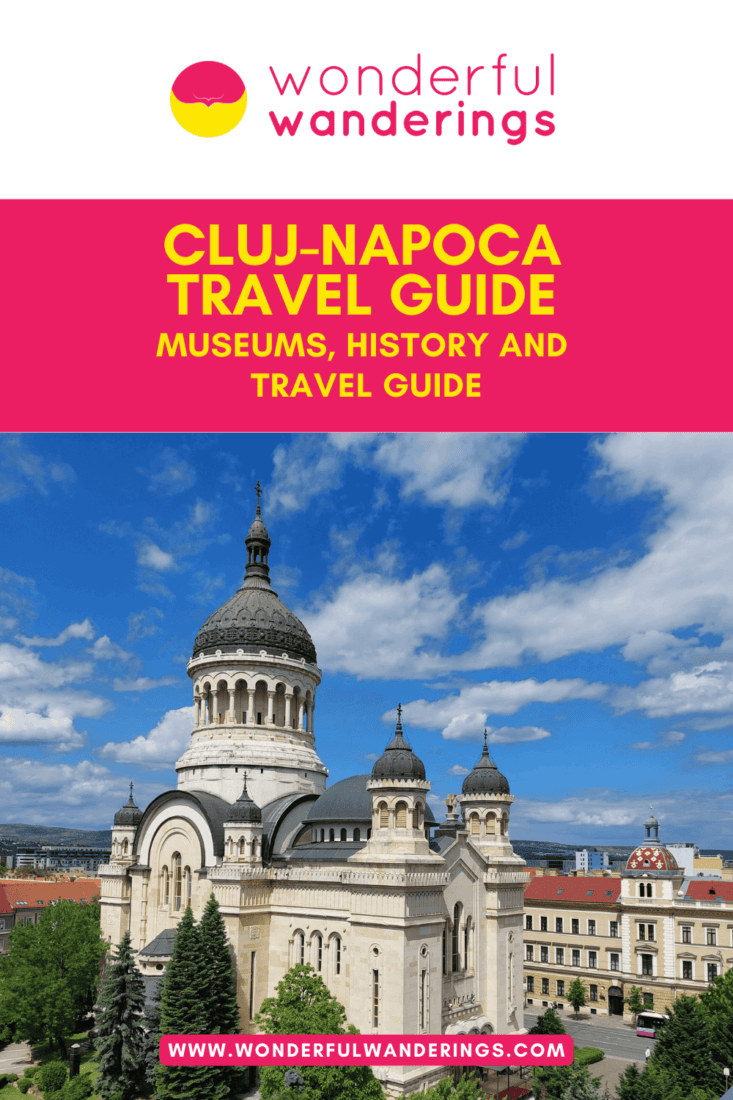
8. Assumption Cathedral (Catedrala Adormirea Maicii Domnului)
The Dormition of the Theotokos Cathedral on Avram Iancu Square is the Romanian Orthodox cathedral of Cluj-Napoca and the counterweight to St. Michael’s on the Catholic side of the city’s history. It was built between 1923 and 1933, immediately after Transylvania joined Romania, to designs by George Cristinel and Constantin Pomponiu, with the foundation stone laid on 7 October 1923.

The style is Romanian Brâncovenesc crossed with neo-Byzantine: a large central dome on a drum, flanked by four smaller ones, over a Greek-cross plan, with carved stone detailing on the porches. The interior is painted throughout, and the iconostasis and the icons are the reason to go inside rather than admire it from the square.
Admission is free and the cathedral is generally open through the day, with services morning and evening. Cover shoulders and knees. The square outside was laid out at the same period as a deliberately Romanian civic center, which is why the cathedral, the Palace of Justice and the National Theatre all face each other across it.
9. Avram Iancu Square (Piața Avram Iancu)
Avram Iancu Square is the ceremonial square of Cluj-Napoca, built in the late 19th and early 20th centuries as the administrative and cultural center of the city. It is named after the Transylvanian Romanian lawyer who led the 1848 revolt against Hungarian rule, and his statue stands in the middle of it.

The buildings around it are the point. The Palace of Justice, built between 1898 and 1902 to designs by Gyula Wagner, the Lucian Blaga National Theatre and Romanian National Opera by Fellner and Helmer, the Palace of the Prefecture, the Palace of Finance, the railway company palace and the Orthodox Metropolis palace form one of the most complete turn-of-the-century civic ensembles in Romania, with the cathedral closing the eastern end.
There is nothing to pay and nothing to queue for. Come in the evening, when the fountains run and the cathedral and theater are lit, and use the cafes on the northern side of the square as the stop.
10. Hoia-Baciu Forest
Hoia-Baciu forest on the western edge of Cluj-Napoca is the most-searched thing near the city that is not in any guidebook to it, thanks to a reputation as one of the world’s haunted places. The forest is genuinely strange to look at in one section, where the beech and hornbeam trunks grow in pronounced curves and spirals, and there is a roughly circular clearing where the trees stop and the grass grows instead.
The reputation dates from 1968, when the technician Emil Barnea photographed what he described as a flying object over that clearing, and it grew from there through decades of accounts of unexplained lights, nausea, camera failures and missing time. Biologists have offered ordinary explanations for the bent trees and the clearing’s soil chemistry; none of it has settled the argument, and the forest now draws paranormal enthusiasts from across Europe and North America.
Practically, it is a large forest with marked trails, a paintball area and a mountain bike course, ten minutes from the city by car and reachable by bus. Entry is free and daytime walking needs no guide. Night tours run from central Cluj with local operators and are the way most visitors do it, because finding the clearing in the dark on your own is a poor plan.
11. Romanian National Opera (Opera Națională Română)
The Romanian National Opera in Cluj-Napoca was founded on 18 September 1919, alongside the National Theatre and the music conservatory, as part of the cultural program that followed the union of Transylvania with Romania. It shares a building on Avram Iancu Square with the Lucian Blaga National Theatre, built between 1904 and 1906 by the Viennese partnership of Fellner and Helmer in a Baroque and Secession style.

The auditorium is the ornate late-Habsburg model: gilded boxes, a painted ceiling and acoustics that need no amplification. The company has staged several hundred titles from the international repertoire alongside Romanian works, and it functions as a proving ground for young Romanian singers. Angela Gheorghiu sang Mimì in La bohème here on 20 June 1990 as her graduation performance, two years before her Covent Garden debut.
Tickets cost a fraction of what a comparable seat costs in western Europe, the season runs from autumn to summer, and the box office is in the building. Guided tours of the house are sometimes available on non-performance days, so ask.
12. Matthias Corvinus House (Casa Matei Corvin)
The Matthias Corvinus House on Strada Matei Corvin is one of the oldest buildings in Cluj-Napoca and the birthplace of the king it is named after. Matthias Corvinus, son of John Hunyadi and later King of Hungary, was born here on 23 February 1443, when the house belonged to Jakab Méhffi, a wine merchant. In 1467 the king granted the Méhffi family exemption from tax and duty in perpetuity.

The building is 15th-century Gothic with Renaissance additions, put up originally as a small guesthouse, and it has served as a jail, a hospital and a museum across the centuries. Since 1950 it has belonged to the University of Art and Design of Cluj-Napoca, and it now houses a visual arts institute rather than a museum.
That means the interior is not routinely open to visitors and there is no ticket desk. What you can see is the facade, the plaque, and the courtyard when the university allows it, on a two-minute walk from Unirii Square. Check whether an exhibition is running if you want to get inside.
13. Turda Salt Mine
The Turda Salt Mine at Turda, about 30 km (19 miles) south of Cluj-Napoca, is a medieval salt mine converted into an underground attraction, and it is the single most extraordinary thing within an hour of the city. Salt was extracted here from antiquity and continuously from the Middle Ages, with the first document naming the mine dating from 1 May 1271, until commercial mining stopped in 1932.

It opened for tourists in 1992 as a halotherapy center, was rebuilt under a European infrastructure program in 2008 and reopened in its current form in January 2010. The Rudolf mine, the last chamber worked, is 80 m long, 50 m wide and 42 m deep, and it now holds a Ferris wheel, a mini golf course, table tennis, a bowling lane and an amphitheater under a ceiling hung with three-metre salt stalactites. The Terezia chamber, a bell mine 90 m high, has an underground lake with rowing boats and an island at its center. The depth from the shaft head to the base of the mine is 112 m (367 feet).
The air holds a constant low temperature and high salt content, which is why the mine also runs as a respiratory therapy center. Take a jacket even in August. A panoramic lift and 172 steps both connect the levels, and visitor numbers ran to around 618,000 in 2017. Getting there is easiest by car or on an organized day trip, and comparing car hire in Romania with DiscoverCars is worth doing if you also want the Apuseni mountains or the Bánffy castle at Bonțida.
14. Steampunk Transylvania
Steampunk Transylvania is an interactive museum in Cluj-Napoca built around steampunk and fantasy, and it is the reliable answer to a wet afternoon with teenagers. The museum spreads over two floors of themed rooms filled with machines, sculptures and props built by local artists, in the Victorian-industrial-meets-science-fiction idiom that gives the genre its name.

Most of it can be touched, which is the point. Rooms include an alchemy laboratory, a workshop of improbable devices, a library with a hidden door and fantasy environments to walk through, and staff explain what each object is meant to be. Costumes are available to try on and there are retro arcade games.
It suits families, and adults who like the aesthetic will get as much from it as children. Allow an hour to ninety minutes. Check current opening hours and book ahead at weekends, because capacity is small.
15. Muzeon
Muzeon is the Jewish history museum of Cluj-Napoca, opened in 2020, and it is the most quietly effective museum in the city. Muzeon tells the story of the Jewish community of Cluj through a single family, using three audio guides voiced as three characters, Julia, Paul and David, so that the same rooms carry three different accounts of the same events.

You walk the exhibition with a phone or a museum tablet, and the objects, film and recorded voices do the work rather than wall text. The subject runs from the community’s arrival and its part in building the city through the interwar years, the Holocaust, and what came after, and it is one of very few museums in Romania to treat both Jewish culture and the Holocaust properly.
It opens Tuesday to Sunday and takes roughly an hour to ninety minutes. Book a slot in advance if you can, because the audio-guide format limits how many people can be inside at once. It is in the center and is suitable for older children upwards.
16. Pharmacy History Collection
The Pharmacy History Collection occupies the Mauksch-Hintz House at Piața Unirii 28, in the rooms of the oldest pharmacy in Cluj-Napoca. A pharmacy has operated on this site since it was first recorded in 1573 under the sign of St. George, and it ran under the Hintz family for the last stretch of that history until it was nationalized in 1949.

The collection is a section of the National Museum of Transylvanian History, and it reopened on 15 January 2024 after a full restoration of the building. On display are 16th-century albarello jars, a wooden dispensing counter, laboratory glass and equipment, prescription books, and the ingredients of pre-modern pharmacy, which include powdered mummy, ground crab eyes and human skull. The alchemical wall paintings uncovered in the cellar are the surprise.
There is an admission charge, and it is worth taking a guided explanation if one is offered, because the labels alone do not convey what half the objects were for. Allow 45 minutes. It sits directly on Unirii Square, so it slots into any walk through the center.
17. The Ethnographic Park (Parcul Etnografic Național “Romulus Vuia”)
The Romulus Vuia National Ethnographic Park is the open-air village museum on the Hoia hillside northwest of the center, and it was the first open-air museum in Romania, founded on 1 June 1929. It is named after Romulus Vuia, the ethnographer who created it, and it works as the outdoor half of the Ethnographic Museum of Transylvania.

The park is laid out as a Transylvanian village, with around thirteen complete households and some ninety buildings brought here from villages across the region and rebuilt on site: houses, barns, wells, wooden churches, water mills, a fulling mill, an oil press and craft workshops. The buildings span the 17th to the 20th centuries, and the technical installations are the part visitors underestimate.
Guided tours, craft demonstrations and seasonal fairs run through the year. It is a 10-minute drive or a 40-minute walk from the center, on Strada Tăietura Turcului, and the site is large, hilly and mostly unshaded, so bring water and shoes. Winter opening is shorter than summer.
What are the best museums to visit in Cluj-Napoca?
The 5 museums worth a ticket in Cluj-Napoca are listed below.
- National Museum of Transylvanian History. The National Museum of Transylvanian History on Constantin Daicoviciu Street covers the region from prehistory through Dacian and Roman Napoca to the modern era, and it is the parent institution of the Pharmacy Museum on Unirii Square.
- Ethnographic Museum of Transylvania. The Ethnographic Museum in the Reduta Palace holds over 40,000 objects of Transylvanian rural life, with its open-air section at the Romulus Vuia park on the edge of the city.
- Cluj-Napoca Art Museum. The Art Museum occupies the Bánffy Palace on Unirii Square, the finest Baroque building in the city, and shows Romanian and European painting, sculpture, graphics and decorative art.
- Muzeon. Muzeon tells the story of the city’s Jewish community through three audio-guided personal narratives, and it is the most modern museum experience in Cluj.
- Pharmacy History Collection. The Pharmacy Museum in the Mauksch-Hintz House sits in rooms that held a working pharmacy from 1573, and it reopened after restoration in January 2024.
What are the best things to do in Cluj-Napoca with kids?
The 5 things to do in Cluj-Napoca with children are listed below.
- Central Park. Central Park has the lake with pedal boats, playgrounds, outdoor gym equipment, sports courts and space to run, and it costs nothing.
- Steampunk Transylvania. Steampunk Transylvania is hands-on, indoors and strange enough to hold the attention of children who have had enough of churches.
- The Ethnographic Park. The Romulus Vuia park lets children walk into old houses, mills and workshops rather than read about them, and there is room to run between the households.
- The Botanical Garden. The Botanical Garden has the Japanese garden, the glasshouses of palms and carnivorous plants, and the observation tower, which children reliably want to climb.
- The Turda Salt Mine. The salt mine is the day trip that wins: a Ferris wheel, boats and mini golf a hundred meters underground, in a cavern the size of a cathedral.
What are the best activities for a business traveler in Cluj-Napoca?
Cluj-Napoca is Romania’s second technology center and its airport is the country’s second busiest, so business visitors arrive here directly rather than through Bucharest. The 4 things worth doing with a spare half-day are listed below.
- Eat and meet in the old town. The restaurants around Unirii Square and Strada Universității are within a few minutes of each other and cost far less than their equivalents in western Europe, which makes them the reliable choice for client dinners.
- Work from a co-working space. Cluj has a well-developed co-working scene serving the technology cluster, with day passes, meeting rooms and reliable connections, and it is the easiest way to meet people in the local startup community.
- Walk up Cetățuia at the end of the day. The staircase from the river takes ten minutes and the terrace at the top gives the whole city, which turns a spare hour between meetings into something worth having.
- Take the Turda Salt Mine as a team trip. The salt mine is 40 minutes away by road and works as a group outing that nobody has done before, with an amphitheater inside it that has hosted events.
Where is Cluj-Napoca?
Cluj-Napoca is in northwestern Romania, in the Someșul Mic river valley on the edge of the Apuseni mountains, and it is roughly equidistant from three capitals: 445 km (277 miles) from Bucharest, 461 km (286 miles) from Budapest and 483 km (300 miles) from Belgrade. Cluj-Napoca is the seat of Cluj County and the unofficial capital of Transylvania, and its position at the meeting point of the Transylvanian plateau and the western mountains is why it has served as a regional capital for most of its history. The rest of the country is covered in our guide to Romania.

Cluj International Airport lies 9 km (5.6 miles) east of the center and is the second busiest in Romania after Bucharest Otopeni, with direct flights to a long list of European cities and a bus and trolleybus link into town. The railway station is about 2 km (1.2 miles) north of the center on the main line between Bucharest, Oradea and the Hungarian border, with direct trains to Budapest. Compare flights to Romania with both Cluj and Bucharest in the search, because the two airports often differ by more than the cost of the connection. The wider country is covered in our guide to Romanian destinations.
What is the history of Cluj-Napoca?
Cluj-Napoca sits on the site of Napoca, a Dacian settlement that the Romans took when they conquered Dacia in 106 CE and rebuilt as a town, granting it municipal and then colonial status. After the Roman withdrawal the record thins for centuries, and the medieval town appears in writing as Clus in 1213.
Saxon settlers built it up from the 13th century as Klausenburg, and it grew rich enough on trade and crafts to be known as the Treasure City, Kincses Kolozsvár in Hungarian. Matthias Corvinus was born here in 1443. The town became a center of the Reformation in the 16th century and of Unitarianism in particular, and the Edict of Turda of 1568, issued nearby, is one of the earliest declarations of religious tolerance in Europe.
Cluj served as the capital of the Grand Principality of Transylvania from 1790 to 1848 and again from 1861 to 1867, then as a Hungarian county seat until Transylvania joined Romania in 1918. The Romanian civic quarter around Avram Iancu Square was built in the interwar years as a deliberate second center to the Hungarian one. The name Napoca was added in 1974. The city today is Romania’s second largest and its main university town.
What language is spoken in Cluj-Napoca?
Romanian is the language of Cluj-Napoca and the official language of Romania, and Hungarian is the significant minority language. At the 2021 census about 85% of residents were Romanian and about 14% Hungarian, which is a large enough share to sustain a Hungarian State Theatre, Hungarian-language faculties at Babeș-Bolyai University and Hungarian schools and newspapers.
German has a much smaller presence than it once had, though it is still taught and there are German-language faculties at the university. English is widely spoken by younger people and is the working language of the technology sector, so ordering, checking in and asking directions in the center rarely need Romanian. “Bună ziua” for hello, “mulțumesc” for thank you and “nota, vă rog” for the bill will still be appreciated.
What time zone is Cluj-Napoca in?
Cluj-Napoca is on Eastern European Time, two hours ahead of Coordinated Universal Time in winter, and switches to Eastern European Summer Time at UTC+3 between late March and late October. That leaves the city seven hours ahead of United States Eastern Time for most of the year and two hours ahead of the United Kingdom.
How many people live in Cluj-Napoca?
Cluj-Napoca had 286,598 inhabitants at the 2021 census, which makes it the second most populous city in Romania after Bucharest. The metropolitan area held 411,379 people at the same count, and the wider peri-urban area is estimated at around 420,000.
The census figure is lower than the 324,576 recorded in 2011, a fall that reflects how the census counts registered residence rather than who lives in the city day to day. Cluj also carries a large floating population: an estimate for the mid-2000s put non-resident students and workers at over 20,000 a year, and the university intake alone changes the feel of the center between term and the summer.
What are the most interesting facts about Cluj-Napoca?
The practical facts to know before traveling to Cluj-Napoca are listed below.
- Currency. The currency is the Romanian leu, plural lei, written RON. Romania is not in the eurozone and euros are not accepted in shops or restaurants. Use a bank ATM rather than an exchange kiosk, and keep some cash for markets and small museums.
- Time zone. Cluj-Napoca is on UTC+2 in winter and UTC+3 in summer, changing at the end of March and the end of October.
- Language. Romanian is the official language, Hungarian is spoken by around 14% of residents, and English is common among younger people and standard in the technology sector.
- Power plugs. Sockets are Type C and Type F, two round pins, at 230 V and 50 Hz. Travelers from North America need a plug adapter and should check their devices accept 230 V.
- Nickname. Cluj is known in Hungarian as Kincses Kolozsvár, the Treasure City, from its wealth as a medieval trading town, and in Romanian technology circles as the Silicon Valley of Transylvania.
How many days are needed to see Cluj-Napoca?
Three days is the right length for Cluj-Napoca. Two days cover the city itself without rushing: Unirii Square and St. Michael’s, the Art Museum and the Pharmacy Museum, Avram Iancu Square and the cathedral, the Ethnographic Museum, Central Park and the Botanical Garden, and the climb up Cetățuia at sunset.
The third day is for a trip out. The Turda Salt Mine is the obvious one, and it pairs with the Turda Gorge for anyone who wants a walk. Hoia-Baciu forest takes an afternoon or an evening. The Bánffy castle at Bonțida, the Apuseni mountains and the wooden churches of the Maramureș valleys are all further options, the last of them needing a full day and a car.
Is Cluj-Napoca worth visiting?
Yes, Cluj-Napoca is worth visiting, and it is the most enjoyable Romanian city to spend a weekend in. The medieval center is compact and walkable, the museums are good and cheap, the festival calendar is the strongest in the country, and the student population keeps the cafes, restaurants and bars busy and inexpensive all year.
What Cluj does not have is a single overwhelming sight. There is no Bran Castle here and no Black Church, and visitors who arrive expecting one landmark to organise the trip around can be underwhelmed. Come instead for the texture: Gothic and Baroque next to interwar civic grandeur, Hungarian and Romanian history overlapping in the same square, hills on three sides, and the salt mine and the haunted forest half an hour away.
Is Cluj-Napoca expensive to visit?
No, Cluj-Napoca is inexpensive by western European standards, although it is the most expensive Romanian city after Bucharest and its property and restaurant prices have risen fast with the technology industry. Numbeo’s Romania averages put a meal in an inexpensive restaurant at around 50 RON (about €10, $11, £8) and a three-course dinner for two in a mid-range restaurant at around 200 RON (about €38, $44, £33), and central Cluj sits at or above those figures.
A realistic daily budget is 250 to 350 RON per person (about €48 to €67, $55 to $78, £41 to £57) for a mid-range hotel bed, three meals out, local transport and one museum or attraction. Public transport is cheap, most churches and all the parks are free, and museum tickets run to a few euros. Accommodation in late June during the film festival and in early August during Untold is the exception and costs several times the normal rate.
Prices move, so treat those figures as a shape and check current rates before you budget.
Is Cluj-Napoca safe to visit?
Yes, Cluj-Napoca is a safe city, with low violent crime and a busy, well-lit center into the small hours. The realistic risks are pickpocketing in crowded squares during festivals and the usual care with belongings on buses.
Two local points are worth knowing. Unlicensed taxis at the airport and the station overcharge; use a ride-hailing app or the official taxi ranks with metered fares. And street racing on the boulevards has been a recurring problem at night, so cross where you are supposed to. Tap water is drinkable, pharmacies are plentiful, and the emergency number is 112.
Is Cluj-Napoca easy to visit with kids?
Yes, Cluj-Napoca works well with children. The old town is compact and largely pedestrian, distances between sights are short, and restaurants and cafes are relaxed about families and serve early.
The parks carry the day: Central Park with its lake and boats, the Botanical Garden, the university sports park and the Romulus Vuia village museum all have room to run. Steampunk Transylvania is the wet-weather answer, and the Turda Salt Mine is the day trip children talk about afterwards. Cobbles and the Cetățuia steps are hard on a pushchair, so plan those around a carrier.
What is Cluj-Napoca famous for?
Cluj-Napoca is most famous for its festivals. Untold, which began in 2015 and is held mainly at Cluj Arena, is the largest music festival in Romania and drew over 300,000 people in its second edition. Electric Castle at the Bánffy castle in Bonțida had over 120,000 by 2016. The Transylvania International Film Festival, running since 2002, is the country’s most important film event.
Second, it is famous as a university city: six major universities, Babeș-Bolyai among the largest in Romania, and a student population that shapes the whole center. Third, as a technology hub, which is why it is called the Silicon Valley of Transylvania and why it has Romania’s second busiest airport. Fourth, for St. Michael’s Church, the oldest and most complete Gothic building in the country, and for being the birthplace of Matthias Corvinus.
Who are the most important people born in Cluj-Napoca?
Fewer household names were born in Cluj-Napoca than most lists claim, because the city’s celebrated figures usually worked here rather than being born here. The people genuinely born in the city, and the ones who made their career in it, are listed below.
- Matthias Corvinus (1443-1490). Matthias was born in Cluj on 23 February 1443, the son of John Hunyadi, and reigned as King of Hungary from 1458 until his death. He built the Bibliotheca Corviniana, one of the largest libraries in Renaissance Europe, and his equestrian statue stands in front of St. Michael’s Church.
- Emil Racoviță (1868-1947). Racoviță was born in Iași rather than Cluj, but he belongs to the city’s story: after the Belgica expedition of 1897 to 1899, the first to overwinter in Antarctica, he founded the world’s first Institute of Speleology in Cluj in 1920 and served as rector of the university here.
- Angela Gheorghiu (born 1965). Gheorghiu was born in Adjud and trained in Bucharest, but she made her stage debut at the Romanian National Opera in Cluj-Napoca on 20 June 1990, singing Mimì in La bohème, before going on to Covent Garden and the Metropolitan Opera.
- Alexandru Borza (1887-1971). Borza was the botanist who laid out the Botanical Garden from 1920 and gave it the shape it still has, and the garden carries his name.
What to eat in Cluj-Napoca?
Varza a la Cluj, sarmale, ciorba, mici, papanasi and kurtoskalacs are the things to eat in Cluj-Napoca. Transylvanian cooking borrows from Romanian, Hungarian and Saxon kitchens, Cluj has one dish of its own, and the 6 things to eat here are listed below.
- Varză à la Cluj. Varză à la Cluj is the city’s own dish: layers of sauerkraut, minced pork and rice baked in a dish and served with sour cream, essentially a deconstructed sarmale. Every traditional restaurant in Cluj serves it and no two versions are the same.
- Sarmale. Sarmale are minced pork and rice rolled in pickled cabbage or vine leaves and simmered slowly, served with sour cream and mămăligă, the Romanian polenta.
- Ciorbă. Ciorbă is the family of sour soups, soured with fermented bran or lemon. Ciorbă de burtă with tripe, garlic and cream is the classic, and ciorbă de fasole served in a bread bowl is the version to order outdoors.
- Mici. Mici, or mititei, are grilled skinless sausages of beef, pork and lamb with garlic, ordered by the piece with mustard and bread, and they are the standard market and festival food.
- Papanași. Papanași are fried cheese doughnuts served hot under sour cream and sour cherry jam, one large ring topped with a small ball. A single portion feeds two.
- Plăcintă and kürtőskalács. Plăcintă is the baked or fried pastry filled with salty cheese, cabbage or apple. Kürtőskalács, chimney cake, is the Hungarian contribution, wound round a spindle and rolled in sugar or walnut, and Cluj sells it everywhere.
What are the best places to eat in Cluj-Napoca?
The restaurants worth booking in Cluj-Napoca are listed below.
- Zama. Zama cooks Romanian and Transylvanian food in a modern register: sour soups, sarmale, grilled meats and updated classics in a bright room in the center. It is the first booking to make in Cluj and it fills at weekends.
- Roata. Roata is the traditional one, a rustic room serving Transylvanian staples including varză à la Cluj, bean soup, grilled meats and papanași, at prices that have not caught up with the rest of the center.
- Casa Dacilor. Casa Dacilor, also known as Hanul Dacilor, serves very large portions of Romanian food built for sharing, with grilled meats and polenta at the middle of it and folk-style rooms around it.
- Samsara Foodhouse. Samsara on Cardinal Iuliu Hossu is the vegetarian and vegan address, with a globally drawn menu of soups, curries, bowls and pasta and a courtyard that is one of the pleasanter places to sit in the center.
- Baracca. Baracca is the fine-dining end of the city, a modern European kitchen that appears at the top of Cluj restaurant rankings, and the place to go when the meal is the occasion.
Check current opening hours before you go. The Cluj restaurant scene turns over quickly, and a place recommended in a guide written a few years ago may have changed hands.
What are the best areas to stay in Cluj-Napoca?
The 4 areas to stay in Cluj-Napoca are listed below.
- The old town. The historic center around Unirii Square and Strada Universității puts the churches, museums, restaurants and bars outside the door. It is the most expensive area and the only one where you never need transport.
- Grigorescu. Grigorescu is the leafy residential district west of the center along the river, quiet, green and safe, with a 20-minute walk or a short bus ride into town and cheaper rooms.
- Zorilor. Zorilor climbs the hill south of the center and is full of university buildings and student housing, which makes it lively, cheap and well served by buses. It is a 15-minute walk down into the old town.
- Mărăști. Mărăști, east of the center towards the airport, is the modern district of offices, shopping centers and newer hotels, and it is the practical base for anyone here on business.
What are the best accommodations to stay in Cluj-Napoca?
Cluj-Napoca has a deeper range of accommodation than any Romanian city outside Bucharest, from international chains near the business districts to apartments in the old town. Grand Hotel Napoca, a four-star hotel that has stood on the riverbank since 1969, is the large central option and the city’s main conference hotel. Hotel Belvedere sits on top of Cetățuia Hill with the panoramic view from its rooms and a pool and sauna attached. Hotel Victoria is the smaller three-star option on the central boulevard.
Book several months ahead for late June, when the film festival takes the city, and for the first week of August, when Untold does. Prices in those two weeks run several times the normal rate and the cheaper places sell out first. Compare places to stay across Romania if you are combining Cluj with Brașov or the capital, because one search across the country is usually simpler than three separate ones.
How to get from Cluj-Napoca to Bucharest?
Flying is the fastest way from Cluj-Napoca to Bucharest, and driving is the most flexible. Direct flights between Cluj International Airport and Bucharest Otopeni take about an hour and run several times a day, which makes them the sensible choice for a connection onward.
Driving covers roughly 445 km (277 miles) in five to six hours over a mix of motorway and national road, and the mountain sections through the Carpathians are slow but scenic. Bucharest is worth two or three days at the other end rather than a single connection. Direct trains between Cluj-Napoca and Bucharest Nord take around nine to ten hours because the line runs the long way round through Brașov or through Oradea, so this is an overnight rather than a day journey. Long-distance coaches take eight to nine hours and cost the least.
For the airport specifically, take the flight to Otopeni or drive. If you arrive at Bucharest Nord by train or coach, the 783 express bus and the airport rail link both connect the station to the terminal in about an hour, so build that into the timing.
Where to go shopping in Cluj-Napoca?
Shopping in Cluj-Napoca splits between the old town streets and three large malls outside the center. The 4 places to shop are listed below.
- Strada Universității and the old town. The streets around Unirii Square hold the independent boutiques, bookshops, ceramics and craft sellers, and the design shops that have followed the technology money into the center.
- Iulius Mall. Iulius Mall in Gheorgheni, open since 2007, is the largest shopping center in the city, with over 200 shops, a hypermarket, a multiplex cinema and a food court.
- VIVO! Cluj-Napoca. VIVO! is the other large mall, on the edge of the city, with the standard international fashion and sports brands, hypermarkets and a cinema.
- The markets. The produce markets, above all Piața Mihai Viteazul, sell Transylvanian cheese, smoked meat, honey, pickles and țuică, and they are the right place to buy things that travel.
What festivals or events are taking place in Cluj-Napoca?
Cluj-Napoca has the strongest festival calendar in Romania, and two of its events sell out flights and hotels months ahead. The 4 to plan around are listed below.
- Untold Festival. Untold has run since 2015 in early August, mainly at Cluj Arena and the Polyvalent Hall, and is the largest music festival in Romania. It drew over 300,000 people in its second edition and books international headline acts across four days and nights.
- Electric Castle. Electric Castle takes place at the Bánffy castle in Bonțida, about 30 km from the city, and covers rock, electronic and alternative music across several stages in the castle grounds. It began in 2013 with over 30,000 people and had passed 120,000 by 2016.
- Transylvania International Film Festival (TIFF). TIFF has run annually since 2002 in late spring or early summer, with screenings across the city’s cinemas and open-air screenings in Unirii Square, and it is the most important film festival in Romania.
- Jazz in the Park and the smaller festivals. Jazz in the Park fills Central Park in summer, Delahoya has been running as Romania’s oldest electronic music festival since 1997, and the city programs street food, book and craft events through the warm months. Check the city’s cultural calendar before you fix dates.
WonderfulWanderings Pro Tips
The 5 tips below come from checking every address, ticket desk and dedication on this page against the city’s and the museums’ own sources in 2026.
- Head to Strada Tăietura Turcului for the open-air village museum, not to Memorandumului. The Romulus Vuia Ethnographic Park sits on the Hoia hillside, a 10-minute drive or a 40-minute walk from the center, while Memorandumului 21 holds the indoor Ethnographic Museum. Other guides give the park the indoor address, which puts you an hour from where you meant to be.
- Do not look for a ticket desk at the Matthias Corvinus House. The University of Art and Design has owned the building since 1950 and runs a visual arts institute in it, so the interior is not routinely open and the admission prices that circulate for it buy nothing. The facade, the plaque and sometimes the courtyard are what you get, two minutes from Unirii Square.
- Find the Pharmacy Museum at Piața Unirii 28, in the Mauksch-Hintz House. It reopened after restoration in January 2024 and it charges admission. Lists that send you to 9 Eroilor Street for a free guided tour have both the address and the terms wrong.
- Ask for St. Michael’s if you want the Gothic church and for Avram Iancu Square if you want the Orthodox cathedral. St. Michael’s, free-standing in the middle of Unirii Square, is Roman Catholic and the oldest complete Gothic building in Romania. Guides that label it Orthodox send readers hunting for an interior that is a 10-minute walk away.
- Walk Hoia-Baciu by daylight for nothing, and pay for a guide only after dark. Entry is free, the trails are marked, and the forest is ten minutes from the city by car and reachable by bus. Night tours leave from central Cluj with local operators, which is how most visitors do it, because finding the clearing in the dark on your own is a poor plan.
About the author. This guide is written and maintained by the Wonderful Wanderings editorial team. Wonderful Wanderings was founded in 2012 by Sofie Couwenbergh and covers Romania for independent travelers, from the Gothic squares of Transylvania to the salt mines and forests around them. The team checks the museums, restaurants, hotels and tours named on this page against their own sources and updates it when opening hours, prices and access change.