 EN
EN
 Nederlands
 Français
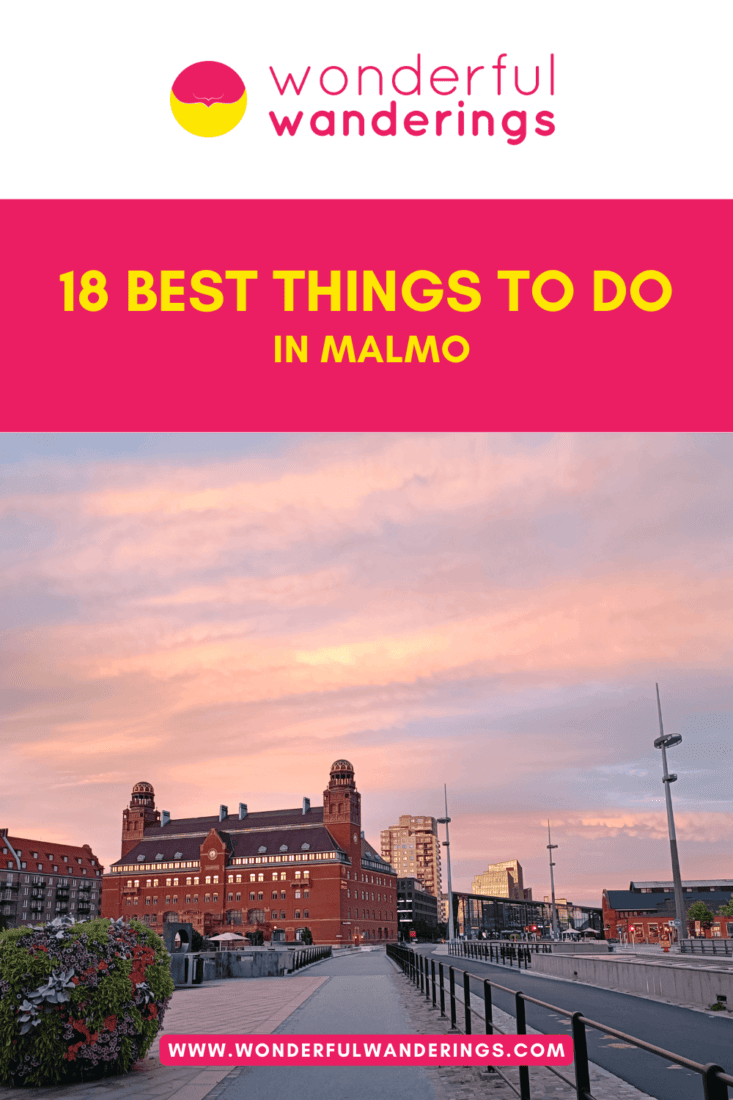
Malmöhus Castle, the Turning Torso, the old squares around Lilla Torg and the beach at Ribersborg are the four things to do in Malmö that carry a first visit, and all of them are within half an hour of the central station on foot or by bike. Malmö is Sweden’s third city and its most compact one, which is why two days covers it comfortably.
Two things about it surprise people. Malmö was Danish for most of its history and only became Swedish in 1658, which is why the old town looks more like Copenhagen than Stockholm, and a large share of the city’s attractions are free, including every square on this list, the beach, the castle gardens, the art gallery and the library.
Things to do in Malmö: the short answer
The 6 attractions below are the ones to build a day around, with what each costs and how you reach it. The full list of 19 follows underneath.
| Attraction | What it is | Cost | Getting there |
|---|---|---|---|
| Malmöhus Castle | A 1530s Renaissance castle holding all the Malmö Museer collections | Ticketed, free under 19 | Bus to Malmöhus, or a 15-minute walk from the station |
| Turning Torso | Santiago Calatrava’s 190 m twisting tower in the Western Harbour | Free to look at, interior mostly private | Train or bus to Västra Hamnen |
| Lilla Torg and Stortorget | The two old squares, half-timbered houses and terraces | Free | 10-minute walk from Malmö Central Station |
| Ribersborg beach and Kallbadhus | 2 km of sand plus an 1898 cold bath house with saunas | Beach free, bath house ticketed | Bus towards Limhamn, or a 30-minute walk |
| Moderna Museet Malmö | Contemporary art in a converted 1901 power station | Ticketed, free under 19 | 10-minute walk from the station |
| Malmö Konsthall | One of Europe’s largest contemporary art halls | Always free | Short walk south of the centre |
1. Øresund Bridge
The Øresund Bridge is what put Malmö within commuting distance of Copenhagen, and the important thing to know is that you cannot walk or cycle it. There is no footpath and no bike lane, so the crossing is by car, coach or train only, and the train is what almost every visitor uses.

The structure is more interesting than a single bridge. The cable-stayed span runs 7.8 km (4.8 mi) from the Swedish shore to the artificial island of Peberholm, where road and railway drop into an immersed tunnel of about 4 km (2.5 mi) for the run into Denmark, so that ships and Copenhagen Airport’s flight paths both stay clear. The whole link opened on 1 July 2000.
Take the Öresundståg from Malmö Central Station if you simply want to cross it: Copenhagen Airport is about 20 minutes away and Copenhagen Central about 35. Driving costs a great deal more than people expect, at 470 DKK (about €63, $73, £54) for a standard car one way at the full rate, though booking online or holding a Øresund GO subscription cuts that sharply.
2. Turning Torso
The Turning Torso is the building Malmö is recognised by, a 190 m tower of nine five-storey cubes that rotate 90 degrees between the ground and the roof. Santiago Calatrava designed it from his own sculpture Twisting Torso and it was finished in 2005, on the reclaimed dockland of Västra Hamnen.

Understand what you can and cannot do before you go. The tower is private housing, the top two floors are conference rooms run as a separate business, and there is no public observation deck, so the visit is really the walk around it. Access to the upper floors has been offered on some summer dates and needs booking well ahead, so treat it as a bonus rather than a plan.
The area around it is the actual attraction. Västra Hamnen is a low-energy district built on old shipyard land, with a seafront boardwalk, swimming decks, cafes and a run of contemporary architecture, and the Öresund train from Malmö Central reaches Västra Hamnen in a few minutes.
3. Lilla Torg (Little Square)
Lilla Torg is the prettiest square in Malmö and the one every visitor photographs, a small cobbled space off Stortorget lined with half-timbered merchant houses. It was laid out in the 16th century as an overflow market for the main square and kept its scale when the rest of the centre was rebuilt.

The square earns its keep in the evening. Restaurant terraces fill the whole space in summer, heaters and blankets keep them going well into autumn, and the buildings are lit after dark. Form/Design Center, the Nordic design centre, occupies Lilla Torghuset on the square and puts on free exhibitions of Swedish design, architecture and craft.
There is no charge to be here, and the square is about ten minutes on foot from Malmö Central Station. Come at lunchtime for the quieter version and after six for the busy one.
4. Kungsparken
Kungsparken is Malmö’s oldest public park, opened in 1872, and it is the green half of a visit to the castle, because the two sit side by side. It covers about 8 hectares in an English landscape style, with winding gravel paths, lawns, a lake and a collection of specimen trees planted from several continents.

Walk it as a loop with Slottsträdgården and the castle rather than as a destination on its own. The park has a playground, an open-air stage used for summer concerts and a cafe, and the canal along its northern edge carries the sightseeing boats.
Entry is free and the park has no gates. The nearest stop is Malmöhus on the local buses, and it is a 15-minute walk from the central station along Norra Vallgatan.
5. Malmö Castle (Malmöhus)
Malmöhus is the oldest surviving Renaissance castle in Scandinavia and the strongest value for money in the city, because one admission covers everything inside it. Eric of Pomerania built the first fortress here in the 1430s, Christian III rebuilt it in the 1530s in the form you see now, and it served as a mint, a royal residence and, for two centuries, a prison.

One ticket opens several museums at once. The Malmö Museer collections inside cover city and regional history, natural history with an aquarium and terrarium, and the city art collection, which is why families end up spending half a day here rather than an hour. The gun ramparts and the moat around the outside are free to walk.
An adult ticket stays well under 100 SEK (under €9, $10, £8) and children and teenagers go free, which for a castle plus four collections is unusual in Sweden. Buses stop at Malmöhus outside the gate, and it is about 15 minutes on foot from Stortorget.
6. Ribban Beach / Ribersborgs Kallbadhus
Ribersborg is Malmö’s city beach, a long shallow strand along the Öresund with the Copenhagen skyline on the horizon, and Malmö people call it Ribban. The sand runs for roughly 2 km between Västra Hamnen and Limhamn, with jetties out to deeper water, volleyball courts, an outdoor gym and barbecue spots.

The bath house at the end of the pier is the reason to come in winter as well as summer. Ribersborgs Kallbadhus opened in 1898, has separate men’s and women’s sections with wood-fired, dry and steam saunas, hot tubs and open steps straight down into the sea, and it runs almost every day of the year. Nude bathing is the rule inside the bath house, which catches first-timers out.
The beach itself costs nothing; the bath house charges admission. Buses towards Limhamn stop at Ribersborgskyrkan by the main entrance, about 15 minutes from the centre, and it is a half-hour walk along the shore.
7. Gustav Adolfs Torg
Gustav Adolfs torg is the big green square between the old town and the central station, and it is the one Malmö uses for events rather than for postcards. It was laid out in the early 19th century as the city expanded beyond its old moat, and it is named after King Gustav II Adolf.

Treat it as a crossing point with reasons to stop. Lawns, fountains, benches and market stalls fill it in summer, cafes and shops line the sides, and the square becomes one of the main stages of the Malmö Festival in August, when the whole city centre turns into a week-long street party.
There is no charge to be here and buses stop on every side. From Gustav Adolfs torg it is five to ten minutes on foot north to Lilla Torg or south to the station.
8. Möllevångstorget
Möllevångstorget is the square that shows you the other Malmö, in the working-class and immigrant district everyone calls Möllan. The buildings around it went up in the early 20th century for shipyard and factory workers, and the square has been the centre of the city’s labour movement ever since.

Come for the market and stay for the streets. An open-air fruit and vegetable market runs on the square with prices well below the supermarkets, Axel Ebbe’s sculpture Arbetets ära, the Honour of Work, stands in the middle with figures lifting a granite block, and the surrounding streets hold the densest run of Middle Eastern, Balkan and North African food in Sweden.
The square is free and lively into the evening. It is a 25-minute walk south from the central station, or a few minutes on the local buses.
9. Malmö City Library
Malmö City Library is worth walking into for the building alone, and it costs nothing. The complex joins a castle-like brick original to a glass extension by the Danish architect Henning Larsen, called the Calendar of Light, whose full-height windows look straight out over Kungsparken.

Use it the way local people do. There is a very large collection in dozens of languages, free wifi, quiet reading spaces, a cafe and a children’s section, and nobody minds a visitor sitting down for an hour with a coffee and a view of the park. Exhibitions, author talks and children’s story times run through the week.
Entry is free and a library card is not needed to sit and read. The library stands on the edge of Kungsparken, a short walk from both the castle and the centre.
10. St. Petri (St. Peter’s Church)
St Petri is the oldest building in Malmö and it is free to walk into. The brick Gothic church went up in the 14th century, in the Baltic style you see all round the southern shore of that sea, with a high vaulted nave, tall pillars and a tower that stands over the old town skyline.

The chapel off the north side is the thing to look for. Krämarkapellet, the Merchants’ Chapel, escaped the whitewashing of the Reformation and keeps its late-medieval wall and ceiling paintings, some from the 1460s and some from the early 1500s, which makes it one of the few places in Skåne where you see a medieval church interior as it was meant to look.
The oak altarpiece and the pulpit are the other highlights, both from the church’s Lutheran period. St Petri sits a couple of minutes from Stortorget, and services and concerts are open to anyone.
11. Södertull / Malmö Canal
The Malmö canal is the old defensive moat, and it is now the easiest way to see the whole centre without walking. It was dug in the 1600s around the fortified town, and the loop it makes still separates the old core from the 19th-century city, with the castle, the library, Kungsparken and Slottsträdgården all sitting on it.

Take a boat rather than walking the whole ring. Sightseeing boats leave from beside the central station and do a circuit of the canal in under an hour, passing under low bridges where everyone has to duck, and pedal boats are for hire in summer. Södertull, where the canal meets the harbour, has a cluster of bars and restaurants.
The towpaths are free and cycling them is faster than any bus. Boat tickets are bought at the quay or online, and the boats run from spring to early autumn.
12. Technology & Maritime Museum
The Technology and Maritime Museum, Teknikens och Sjöfartens hus, is where the shipbuilding half of Malmö’s history is kept, and it is part of Malmö Museer, so the castle ticket covers it. The displays run through engines, aircraft, vehicles, trams and navigation, with a strong section on Kockums, the shipyard that ran the city’s economy until the 1980s.

The submarine outside is the reason children ask to come. U3 was launched in 1943, served in the Swedish navy until 1967 and now sits on land beside the museum, and you climb down through the hatch and walk the length of her, which is a great deal tighter than it looks from outside.
The museum is next to the castle on Malmöhusvägen, so the two are one visit. Access to the submarine is limited to set times, so check the day’s schedule when you arrive.
13. Disgusting Food Museum
The Disgusting Food Museum is the strangest ticket in Malmö and the one people remember. It opened in 2018 and has been at Södra Förstadsgatan 2 since the summer of 2021, and it puts about 80 foods from more than 30 countries in front of you to make a point about how arbitrary disgust is.

The tasting is included, which is what separates it from an ordinary exhibition. Surströmming, hákarl, casu marzu, stinky tofu, cuy and durian are all here, the tasting bar lets you try a rotating set of them, and the sick bags handed out at the entrance are only half a joke. The labels explain why each food is normal somewhere.
Give it an hour, less if the smell wins. The museum is a 10-minute walk from Triangeln station and about 13 from Malmö Central Station.
14. Malmö Art Gallery (Malmö Konsthall)
Malmö Konsthall is one of the largest contemporary art halls in Europe and admission is always free, which makes it the single easiest cultural stop in the city. Klas Anshelm designed it and it opened in 1975, a low white building whose 550 roof lights fill the main hall with even daylight.

It is a kunsthalle, not a museum, so there is no permanent collection and nothing is ever the same twice. The programme runs a handful of large exhibitions a year, mixing international names with Nordic artists, and the space is big enough to take work that would not fit anywhere else in southern Sweden. Guided tours, talks and a children’s workshop run alongside.
Entry costs nothing and there is a good cafe and an art bookshop. The building is about ten minutes on foot south of the centre.
15. Moderna Museet Malmö
Moderna Museet Malmö is the southern branch of Sweden’s national modern art museum, and it is built into a power station from 1901. The perforated orange box added to the old brick shell is the entrance, and it is worth seeing from the street even if you do not go in.

Inside, the programme mixes rotating shows with works drawn from the national collection in Stockholm, which covers modern and contemporary art from 1900 onwards. The Turbine Hall keeps the height of the original building and takes the large installations. There is a library, a shop and a cafe with outdoor seating.
Adults pay a ticket, children and teenagers go free, and the museum runs free days through the year. It is a 10 to 15-minute walk from the central station, over the canal in the Ola Billgrens plats block.
16. Gamla Väster
Gamla Väster is the oldest surviving residential quarter of Malmö and the quietest ten minutes in the centre. Low pastel houses, cobbles and narrow lanes run west from Lilla Torg towards the castle, and the district survived the demolition plans of the 1960s and 1970s that flattened comparable areas elsewhere in Sweden.

Wander rather than tick things off. Antique dealers, craft studios, galleries and small design shops occupy the ground floors, hollyhocks grow out of the pavement in summer, and the whole quarter is small enough to cover without a map. Streets such as Västergatan and Adelgatan hold most of it.
It costs nothing and it is a five-minute walk from Lilla Torg. Combine it with the castle and Slottsträdgården, which are directly beyond it.
17. Drottningtorget
Drottningtorget is where Malmö’s flea market happens, and the day matters. The square hosts a large open-air loppmarknad on Sundays from around early April to late September, roughly 9am to 3pm, selling second-hand clothes, vinyl, books, ceramics, tools and the usual unclassifiable objects.

Go early for anything good. The market fills the whole square, prices are negotiable and cash is still useful even in a country that barely uses it, and the surrounding streets have cafes for the recovery afterwards. Outside the market season the square is a food market and a car park, so a midweek visit in January is not worth the walk.
Entry costs nothing and Drottningtorget is a few minutes north of the central station. Check the season before making the trip.
18. Slottsträdgården
Slottsträdgården is the castle garden, an organic working garden of about 12,000 sq m laid out on the old castle nursery grounds, and it is free. It is divided into a kitchen garden, an orchard, a rose garden, perennial beds, a herb garden and a Japanese section, all planted for the Skåne climate and run on ecological principles.

Come for the cafe as much as the plants. The garden cafe in the old windmill is one of the pleasant places to sit in Malmö on a summer afternoon, there are picnic tables and lawns, and the garden runs workshops, plant markets and outdoor concerts through the season.
Entry is free and the garden is open through the year, though May to September is when it is worth a detour. It sits between Kungsparken and the castle, so all three are one walk.
19. Stortorget
Stortorget is Malmö’s main square and the piece of the city that explains its Danish century. Mayor Jörgen Kock laid it out in the 1530s on what was then the largest scale in Scandinavia, deliberately outsizing anything in the rest of the kingdom, and it still feels too big for the buildings around it.
Three things on it are worth stopping for. The Rådhus, the town hall, occupies the eastern side behind a Dutch Renaissance facade added in the 1860s; Jörgen Kock’s own stepped-gable brick house from the 1520s stands on the corner; and John Börjeson’s equestrian statue of Karl X Gustav in the middle, unveiled in 1896, marks the treaty that made Skåne Swedish in 1658.
The square is free, open and used for markets, concerts and an ice rink in December. Lilla Torg opens off its southwest corner, so the two are one stop.
What are the best museums to visit in Malmö?
The best museums in Malmö are Malmöhus Castle, Moderna Museet Malmö and Malmö Konsthall, and between them they cover history, modern art and contemporary art for very little money. The 5 below are the ones worth your time.
- Malmö Museer at Malmöhus Castle. One ticket for the castle, the city and regional history collections, the natural history museum with its aquarium, and the city art collection. Free for children and teenagers.
- Moderna Museet Malmö. The national modern art collection’s southern branch, in a 1901 power station on Ola Billgrens plats. Rotating exhibitions plus works from the Stockholm collection.
- Malmö Konsthall. One of Europe’s largest contemporary art halls, opened in 1975 to a Klas Anshelm design. No permanent collection, a few large exhibitions a year, and always free.
- Form/Design Center. Nordic design, architecture and craft, in Lilla Torghuset on Lilla Torg. Free exhibitions and a good shop.
- Teknikens och Sjöfartens hus. Engines, aircraft, trams, the Kockums shipyard story and the U3 submarine you climb into. Covered by the same Malmö Museer ticket as the castle.
What are the best things to do in Malmö with kids?
The best things to do in Malmö with children are the ones with water, animals or a submarine in them. The 5 below all work for a family and 2 of them cost nothing.
- Folkets Park. A city-centre park with small fairground rides, mini golf, playgrounds, a reptile house and an outdoor stage. Entry to the park is free and you pay per ride.
- Malmöhus Castle. The aquarium, the natural history displays and the castle itself on one ticket, with children and teenagers free.
- Ribersborg beach. Shallow water, long sand, playgrounds and ice cream, ten minutes from the centre.
- Teknikens och Sjöfartens hus. Climbing down into the U3 submarine is the part they will talk about.
- A canal boat. Under an hour, seated, with bridges low enough that everyone has to duck.
How many days are needed to see Malmö?
Two days is enough for Malmö and three is comfortable. Day one covers the old town, the two squares, Gamla Väster, the castle and its gardens; day two takes Västra Hamnen, the Turning Torso and Ribersborg, with a museum in the afternoon.
Use a third day for a trip out rather than more of the city. Lund is 12 minutes away by train and holds an 1145 cathedral and Scandinavia’s oldest university, the fishing villages of Skanör and Falsterbo are 40 minutes south, and Copenhagen is closer than most Swedish towns.
Is Malmö worth visiting?
Yes, Malmö is worth visiting, particularly as part of a trip that also takes in Copenhagen. It gives you a Swedish city with a Danish street plan, a very good ratio of free things to paid ones, a beach inside the city and a food scene shaped by immigration rather than tradition, and it is small enough to see properly in two days.
Set the expectation correctly. Malmö is not Stockholm and it does not try to be. Its pleasures are a compact old town, cycling everywhere, cold-water swimming and eating well for less money than in the capital.
Is Malmö expensive to visit?
Malmö is expensive by general European standards and cheap by Swedish ones, which is the useful comparison. Hotel rooms, restaurant meals and drinks all cost noticeably less than in Stockholm or Copenhagen, and a good number of people stay here and commute across the bridge for exactly that reason.
Three habits keep the cost down. Eat the fixed-price dagens lunch, which almost every restaurant runs on weekdays and which includes salad, bread and coffee; buy from the stalls at Möllevångstorget rather than a supermarket; and lean on the free list, which here covers the beach, every square, Malmö Konsthall, the library, Slottsträdgården and Gamla Väster.
Is Malmö safe to visit?
Yes, Malmö is safe for visitors, and the city’s reputation abroad is worse than the experience of being in it. The realistic risks in the tourist areas are pickpocketing around the central station and the summer festivals, and bicycle theft if you hire one and leave it unlocked.
Two practical notes. Cycle lanes are heavily used and cyclists move fast, so look before crossing one, and the areas visitors actually go to, the old town, Västra Hamnen, Möllan and Ribersborg, are ordinary busy city districts.
What is Malmö famous for?
Malmö is famous for the Öresund Bridge, the Turning Torso and its falafel. The bridge and the Nordic noir series named after it put the city on television screens across Europe, and the Calatrava tower has been the city’s emblem since 2005.
Two other things get named locally. Malmö has the densest concentration of falafel shops in Sweden, a legacy of Middle Eastern immigration that also produced the city’s best cheap food, and it is a cycling city on the Danish model, with cycle lanes on nearly every street and bikes outnumbering cars in the centre.
What to eat in Malmö
The 5 things below are what to eat in Malmö, and only one of them is a Swedish classic.
- Falafel. Malmö’s signature cheap meal, sold from counters all over Möllan and Södra Förstadsgatan, deep-fried to order and packed into bread with pickles, salad and sauce.
- Kanelbulle. The cardamom-scented cinnamon bun that comes with a coffee at fika, and which every bakery in the city has an opinion about.
- Spettekaka. A Skåne speciality rather than a Swedish one, a tall dry cake of egg and sugar baked on a rotating spit and sold in pieces. It is the local thing to take home.
- Smörgåstårta. A savoury layer cake of bread, mayonnaise, prawns, egg and smoked fish, cut in slices and served cold. Party food that turns up in delis.
- Köttbullar. Swedish meatballs with cream sauce, lingonberries and pickled cucumber, the dish everyone expects and which is genuinely good here.
Where is Malmö and how do you get there?
Malmö is on the Öresund strait in the far southwest of Sweden, facing Denmark, about 600 km (373 mi) from Stockholm and 30 km (18.6 mi) from Copenhagen. Most international visitors arrive through Copenhagen Airport rather than a Swedish one, because the train from the airport terminal reaches Malmö Central Station in about 20 minutes across the bridge.
Malmö has its own airport as well, Malmö Airport at Sturup, with the code MMX. It handles mainly domestic and charter routes, and the Flygbussarna coach runs between the terminal and Malmö Central Station in about 40 minutes, with cheaper tickets bought online than on board.
Compare the routes before fixing your dates, since flights into Copenhagen and into Sweden price very differently for the same trip. Check Trip.com for flights to Sweden and set a price alert if your dates can move. Malmö also makes sense as one stop in a wider route, and our guide to destinations in Sweden covers the alternatives.
How do you get from Malmö to Stockholm?
You get from Malmö to Stockholm by train in about 4 hours 30 minutes, or by air in about an hour plus the airport time. SJ runs the fast trains from Malmö Central to Stockholm Central several times a day, Snälltåget and Öresundståg cover parts of the route more slowly and more cheaply, and long-distance coaches take between 7 and 9 hours.
Book the train weeks ahead for the low fares, because walk-up prices on this route are high. Flights leave from Malmö Airport and from Copenhagen, and once you add the transfers the train is often no slower door to door.
Do you need a car in Malmö?
No, you do not need a car in Malmö, and the city is easier without one. The centre is flat, compact and built for bicycles, the bus network covers the rest, and the trains reach Lund, Copenhagen and the coast.
A car earns its keep only if you are going into the Skåne countryside, for the castles, the Österlen coast or the beaches at Skanör and Falsterbo. DiscoverCars compares the local and international suppliers side by side so the deposit and excess terms are visible before you book, and picking up on the way out of the city avoids paying for parking you will not use.
Where to stay in Malmö
Stay in Gamla Staden if this is your first visit, because the old town puts the squares, the castle and the restaurants within a ten-minute walk. The 4 areas below cover the realistic choices.
- Gamla Staden. The old town between the canal and the station, with Stortorget, Lilla Torg and Gamla Väster on the doorstep. The most convenient and the most expensive.
- Västra Hamnen. The rebuilt harbour district around the Turning Torso, with sea views, swimming decks and modern hotels. Quieter in the evening and about ten minutes from the centre.
- Möllevången. South of the centre, cheaper, and where the food and the nightlife are. Suits a stay of several days rather than one night.
- Around Triangeln. By the underground station, a few minutes from both the centre and Möllan, and the easiest base if you are also using the trains to Copenhagen or Lund.
Book earlier than feels necessary for the Malmö Festival week in August and for the summer weekends, when the city fills with Danish visitors. Compare places to stay across Sweden once your dates are fixed, and filter by neighbourhood rather than by the map pin alone.
Malmö is an easy pairing with its neighbours: Copenhagen is 35 minutes away by train, and the rest of the country is covered in our guide to Sweden.
PIN FOR LATER
WonderfulWanderings Pro Tips
The 5 tips below come from checking Malmö’s attractions and transport against their operators, and every one of them corrects something other guides to the city still get wrong.
- Fly into Copenhagen Airport rather than Malmö. The train from the airport terminal reaches Malmö Central Station in about 20 minutes. Malmö’s own airport is at Sturup, its code is MMX, and it handles mainly domestic and charter routes, with the Flygbussarna coach taking about 40 minutes into the city. If a guide gives that airport as SPU, ignore the rest of its advice as well: SPU is Split, in Croatia.
- You cannot walk or cycle the Øresund Bridge, and there is nowhere to get off halfway. The crossing has no footpath and no bike lane, so it is car, coach or train only. Peberholm, the artificial island in the middle, is uninhabited, closed to the public and has no railway station, whatever timetable advice you read elsewhere.
- Price the bridge properly before you decide to drive it. A standard car pays 470 DKK (about €63, $73, £54) one way at the full rate. Guides that quote a few euros are out by a factor of ten. Booking online or holding an Øresund GO subscription cuts it sharply, and the train costs a fraction of either.
- Go to Drottningtorget on a Sunday or not at all. The flea market runs on Sundays from roughly early April to late September, about 9am to 3pm. Sources that promise a Wednesday and Saturday market year-round will send you to an empty square in February.
- Look at the Turning Torso from the outside. It is private housing, the top two floors are conference rooms run as a separate business, and there is no public observation deck. Upper-floor access has been offered on a few summer dates and needs booking well ahead, so plan the walk around Västra Hamnen instead and treat anything more as a bonus.
About the author. This guide is written and maintained by the Wonderful Wanderings editorial team. Wonderful Wanderings was founded in 2012 by Sofie Couwenbergh, and the team covers Sweden for independent travellers, from Malmö and Skåne to Stockholm, Gotland and Swedish Lapland. We cover the museums, the flights, the hire cars, the hotels and the guided tours worth booking, and update this page when opening hours, prices and access rules change.