 EN
EN
 Nederlands
 Français
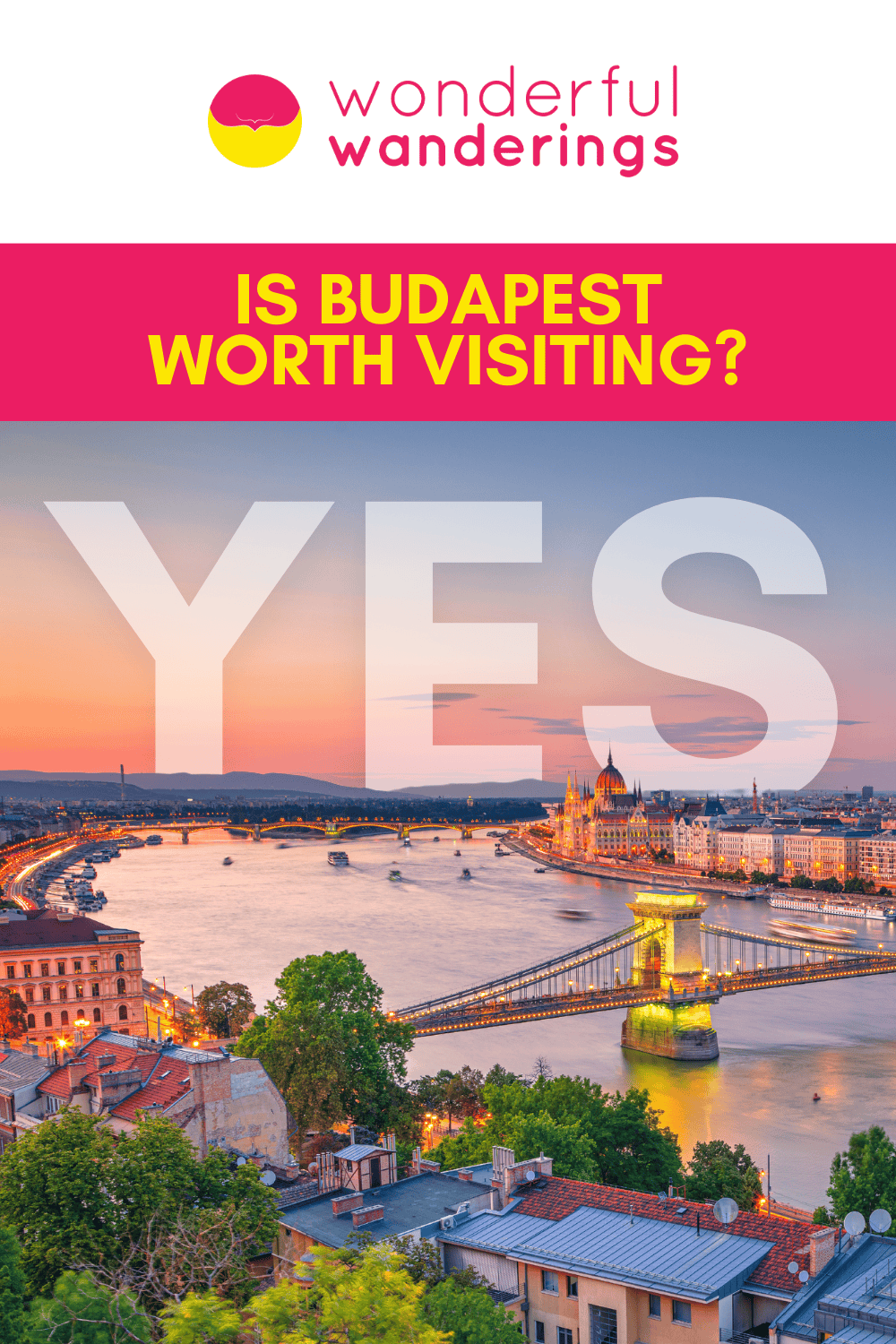
Yes, Budapest is worth visiting, if you want a grand nineteenth-century capital at central European prices rather than Western European ones. Budapest earns the trip on three things a weekend elsewhere cannot match: a city sitting on roughly 120 hot springs and still bathing in them, a Jewish Quarter whose ruin bars turned derelict buildings into cheap late nightlife, and a skyline of Parliament, Castle Hill and the Danube bridges that costs nothing to look at.
No, Budapest is not worth it if your one fixed plan was the Gellért Baths, which closed on 1 October 2025 and is not due to reopen until 2028, or if you are bringing children under 14 specifically for the famous thermal baths, because Széchenyi, Lukács and Rudas all now refuse them entry.
Hungary uses the forint, written Ft or HUF, and has not adopted the euro. Every price below is a 2026 forint figure from the operator, with conversions added at roughly 365 Ft to the euro in September 2026.
What does a trip to Budapest actually cost?
A day in Budapest runs on transport at 2,750 Ft, a museum at 3,500 Ft and a meal that costs less than the museum. Budapest is cheaper than Vienna, Munich or Amsterdam across food, transport and museum entry, and it is now roughly level with Prague rather than clearly under it.

The prices that set a Budapest daily budget are listed below, all from the operator in 2026.
- 24-hour transport travelcard: 2,750 Ft (about €7.50, $8.70, £6.50). Unlimited metro, tram, bus, trolleybus and ferry travel across the city, set by the Centre for Budapest Transport (BKK).
- Hungarian National Museum: 3,500 Ft (about €10, $11, £8). Full-price adult entry to the permanent exhibitions, per the museum’s own ticket page.
- Museum of Fine Arts: 5,200 Ft (about €14, $17, £12). Full-price adult entry to the permanent exhibitions at Heroes’ Square.
- Hungarian National Gallery: 5,800 Ft (about €16, $18, £14). Full-price adult entry at Buda Castle, with the concession rate at 2,900 Ft.
- Citadella, The Bastion of Liberty: 4,900 Ft (about €13, $16, £12). Timed entry to the Gellért Hill exhibition and its roof terraces, with the surrounding park free.
- Lukács thermal bath: 7,000 Ft weekdays, 8,000 Ft Friday to Sunday (about €19 to €22, $22 to $25, £17 to £19). The quiet, local bath rather than the photogenic one.
- Széchenyi thermal bath: 13,200 Ft weekdays, 14,800 Ft Friday to Sunday (about €36 to €41, $42 to $47, £31 to £35). The big Neo-Baroque complex in City Park, and the one real expense in the city.
Budapest’s cheapness has limits, and the baths are where it stops. A Széchenyi weekday ticket at 13,200 Ft is not a budget price, and anyone whose mental image of cheap Budapest was formed a few years ago should reset it. Everything else on that list still reads as good value: a national museum for the price of two coffees in Vienna, and three days of unlimited transport for 5,750 Ft.
Budapest compared with Prague and Vienna
Choose Budapest over Vienna for price and over Prague for the baths. All three sit within a few hours of each other on the same rail corridor, so the comparison is a real decision rather than an academic one.

Vienna is the direct rival and the more polished city, with better museums and considerably higher prices for food, drink and hotels. Budapest gives you comparable architecture on a larger scale, a genuinely cheaper evening, and the thermal baths Vienna has no answer to. Prague is the closer match on price and prettier in its old centre, but it is smaller, more concentrated and much more crowded in its historic core, and it has nothing like City Park or the Danube’s width through the middle of town.
Budapest also wins on how little you have to spend to see the good part. Fisherman’s Bastion, the Danube Promenade, Heroes’ Square, Margaret Island, City Park and the Citadella’s park are all free, and Fisherman’s Bastion’s upper terraces are only ticketed between 9am and 9pm from June to September, and 9am to 7pm the rest of the year. Arriving before nine costs nothing. Getting there from any of the three cities is a train or coach ride rather than a flight, and comparing those routes in one search is easiest on Omio, which covers European rail and bus tickets.

Why Budapest is worth visiting: 10 reasons
Budapest is worth visiting for 10 things it does better or cheaper than its neighbours, and each one below names what you get and what it costs. The list is ordered by how often each reason is the deciding one.

- The thermal baths. Budapest sits on roughly 120 hot springs and has bathed in them since the Romans, and four bathhouses are open in 2026: Széchenyi and Lukács on the Pest and Buda sides, Ottoman-era Rudas with its rooftop pool over the Danube, and Palatinus on Margaret Island for families.
- The ruin bars. Ruin bars are bars built inside derelict District VII buildings, furnished from junk shops and open late, and Szimpla Kert started the format in 2001 and is still the one to see first.
- The architecture. Budapest runs from Roman ruins at Aquincum through Matthias Church’s Gothic core to the Parliament’s Gothic Revival and the Art Nouveau frontages of inner Pest, most of it built in a burst around the 1896 millennial celebrations.
- The Jewish Quarter. District VII holds the Dohány Street Synagogue, Europe’s largest, along with the Hungarian Jewish Museum, smaller synagogues on Kazinczy utca and Rumbach Sebestyén utca, and the Shoes on the Danube memorial a short walk away.
- The museums. Budapest’s national collections are cheap by European standards, with the Hungarian National Museum at 3,500 Ft, the Museum of Fine Arts at 5,200 Ft and the Hungarian National Gallery at 5,800 Ft.
- The food. Hungarian cooking is paprika, pork and sour cream in large portions, and the three dishes worth planning around are goulash, which is a soup here rather than a stew, lángos, and the chimney cake kürtőskalács.
- The ease of getting around. Budapest’s centre is walkable and BKK covers everything beyond it on one ticket, with four metro lines including the 1896 M1, trams, trolleybuses, buses, the HÉV suburban railway and Danube ferries.
- Sziget. Sziget is one of Europe’s larger multi-genre festivals and takes over Óbuda Island for five days each August, and the 2026 edition ran from 11 to 15 August.
- The street art. District VII carries large commissioned murals on the blank flank walls left by demolition, including the Rubik’s Cube piece marking the puzzle’s Hungarian inventor, and they are free to walk between.
- The hidden courtyards. Courtyards behind Pest’s apartment blocks open onto arcades, columns and stained glass, and Gozsdu Courtyard in District VII is the accessible one, a run of linked yards full of bars and restaurants.
Two of those reasons need more than a line each. Szimpla Kert is only the first stop of several, and the ruin bars of Budapest guide works through the District VII alternatives to it. Tickets, camping and what the island is actually like for five days are covered in the Sziget Festival guide.

Who should not bother with Budapest
Skip Budapest if you were going for the Gellért Baths, if you need warm-weather swimming outside July and August, or if you are travelling with children under 14 whose highlight was going to be a thermal bath. Budapest is a strong city for most travellers and a poor fit for a specific few, and being honest about which is which saves a wasted booking.

The cases where Budapest disappoints are listed below.
- You came for the Gellért. The Gellért Baths closed on 1 October 2025 for a restoration running to 2028, and the Király Bath has closed indefinitely. Both still appear in guides written before the closures.
- You have children under 14 and a bath on the itinerary. Széchenyi, Lukács and Rudas all bar under-14s. Palatinus on Margaret Island sells child and family tickets and is the one that works.
- Your trip lands on a Monday and museums are the plan. The Hungarian National Museum, the Hungarian National Gallery and the Museum of Fine Arts all close on Mondays.
- You want a beach or reliable outdoor swimming. Hungary is landlocked, so there is no coast to reach, and the baths’ outdoor pool sections run on a summer season.
- You want a compact old town you can finish in a day. Budapest is spread across two banks and a large park, and it rewards three days rather than one.

How long do you need in Budapest?
Three days is enough, and two will do at a push. Budapest splits cleanly into a Pest walking day and a Buda walking day, which leaves the third for a bath, a museum or a Danube cruise without cutting anything short.

Two days covers the headline sights on both banks and nothing else. Four or five days lets you add Óbuda and Aquincum, a day trip out to Szentendre on the HÉV, and a second bath. Arrival routes, the districts and a full two-to-three-day outline are set out in our Budapest travel guide.
Three days of paid sights plus a bath is also the point at which a city pass starts to matter. Working out whether the Budapest Card pays for itself takes about two minutes and is better done before you arrive than at the airport counter.

Where to stay in Budapest, and what it costs
Stay in District V for a first visit, because it puts the Parliament, St. Stephen’s Basilica, the Danube Promenade and the Chain Bridge inside a fifteen-minute walk. District V also has the deepest hotel supply, so it tends to have rooms when the rest of the city is full.

District VII is the alternative and the cheaper one, with the ruin bars and the late-night food on the doorstep and the noise that comes with them. District I on Castle Hill is the quietest and most scenic, at the cost of hills and a thin choice of dinner after 9pm. Rates in District V climb sharply during Sziget week in August and through the Christmas market season, and comparing what each district charges on the same dates is quickest through Booking.com’s Hungary listings.
Budapest FAQ
Is Budapest safe for tourists?
Budapest is a low-crime European capital, with pickpocketing on crowded trams, the metro and around the ruin bars as the realistic risk. Use a licensed taxi from a rank or an app rather than one that approaches you, and agree the fare before you set off.
Is Budapest expensive?
Budapest costs less than Vienna or Munich for food, transport and museums, and about the same as Prague. The thermal baths are the outlier: a weekday adult ticket at Széchenyi is 13,200 Ft, which is not cheap by any measure.
Do you need euros in Budapest?
No. Hungary uses the forint, and although some tourist businesses accept euro notes, they set their own rate and you lose money on it. Cards work almost everywhere, including BKK ticket machines and the baths.
What is the best time to visit Budapest?
May, June, September and early October are the strongest months, with warm days, working outdoor pools and thinner crowds than July and August. Winter is cold and grey, which is exactly when a steaming outdoor pool and a Christmas market repay the trip.
WonderfulWanderings Pro Tips
The four tips below come from checking Budapest’s venues against their own 2026 information, and each corrects something older guides still say.
- Take the under-14 rule seriously before you promise a child a thermal bath. Széchenyi, Lukács and Rudas all refuse entry under 14, and the notice sits at the top of each bath’s own price page. Palatinus on Margaret Island is the one with child and family tickets.
- Go to Fisherman’s Bastion before 9am. The upper terraces are only ticketed from 9am to 9pm between June and September, and 9am to 7pm otherwise, so an early arrival is free and the light over Parliament is better.
- Book the Széchenyi morning ticket if the bath is the point of the trip. Entry before 9am on a weekday is 10,500 Ft rather than 13,200 Ft, and the complex is close to empty at opening.
- Do not build a Monday around museums. The three national collections all close on Mondays, so a Monday belongs on Castle Hill, on Gellért Hill or in a bath, all of which are open.
About the author. This guide is written and maintained by the Wonderful Wanderings editorial team. Wonderful Wanderings was founded in 2012 by Sofie Couwenbergh, who has visited Budapest twice, once on a four-day trip with her mother and once for the Sziget festival. The team covers Budapest and Hungary for independent travellers, including the hotels, thermal baths, ruin bars and city passes worth booking, and updates this page when prices, opening arrangements and rules change.