 EN
 Nederlands
 Français

Gruyères is a single cobbled street on a hill with four paying attractions on it, and half a day covers the town comfortably. The castle at CHF 13 (about €14, $16, £12), the cheese dairy at the station, the HR Giger Museum and the Tibet Museum are the four, and combined tickets sold on the spot cut the cost of seeing two of them. Add Maison Cailler in Broc or the Moléson cable car and you have a full day; anything more and you are padding. Everything below carries its 2026 price, its closed day and how to reach it without a car.
How long Gruyères actually warrants
Gruyères warrants half a day on its own and a full day with one excursion attached. The town has roughly 2,000 residents, the walled part is a few hundred metres end to end, and the entire visit happens on foot. The three sensible plans are listed below.
- Half a day: the castle and the cheese dairy. Arrive at Gruyères station, do La Maison du Gruyère next to the platform, walk up to the town and do the castle. This is the version most people want.
- A full day: add one museum and one excursion. The HR Giger Museum or the Tibet Museum fills an hour, and Maison Cailler at Broc or the Moléson lifts fills an afternoon.
- An overnight: only for the empty town. Day visitors leave by early evening and the street goes quiet, which is the single argument for sleeping here rather than in Bulle or Montreux.
Nobody needs two full days in Gruyères. Pair it with Bulle, Montreux or Fribourg, and compare room rates on Trip.com across the three before deciding where to sleep. More of the country’s cluster towns are listed among the places to visit in Switzerland.
Combined tickets: the cheapest way to see two attractions
Combined tickets are sold on the spot by the three institutions that offer them, and each saves between CHF 3 and CHF 5.50 against two separate adult tickets. The four 2026 pairings are listed below.
| Combined ticket | Price | Separate | Saving |
|---|---|---|---|
| Château and La Maison du Gruyère | CHF 17 | CHF 21 | CHF 4 |
| Château and HR Giger Museum | CHF 20 | CHF 25.50 | CHF 5.50 |
| Château and Tibet Museum | CHF 18 | CHF 23 | CHF 5 |
| Château alone, adult | CHF 13 |
Combined tickets are individual adult rates only, they are bought in person at one of the institutions rather than online, and they apply to a same-day visit. Euro notes are accepted at the castle and the Tibet Museum, with change given in Swiss francs.
1. Château de Gruyères
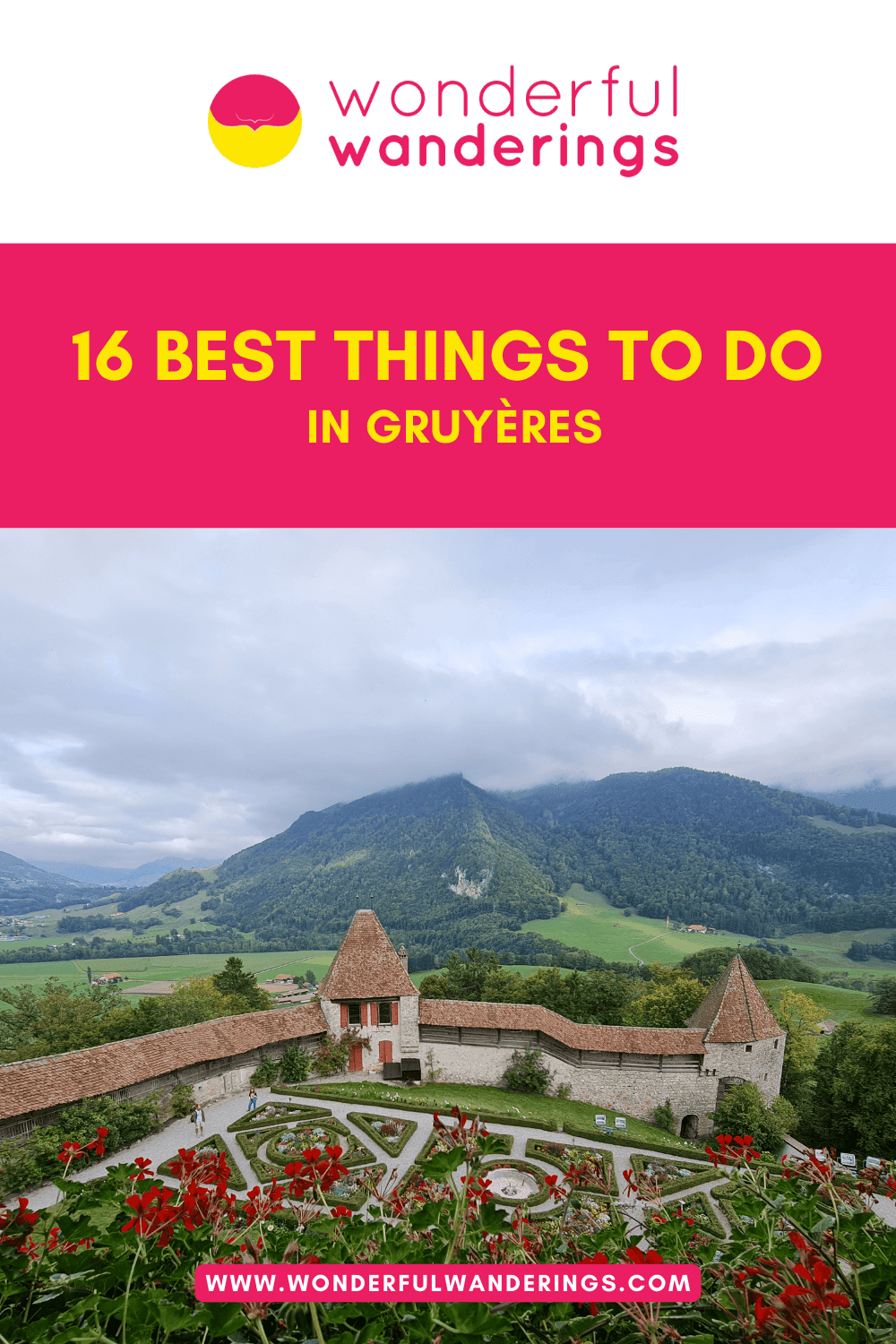
Château de Gruyères costs CHF 13 (about €14, $16, £12) for an adult and is the only Swiss castle that opens every day of the year, including Christmas Day and New Year’s Day. It stands at the top of the town on a rock above the Saane valley, and the route through it covers roughly eight centuries, from the counts of Gruyère who held it until Count Michel went bankrupt in 1554, through the Fribourg bailiffs who ran the region from here until 1798, to the Bovy family from Geneva who filled the rooms with painting in the 19th century and the canton, which bought it back in 1938.

Opening hours are 09:00 to 18:00 from April to October and 10:00 to 17:00 from November to March, with last entry 45 minutes before closing. The garden is open from Easter to September and closes at 17:30. Seniors and students pay CHF 9 (about €10, $11, £8), children aged 6 to 15 pay CHF 5 (about €5, $6, £5), under-6s go free, and a family of two adults with up to three children pays CHF 29 (about €31, $36, £26).
Three practical restrictions catch people out. There is no café inside the castle and no picnicking within the walls, pushchairs and baby carriers are not allowed in the castle rooms for safety reasons, and wheelchair users can reach only the esplanade, the courtyard and part of the garden because of the stairs. Free children’s trails, the Bestiary from age 3 and the Chalamala trail from age 6, are handed out at the desk. How this castle compares with the rest of the country’s is set out in the castles in Switzerland guide.
2. La Maison du Gruyère
La Maison du Gruyère charges CHF 8 (about €8, $10, £7) and sits directly beside Gruyères railway station, which makes it the first thing you reach and the easiest to fit in. The dairy makes Gruyère AOP in open vats behind glass, and the visitors’ gallery looks straight down onto the work. Cheese is made two to four times a day between 09:00 and 12:30, so a morning arrival is the difference between watching production and looking at an empty vat.

The exhibition opens daily, 09:00 to 18:30 from June to September and 09:00 to 18:00 from October to May, with last entry 30 minutes before closing. Students from age 12 and pensioners pay CHF 6 (about €6, $7, £5), and a family package of two adults with children under 12 costs CHF 12 (about €13, $15, £11). Tickets are sold on site only, not online. Entry is free for Raiffeisen Member Plus holders.
An audio guide is included, the Marché Gruérien on site sells cheese from local producers and the restaurant serves Gruyère AOP dishes. The building is level and easy for wheelchair users, which the castle at the top of the hill is not. Small dogs may come in if carried.
3. HR Giger Museum and Bar
The HR Giger Museum costs CHF 12.50 (about €13, $15, £11) and holds the largest collection of work by the Swiss artist who designed the creature in Alien. It occupies the Château St-Germain on the same street as the main castle, across four floors of paintings, sculpture and film designs, with Giger’s own private art collection on the top floor. The bar opposite, finished in 2003, is itself one of his works: the vaulted ceiling is built as a ribcage and the furniture came out of his Dune designs.

Opening hours change with the season. April to October the museum opens Monday to Friday 10:00 to 18:00 and Saturday and Sunday 10:00 to 18:30; November to March it opens Monday to Friday 12:00 to 17:00 and Saturday and Sunday 10:00 to 18:00, with last entry 45 minutes before closing. Students, seniors and military pay CHF 8.50 (about €9, $10, £8) and children CHF 4 (about €4, $5, £4). Tickets are sold at the museum on the day and are not available online.
Allow 30 minutes to an hour. There is no lift and only the shop is wheelchair accessible, some of the work is unsuitable for children, and under-16s have to be with an adult. Guided tours for up to 12 people can be booked two weeks ahead in five languages, at CHF 90 (about €95, $111, £82) for 45 minutes or CHF 120 (about €127, $148, £109) for an hour on top of the group rate.
4. Tibet Museum
The Tibet Museum in Gruyères is the Fondation Alain Bordier, a private collection of Himalayan Buddhist art, and entry costs CHF 10 (about €11, $12, £9). It occupies a deconsecrated chapel on Rue du Château, between the HR Giger Museum and the entrance to the castle, and the pieces come from Tibet, Nepal, Kashmir and the wider Himalaya. The setting does most of the work: sculpture and painted scrolls lit in a stone chapel, in a building that holds your attention for about an hour.

The season splits in two. From November to Easter the museum opens Tuesday to Friday 13:00 to 17:00 and Saturday and Sunday 11:00 to 18:00, closed on Mondays; from Easter to October it opens daily, including public holidays, 11:00 to 18:00. Seniors and students pay CHF 8 (about €9, $10, £8), children aged 6 to 16 pay CHF 5 (about €5, $6, £5), and entry is free with a Swiss Museum Pass, a Raiffeisen card or an AG Culturel.
This museum has nothing to do with the Tibet Museum run by the Central Tibetan Administration in Dharamshala, India, which several guides confuse it with. The Gruyères collection is Alain Bordier’s, assembled privately and opened here in 2009.
5. Lac de la Gruyère
Lac de la Gruyère is a reservoir 13.5 km (8.4 mi) long, free to visit, and the closest swimming to the town. The Rossens dam, completed in the late 1940s, created it, and the water level rises and falls with the seasons, so swimming depends on when you come. The small island of Île d’Ogoz carries a chapel and the ruins of two castle towers, reachable by pedalo, rowing boat or sailing dinghy from the shore.

Walking trails, a golf course and a campsite ring the lake, and the surrounding pastures are where the milk for Gruyère AOP comes from. Corbières and Broc, at the southern end, are the two access points served by public transport. Nothing here costs anything beyond the boat hire.
6. The Fribourg cows and the désalpe
The black and white Fribourg cattle grazing around Gruyères supply the milk for Gruyère AOP, and watching them come down from the summer pastures is the region’s biggest annual event. The désalpe, the descent from the alp, happens in late September, when herds walk down through the villages wearing large bells and headdresses of flowers. Charmey, in the valley east of Gruyères, holds the canton’s most famous désalpe, on the fourth Saturday of September; in 2026 that fell on 26 September, and the event pairs the procession with a regional produce market and concerts.

Farm visits outside the désalpe are arranged through the local tourist office rather than turning up at a gate. The cheese trail between the demonstration dairies is the other way to see how the milk becomes the wheel, and what actually goes into the pot is covered in the guide to top food to eat in Gruyères, Switzerland.
7. Walking the medieval town
The walled town of Gruyères is free, closed to traffic and small enough to walk end to end in ten minutes. One cobbled street, the Rue du Bourg, runs from the gate to the castle, with a fountain in the middle, houses from the 15th and 16th centuries on both sides and restaurants serving fondue moitié-moitié, raclette, soupe de chalet and the local double cream with meringues. The ramparts and the path around the outside of the walls give the view down the Saane valley that the postcards use.
Cars cannot enter. Paid car parks sit at the bottom of the hill and the walk up takes 10 to 20 minutes, which is the single biggest practical fact about visiting Gruyères. From Gruyères railway station the walk is about 20 minutes; from the Gruyères-Ville bus stop at the town gate it is 5 to 10 minutes. What that costs in a country this expensive is set out in the cost of living in Gruyères and Switzerland.
8. Moléson
Moléson is the 2,002 m (6,568 ft) peak above the town, and a return trip to the summit by funicular and cable car costs CHF 35 (about €37, $43, £32) for an adult. The lifts run in stages from Moléson-sur-Gruyères to Plan-Francey and on to the summit, and the fare is charged by section: CHF 14 (about €15, $17, £13) for one, CHF 22 (about €23, $27, £20) for two, CHF 30 (about €32, $37, £27) for three and CHF 35 for four, which is the up-and-down to the top. Young people aged 16 to 24 pay CHF 25.10 (about €27, $31, £23) for the same four sections, children aged 6 to 15 pay CHF 19.60 (about €21, $24, £18), and families of three or more paying members get CHF 2 off each parent.

From the top the view runs from Lake Geneva across to the Bernese Alps, Mont Blanc and the Jura. An alpine cheese dairy at Moléson-sur-Gruyères runs cheese-making demonstrations over an open wood fire, and the mountain also carries a summer toboggan run, a Devalkart track, two via ferrata routes, a bike park and minigolf. Dogs travel free on the lifts, and parking at the bottom station is free.
9. Maison Cailler in Broc
Maison Cailler is the Cailler chocolate factory in Broc, about 10 minutes from Gruyères, and entry costs CHF 17 (about €18, $21, £15) for an adult. The visit runs 45 minutes to an hour through the history of the company Alexandre Cailler built here at the end of the 19th century, ends in a tasting room, and is available in 16 languages. Students, seniors and visitors with a disability pay CHF 14 (about €15, $17, £13), children aged 6 to 15 pay CHF 7 (about €7, $9, £6) and under-6s go free.
It opens seven days a week, 10:00 to 18:00 from 1 April to 31 October and 10:00 to 17:00 from 1 November to 31 March, closed only on 25 December and 1 January. The last on-site ticket goes on sale an hour before closing, and booking online ahead is worth it in summer. A Swiss Travel Pass or Swiss Museum Pass gets a reduction here rather than free entry, which is unusual among Swiss museums.
Broc-Chocolaterie has its own station, right at the door, with a direct train from Bern. Parking is free, the site is wheelchair accessible and animals are not admitted.
How to reach Gruyères without a car
Gruyères has its own railway station, and both the town and La Maison du Gruyère are reachable on foot from it. From Geneva the route runs to Bulle with a change, then a regional train up to Gruyères, taking about 1 hour 30 minutes. From Zurich, travel to Fribourg, change at Bulle and take the Regio-Express towards Montbovon. From Montreux, the hourly train to Montbovon connects to the same Regio-Express, which is the scenic way in over the Col de Jaman.

Rail and coach tickets across Switzerland are worth pricing on Omio before you commit to a pass, because a single day trip from Geneva or Montreux rarely justifies a Swiss Travel Pass on its own. Onward, Lausanne is the nearest large city on Lake Geneva.
Frequently asked questions
Is Gruyères worth visiting?
Gruyères is worth half a day, mostly for the castle, the cheese dairy and the walk up a car-free medieval street. It is not worth a two-night stay on its own, and it works as a day trip from Montreux, Bulle, Fribourg or Bern.
Do you need to book Gruyères Castle in advance?
No. The castle sells tickets at the door, it opens every day of the year, and combined tickets with the other three attractions are also sold in person rather than online. La Maison du Gruyère and the HR Giger Museum likewise sell only on site.
Can you drive into Gruyères?
No. The walled town is closed to traffic, and the car parks sit at the bottom of the hill, which means a walk of 10 to 20 minutes up cobbles to the castle gate. Anyone with limited mobility should plan around this, because there is no shuttle.
What is the difference between Gruyères and Gruyère?
Gruyères with an s is the town and the castle; Gruyère without one is the cheese and the surrounding region, La Gruyère. The cheese is protected as Gruyère AOP and has been made in the area since at least the 12th century. More background sits in the facts about Gruyères and Switzerland.
Is there anything to do in Gruyères when it rains?
The castle, La Maison du Gruyère, the HR Giger Museum, the Tibet Museum and Maison Cailler in Broc are all indoors, which is more wet-weather cover than most Swiss villages of this size offer. The walk up from the car parks is the only unavoidably outdoor part.
WonderfulWanderings Pro Tips
The four tips below come from checking each Gruyères attraction’s own 2026 opening calendar and ticket page, and each one saves money or a wasted walk.
- Arrive at La Maison du Gruyère before 12:30. Cheese is made two to four times a day between 09:00 and 12:30, and after that the vats are empty, which turns a live demonstration into a display case.
- Ask for the combined ticket at the first desk you reach. The Château plus HR Giger Museum pairing costs CHF 20 against CHF 25.50 separately, and none of the combined tickets can be bought online.
- Do not visit the Tibet Museum on a Monday between November and Easter. It is the only one of the four town attractions that closes weekly, and the castle next door stays open every day of the year.
- Leave 20 minutes for the climb from the car park. The medieval town bans cars, so the last stretch to the castle is on foot up a cobbled hill, and it is the part visitors consistently underestimate.
About the author. This guide is written and maintained by the Wonderful Wanderings editorial team. Wonderful Wanderings was founded in 2012 by Sofie Couwenbergh, and the team covers Switzerland for independent travellers, from Gruyères Castle and the Gruyère AOP dairy to the Moléson lifts and the chocolate factory at Broc, including the tours, hotels and rail tickets worth booking. We check each attraction’s own opening calendar and ticket page and update this guide when prices, seasons and closed days change.