 EN
EN
 Nederlands
 Français
The main things to do in Gdańsk are the Royal Route through the Main Town from the High Gate to the Green Gate, St. Mary’s Church and its tower, the European Solidarity Centre at the shipyard, the Museum of the Second World War, the Gdańsk Crane on the Motława, and the amber shops on Mariacka Street. Gdańsk sits at the mouth of the Motława on the Baltic coast of northern Poland, is the capital of the Pomeranian Voivodeship, and forms the Tricity with Sopot and Gdynia next door.
The city was first mentioned in 997, received city rights in 1263, joined the Hanseatic League and spent centuries as the Polish Crown’s principal seaport and largest city. It was annexed by Prussia in 1793, became the Free City of Danzig between the wars, and was where the Second World War began on 1 September 1939 at Westerplatte. Forty-one years later, strikes at its shipyard produced Solidarity. Over 90% of the historic center was destroyed in 1945 and was rebuilt from paintings and photographs, which is why the gabled facades on Długi Targ look older than the concrete behind them.
The seven sights that give you Gdańsk in a single day are listed below.
- The Main Town and the Royal Route. The Royal Route runs from the High Gate through the Golden Gate, along Ulica Długa and Długi Targ to the Green Gate on the river, and it takes in most of the city’s landmarks in a 15-minute walk.
- European Solidarity Centre. The European Solidarity Centre stands at the shipyard gate where the 1980 strikes happened, and its permanent exhibition across seven halls is the best museum in the city.
- St. Mary’s Church. St. Mary’s is one of the three largest brick churches ever built, holds over 25,000 people, and its tower is 405 steps up with no lift and the widest view in Gdańsk at the top.
- Mariacka Street. Mariacka Street is the reconstructed lane of terraced stone porches between St. Mary’s and the river, lined with amber shops and cafes, and the most photographed street in the city.
- Gdańsk Crane. The Gdańsk Crane is the medieval timber-and-brick port crane on the Motława, the largest in Europe when it was built in 1442 to 1444, reopened after restoration on 30 April 2024.
- Museum of the Second World War. The Museum of the Second World War opened its exhibition in 2017 in a leaning glass and brick tower, and it covers the war from the civilian side rather than the military one.
- Westerplatte. Westerplatte is the peninsula where 182 Polish defenders held out for seven days against the German attack that began the war on 1 September 1939.
1. Gdańsk Old Town
Gdańsk Old Town is where almost everything on this page sits, and it is worth knowing at the start that it is two districts rather than one. The Main Town (Główne Miasto) holds Ulica Długa, Długi Targ, St. Mary’s Church, the Artus Court and the Crane, and it is what visitors mean when they say Old Town. The Old Town proper (Stare Miasto) lies north of it, around the Great Mill, St. Catherine’s Church and the Old Town Hall, and it is quieter and less visited.

Both were destroyed in 1945, when over 90% of the center was lost, and both were rebuilt from old paintings, engravings and photographs over the following decades. The reconstruction went back to the 17th-century appearance rather than to what stood in 1939, so the gables are Dutch and Flemish in style and the streets are narrower and more decorated than a German city of the same period would have been.
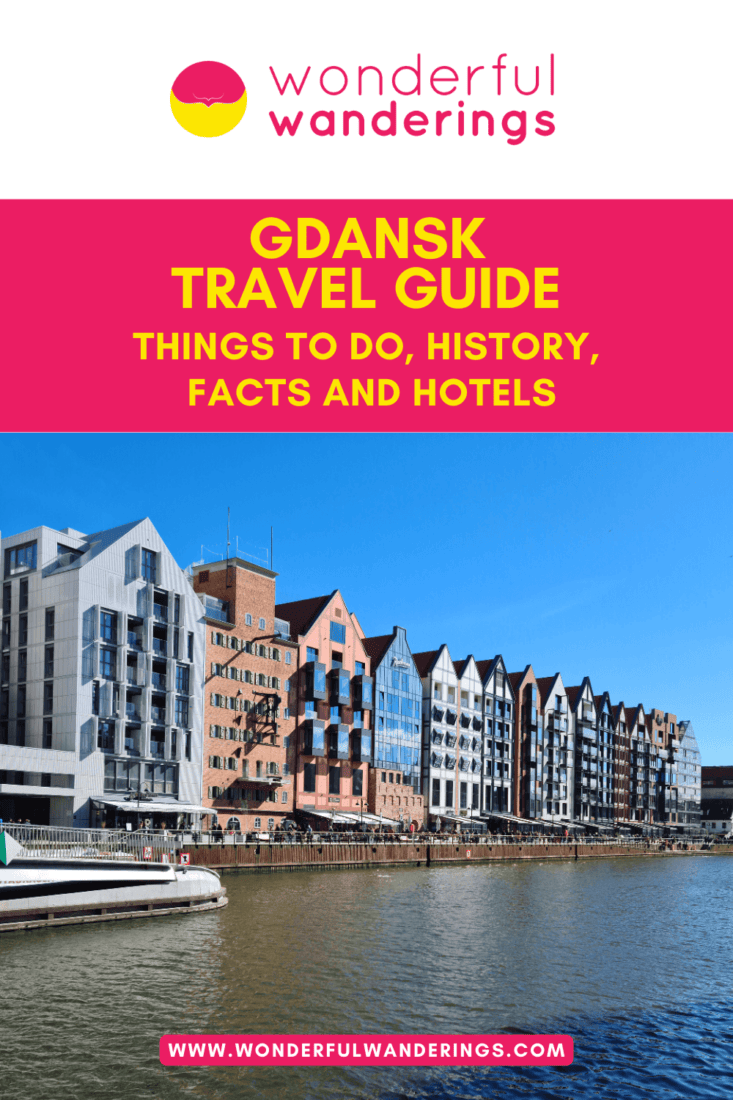
The Royal Route is the spine: High Gate, Golden Gate, Ulica Długa, Długi Targ, Green Gate, and then the Motława waterfront. Walk it once end to end, then come back and go into the side streets, which is where Mariacka, the granaries on Ołowianka and the Radunia Canal are. Entry to all of it is free; only the museums and the church tower charge.
2. European Solidarity Centre
The European Solidarity Centre at Plac Solidarności 1 is the museum of the Solidarity movement, built at the gate of the Gdańsk Shipyard where the 1980 strikes happened. It opened on 31 August 2014, the 34th anniversary of the Gdańsk Agreement that legalized the first independent trade union in the Soviet bloc, and its rusted steel walls are meant to read as the plates of a ship’s hull.

The permanent exhibition runs across seven halls on two floors and is the reason to come. The objects are the strongest part: the wooden boards on which the strikers wrote their 21 demands, now on the UNESCO Memory of the World register, the crane cab of Anna Walentynowicz whose sacking triggered the strike, and material from the 1970 shootings, martial law in 1981 and the transition of 1989. Audio guides are included in the ticket.
Adult admission to the permanent exhibition is 40 PLN (about €9.30, $10.80, £8), with a discount rate of 35 PLN and family tickets, and the building itself, the roof garden and the winter garden are free to enter. Allow two hours minimum, three if you read everything. The center closes one day a week in the winter season, so check before you go. The tram stop is Plac Solidarności, and the monument to the fallen shipyard workers of 1970 stands outside the gate.
3. Mariacka Street
Mariacka Street is the short cobbled lane between St. Mary’s Church and the Motława, and it is the most photographed street in Gdańsk. Its character comes from the przedproża, the raised stone terraces with steps and carved railings that project from each house into the street, which is how Gdańsk merchants entered their homes above the level of the flood.

The street dates from the 14th century and its houses were built by shoemakers, then merchants, from the late 15th century onward. Gargoyle waterspouts jut from the gutters over the pavement. All of it was destroyed in 1945 and rebuilt between the 1950s and the 1970s using surviving fragments and detailed records, which is why the stonework looks handmade rather than reproduced.
Today the ground floors are amber workshops and galleries, and Mariacka is the place to buy Baltic amber if you are buying it anywhere. Cafes put tables on the terraces in warm weather. The Archaeological Museum in the Naturalists’ House sits at the eastern end, and St. Mary’s fills the western one. Walking the street is free.
4. Highgate (Brama Wyżynna)
The High Gate is the Renaissance gate at the western end of the Royal Route, built between 1574 and 1588 as part of Gdańsk’s new bastion fortifications. Willem van den Blocke faced it in sandstone in 1588, and it was the point at which Polish kings entered the city, which is what makes the route behind it royal.

Three coats of arms sit above the passageways: the Polish eagle in the middle, the two crosses of Gdańsk on one side and the Royal Prussian arms on the other, held by angels, lions and unicorns. Latin inscriptions across the facade set out the virtues a well-run city needs. Until 1878 the gate stood inside a larger complex of walls, bastions and a moat, all since cleared, so it now stands free by the tram line.
Entry to look at it costs nothing, and it is a two-minute walk from Gdańsk Główny station and the Brama Wyżynna tram stop. Behind it come the medieval Torture House and Prison Tower, which held the Amber Museum until it moved to the Great Mill in 2021 and now house a museum of amber and torture instruments in the same complex, and then the Golden Gate.
5. Artus Court
Artus Court at Długi Targ 43-44 was the meeting house of Gdańsk’s merchant elite, and its Great Hall is the finest interior in the city. The building goes back to the mid-14th century, was rebuilt after fires and given its present Renaissance facade in 1616, and it takes its name from King Arthur, because the merchant brotherhoods who used it liked the idea of themselves as knights of the round table.

Inside, the hall rises the full height of the building on slender granite columns, hung with model ships, paintings and hunting scenes. The object everyone comes for is the tiled stove of 1546, over ten meters tall and made of around 500 tiles carrying portraits of the rulers of Europe, which is the largest surviving Renaissance stove in Europe. Cases hold Gdańsk silver, majolica and ceremonial goblets.
Artus Court is a branch of the Museum of Gdańsk, so a single museum ticket or a combined one covers it along with the Main Town Hall and Uphagen’s House. Concerts are held in the hall. The exterior and Neptune’s Fountain directly in front of it are free.
6. Neptune’s Fountain
Neptune’s Fountain stands in front of Artus Court on Długi Targ and is the symbol of Gdańsk. The bronze Neptune was designed by Abraham van den Blocke and cast by Peter Husen, and the fountain was unveiled in 1633, a statement by a city that made its money from the sea and wanted everyone arriving along the Royal Route to know it.

The story attached to it is that Goldwasser, the Gdańsk herbal liqueur with gold flakes suspended in it, was born here when Neptune struck the water with his trident and shattered the gold coins thrown in by passers-by. It is a good story and it is a legend: Goldwasser has been made in the city since 1598, thirty-five years before the fountain existed.
Neptune has survived more than most statues. The figure was taken down and hidden outside the city during the Second World War to keep it from being melted for armaments, and it was returned to a rebuilt fountain in 1954. Looking at it is free. It is at its best after dark, when the fountain and the townhouses behind it are lit.
7. Oliwa Cathedral
Oliwa Cathedral in the Oliwa district holds the most famous organ in Poland, and hearing it is the reason to make the trip out. The church began in the 12th century as the abbey of a Cistercian monastery, burned and was rebuilt repeatedly, and ended up as a long Gothic brick body with a Baroque and Rococo interior, which is an odd and rather good combination.

The organ was built between 1763 and 1788 by Jan Wulff and Friedrich Rudolf Dalitz, and it is enormous: thousands of pipes behind a carved and gilded case populated by angels who move, trumpet and strike bells while it plays, along with suns and stars that turn. Short demonstration recitals run through the day in the tourist season and full concerts are programd in summer, and the moving figures are what children remember.
The cathedral is about 8 km (5 miles) north of the Main Town in Oliwa, reachable by the Szybka Kolej Miejska (SKM) commuter train to Gdańsk Oliwa and a ten-minute walk, or by tram. Entry to the church is normally free, with charges for recitals and the diocesan museum. Oliwski Park is directly outside the door, which makes the two a single trip.
8. Gdańsk Crane
The Gdańsk Crane at ul. Szeroka 67-68 is the medieval port crane on the Motława and the single most recognizable building in the city. It was built between 1442 and 1444 by order of the mayor Heinrich Vorrath, incorporated into the city walls as a water gate, and when it was finished it was the largest port crane in Europe.

It worked on human power. Two pairs of timber treadwheels, each over six meters across, were walked by men inside them to wind the rope, lifting cargo of up to two tonnes to a height of 27 meters, or stepping masts into ships. The brick towers on either side carried gun ports and gave the harbour its lookout. The wooden section burned in 1945 with 60% of the medieval defences around it, was rebuilt between 1956 and 1959, and had its lifting gear reinstalled in 1966.
The Crane is a branch of the National Maritime Museum. It closed for a major restoration in 2020 and reopened on 30 April 2024 with a new exhibition on the port and the people who worked it, so any guide written before then is out of date. The interior involves steep stairs and narrow spaces. Looking at it from Długie Pobrzeże costs nothing and is what most visitors do.
9. National Maritime Museum in Gdańsk
The National Maritime Museum is spread across both banks of the Motława, and it is the most substantial museum in Gdańsk after the two war and Solidarity museums. The institution dates from 1960 and its main site occupies the restored medieval granaries on Ołowianka island, opposite the Crane, with a small ferry running the twenty meters between the two.

The collection covers Poland’s relationship with the sea across a thousand years: model ships, navigation instruments, naval artillery, ethnographic material from fishing communities, and archaeology raised from Baltic wrecks, including the cargo of the medieval Copper Ship found in the Gdańsk roads. The Maritime Culture Centre next door is the interactive half, built for families.
Two ships are part of the museum. The SS Sołdek, moored on the Ołowianka side, was the first ship built in Poland after the war and can be walked from engine room to bridge. The Dar Pomorza, the white three-masted training barque, is berthed in Gdynia rather than Gdańsk, which is a half-hour SKM train away. Combined tickets cover several sites; buy them at the first one you visit.
10. Uphagen’s House
Uphagen’s House at Ulica Długa 12 shows what the inside of a Gdańsk merchant’s house looked like, which no other building in the city does. Johann Uphagen, a wealthy merchant, historian and city councillor, bought it in 1775 and rebuilt the interior in the fashionable style of the day, and his will required that nothing in it be changed.

That instruction held for over a century, and the house opened as a museum in 1911. The contents were evacuated by German curators in 1944 and the house burned in 1945, but because the interiors had been photographed and measured in detail, the reconstruction that reopened in 1998 is unusually accurate. The rooms run in sequence: the entrance hall with its stucco, the Chinese-papered tea room, the drawing room with painted panels, the gilded dining room and the music room with its bird motifs.
The house is a branch of the Museum of Gdańsk and is included on the combined ticket. Allow an hour. Stairs and narrow doorways make it difficult for anyone with limited mobility. It sits on the Royal Route between the Golden Gate and the Main Town Hall, so it costs no detour.
11. Basilica of St. Mary in Gdańsk
St. Mary’s Church, the Bazylika Mariacka, is one of the three largest brick churches ever built and it is visible from every angle in the city. Construction ran from 1343 to 1502, the interior holds over 25,000 people and encloses roughly 155,000 cubic meters, and the effect inside is of an enormous whitewashed hall with 31 chapels around its edge rather than of a dark medieval church.

Three things inside are worth finding. The astronomical clock in the north transept, built by Hans Düringer between 1464 and 1470, shows the date, the phases of the moon and the zodiac and stands about 14 meters tall. The Ten Commandments Table of around 1480 is a rare survival of medieval painting. And a copy of Hans Memling’s Last Judgement hangs here; the original triptych, painted around 1467 to 1471 and seized by a Gdańsk privateer on its way to Florence, is in the National Museum in Gdańsk, ten minutes away, and is worth the separate trip.
The tower is the other reason to come. It is around 78 m high with a flat roof, and there is no lift: getting up means 405 steps of narrow spiral stair and then a wooden ramp, and the reward is the whole Main Town, the shipyard cranes and the Baltic laid out below. Entry to the church is free; the tower charges a small fee, recently around 10 PLN (about €2.30, $2.70, £2). The climb is not for anyone with a heart condition or claustrophobia.
12. Westerplatte
Westerplatte is the peninsula at the mouth of the harbour where the Second World War began. Under the Treaty of Versailles Poland was allowed a small military transit depot on the peninsula inside the Free City of Danzig, and at 04:45 on 1 September 1939 the German battleship Schleswig-Holstein opened fire on it. Around 180 Polish defenders held out for seven days against a far larger force before surrendering.

What survives is a memorial landscape rather than a museum in a building. The ruins of the barracks, the shattered guardhouses and the concrete positions are left as they were, with interpretation boards along a marked path. The Monument to the Coast Defenders, a 25-metre granite obelisk raised in 1966, stands on an artificial mound at the end of it, and a small cemetery holds the Polish dead. A branch of the Museum of the Second World War runs the site and its exhibitions.
The peninsula is about 7 km (4.3 miles) from the Main Town. Buses run there, and in season so do river boats from the Motława quays, which is the more enjoyable way to arrive and gives you the working port on the way. The outdoor memorial grounds are free and always open; museum exhibitions charge. Allow two to three hours including the journey, and take a coat, because it is exposed.
13. Long Market (Długi Targ)
Długi Targ, the Long Market, is the wide final stretch of the Royal Route between Ulica Długa and the Green Gate, and it is the postcard view of Gdańsk. It began as a market road, became the city’s main thoroughfare, and its Latin name Longa Platea appears in writing in 1331.

The townhouses along both sides are the point. Each is narrow and tall with a decorated gable, built in Dutch Renaissance, Flemish and Baroque styles, and each was reconstructed after 1945 from the records of what stood there. The Golden House at number 41, with 12 carved biblical and historical scenes across its facade, is the most elaborate. Neptune’s Fountain stands in the middle, Artus Court behind it, the Main Town Hall with its gilded spire at the western end and the Green Gate closing the eastern one on the river.
The street is pedestrian and free, and it is busy from morning until late. Amber shops, restaurants and street performers fill it in summer. Come at first light if you want the buildings without the crowds, and again at dusk when the facades are lit and the Motława is behind you.
14. Golden Gate (Zlota Brama)
The Golden Gate stands between the High Gate and Ulica Długa and is the ceremonial entrance to the Main Town. It was built between 1612 and 1614 by Abraham van den Blocke, working with the mason Jan Strakowski, replacing a 13th-century Gothic gate on the same site.

The design is Dutch Mannerist: a light sandstone front of paired Ionic and Corinthian columns over an arched passage, with an open balustrade above. Eight allegorical figures stand along the roofline, four on each face, representing Peace, Liberty, Wealth and Fame on the city side and Concord, Justice, Piety and Prudence on the outer one. A Latin inscription runs beneath them: small states grow through concord, great ones fall through discord.
Attached to the gate is the Court of the Brotherhood of St. George, the red-brick building of the medieval archers’ guild. Walking through the gate is free and takes ten seconds, so stop and look up first, because almost nobody does.
15. Amber Museum (Gdańsk)
The Amber Museum is Poland’s museum of Baltic amber and it moved in 2021 into the Great Mill, the enormous 14th-century Teutonic grain mill on the Radunia Canal in the Old Town. It had previously occupied the medieval Prison Tower complex by the High Gate, so guides written before 2021 will send you to the wrong building.

The collection covers amber as fossil resin, as material and as art. The prize exhibits are the inclusions, insects and plant fragments trapped in resin 40 million years ago, including a lizard. Around them are amber worked into altars, caskets, chess sets, jewelry and modern sculpture, along with the history of the Baltic amber trade that made Gdańsk rich and gave it the name Amber Capital of the World.
The Great Mill itself is worth the ticket: six floors under an enormous roof, once the largest industrial building in medieval Europe, grinding grain for the whole city. The museum is a branch of the Museum of Gdańsk and appears on the combined ticket. Allow an hour, more with children, who tend to stay at the inclusions.
16. Oliwski Park
Oliwski Park, next to Oliwa Cathedral, is the finest park in Gdańsk and it is free. It grew out of the Cistercian monastery garden, and its shape comes from the 18th century, when Abbot Jacek Rybiński laid out a formal French Baroque garden in front of the Abbot’s Palace with clipped hedges, canals and a long lime avenue known as the Whispering Grotto view.

A later abbot brought in an English landscape garden with winding paths, streams, bridges and follies, so the park now runs from strict geometry at one end to apparent wildness at the other. Sections added since include an alpine rock garden, a Japanese garden with cherry trees, a pond with swans and a palm house holding tropical plants in a 19th-century glasshouse.
The park is open daily and costs nothing; the palm house charges a small fee. The Abbot’s Palace holds a branch of the National Museum with modern art. Take the SKM to Gdańsk Oliwa and walk ten minutes, and combine it with the cathedral organ recital next door, which is what most visitors do.
17. Museum of Gdańsk, Main Town Hall
The Main Town Hall at the corner of Ulica Długa and Długi Targ is the headquarters of the Museum of Gdańsk and holds the most ornate rooms in the city. The Gothic and Renaissance building went up from the 14th century, served as the seat of city government for over 400 years, burned in 1945 and was rebuilt by the 1950s.

The Red Room, the council’s summer meeting chamber, is the one to see: painted, panelled and gilded in the 1590s, with a ceiling of 25 paintings by Isaac van den Blocke at its center, the Apotheosis of Gdańsk, showing the city’s trade under divine approval. The Great Hall of the Wet has a marble fireplace, and the upper floors hold the city’s silver, guild material and a reconstruction of everyday Gdańsk in 1939.
The tower is the other draw, at about 80 meters, with a carillon that plays over the rooftops and a viewing gallery reached on foot. Adult admission runs around 23 PLN (about €5.30, $6.20, £4.60) and combined tickets cover the other Museum of Gdańsk branches. There is a free day each week; check which one before you plan around it.
18. Museum of the Second World War
The Museum of the Second World War at Plac Bartoszewskiego 1 is the most ambitious museum in Poland and one of the largest exhibitions about the war anywhere. It was created on 1 September 2008, its building by the Gdynia studio Kwadrat opened as a leaning tower of red concrete and glass, and the permanent exhibition opened to the public on 23 March 2017.

Most of the museum is underground, on the logic that the war should be entered rather than looked at. The exhibition is arranged as the road to war, the horror of war and the long shadow of war, and its subject is civilians as much as armies: a Gdańsk street of the 1930s, a Warsaw cellar under bombardment, occupation, deportation, the camps, the Soviet advance, and the world afterwards. Tanks, aircraft and an Enigma machine are there too, but the material that stays with visitors is the personal kind.
Adult admission runs around 23 PLN (about €5.30, $6.20, £4.60) with concessions at 16 PLN, and one day a week is free. Allow three to four hours; four is not excessive. Take the family route if you are with children under about twelve, because the main exhibition does not soften anything. It received over 600,000 visitors in 2024, so book online in summer.
19. Brzeźno Pier
Brzeźno Pier is the wooden pier in the Brzeźno district, running out into the Bay of Gdańsk from a long sand beach, and it is where the city goes when it wants sea air rather than history. The first pier here was built in the late 19th century when Brzeźno was a spa resort; the present structure, around 136 meters long, dates from the post-war rebuilding.

The point of it is the walk to the end and back, with the Hel peninsula on the horizon on a clear day and the port cranes to the east. Benches line the deck. Beach volleyball courts, a playground, a promenade and a run of seasonal bars and restaurants sit at the shore end, and the sand runs for kilometers in both directions towards Jelitkowo and Sopot.
Entry is free and the pier is open at all hours. Tram lines from the center reach Brzeźno in about 20 minutes. The Baltic is cold, but Poles swim in it from June to August and the beach here is broad, clean and much less crowded than Sopot. Sunset faces the right way.
20. Bread Bridge, the Bridge of Love
The Bread Bridge, Most Chlebowy, is the small brick bridge over the Radunia Canal in the Main Town that has become Gdańsk’s love-lock bridge, known locally as Most Miłości. It takes its older name from the bread sellers who had stalls at this crossing in the medieval city, and a bridge has stood here since at least the 14th century.

Couples fix padlocks with their names to the railings and, by tradition, throw the key into the canal. Guides ask visitors not to throw keys from the bridge itself, because tour boats pass underneath. Locks are sold in the souvenir shops nearby for roughly 15 to 30 PLN (about €3.50 to €7, $4 to $8, £3 to £6), or bring your own.
The setting is the reason to walk past even without a padlock. The Great Mill and the old miller’s house stand beside the canal, the brick arches reflect in the water, and it is a two-minute walk from St. Catherine’s Church and the Amber Museum. There is no charge and the bridge is flat and accessible.
What are the best museums to visit in Gdańsk?
The 5 museums worth a ticket in Gdańsk are listed below, in the order most visitors should take them.
- European Solidarity Centre. The European Solidarity Centre tells the story of the shipyard strikes and the movement that followed, on the site where it happened, and it is the museum to see if you only see one.
- Museum of the Second World War. The Museum of the Second World War covers the whole war from the civilian side across a vast underground exhibition, and it needs half a day.
- National Museum in Gdańsk. The National Museum holds the city’s art collection across several buildings, and its single most important object is Hans Memling’s Last Judgement triptych of around 1467 to 1471, seized at sea by a Gdańsk privateer and never returned.
- National Maritime Museum. The National Maritime Museum spans the Motława, with the granaries on Ołowianka, the Maritime Culture Centre, the Gdańsk Crane and the SS Sołdek all part of the same institution.
- Amber Museum. The Amber Museum, in the Great Mill since 2021, covers Baltic amber from fossil inclusions to worked art, in a building that was once the largest industrial structure in medieval Europe.
What are the best things to do in Gdańsk with kids?
The 5 things to do in Gdańsk with children are listed below.
- Walk the Royal Route and hunt the lions. Stone and metal lions appear on facades, gates and doorways all along Ulica Długa and Długi Targ, and turning the walk into a hunt for them keeps small children moving. Gdańsk gingerbread from a stall is the reward.
- Go up St. Mary’s tower. The 405 steps are the attraction for anyone over about eight, and the view at the top settles the argument. There is no lift, so judge it honestly.
- Visit the Amber Museum. The insects and the lizard trapped in 40-million-year-old resin do the work here, and the Great Mill’s six floors of timber are worth the visit on their own.
- Take a boat to Westerplatte. River boats leave the Motława quays in season, pass the shipyard and the working port, and land at the peninsula, which turns a history lesson into a day out.
- Spend a day at Gdańsk Zoo. The zoo in Oliwa covers 123.7 hectares, which makes it the largest in Poland by area, with wooded enclosures, a children’s zoo and a road train to save small legs.
What are the best activities for a business traveler in Gdańsk?
The activities for a business traveler in Gdańsk are the European Solidarity Centre, dinner on the Motława waterfront, a walk through the Young City and a ride on the water tram. Gdańsk has become a significant technology and shared-services center, so business visitors now arrive here directly, and the 4 worth doing with a spare half-day are listed below.
- Take a client to the European Solidarity Centre. It is a 15-minute walk from the Main Town, takes two hours, and it explains the country you are doing business in better than any briefing.
- Eat on the Motława waterfront. The restaurants along Długie Pobrzeże and on Ołowianka face the Crane and the granaries across the water, which makes them the reliable choice for a working dinner.
- Walk the Young City. Młode Miasto, the district between the Main Town and the shipyard, is where the new offices, apartments and hotels are going up on former shipyard land, and it is the clearest picture of where the city is heading.
- Use the water tram. Gdańsk’s seasonal water trams cross the Motława and run out to Westerplatte and Sobieszewo, which is a better way to see the port than any road, and they leave from the Main Town quays.
Where is Gdańsk?
Gdańsk is on the Baltic coast of northern Poland, at the mouth of the Motława where it joins the Vistula delta, and it is the capital of the Pomeranian Voivodeship. With Sopot and Gdynia immediately to the north it forms the Tricity, a continuous urban strip along the bay with a combined population of over a million.
Gdańsk Lech Wałęsa Airport, expanded in 2022, connects the city directly to a long list of European destinations and is about 12 km (7.5 miles) west of the center. Compare flights to Poland before you fix the dates, because the low-cost routes into Gdańsk vary sharply by season. The SKM commuter railway runs every few minutes the length of the Tricity, which means Sopot’s pier and Gdynia’s ships are both a short train ride from the Main Town, and long-distance trains reach Warsaw in under three hours. Our guide to Polish destinations covers the rest of the country.
What is the history of Gdańsk?
Gdańsk was first mentioned in 997, when Bishop Adalbert of Prague baptized its inhabitants on his way to martyrdom, and it grew as a Baltic trading town under the Piast and Samboride dukes of Pomerelia. The Teutonic Knights seized it in 1308, massacring part of the population, and held it until 1454.
The city then spent three centuries as the Polish Crown’s principal seaport, with more autonomy than any other town in the kingdom. The Great Privilege granted by Casimir IV removed tariffs on trade with Poland and Lithuania, gave the city its own jurisdiction and its own coinage, united the Old Town and the Main Town, and licensed the demolition of the New Town, which was gone by 1457. Grain from the Vistula basin left through Gdańsk for the whole of western Europe, and the money paid for the buildings on Długi Targ.
Prussia annexed the city in 1793, and it became German Danzig through the 19th century. After 1918 it was made the Free City of Danzig under the League of Nations, neither German nor Polish, an arrangement that lasted until the Schleswig-Holstein opened fire on Westerplatte on 1 September 1939. The city was almost entirely destroyed in 1945, its German population expelled and replaced by Poles from the east, and rebuilt to a 17th-century image. In August 1980 the shipyard strikes produced Solidarity, and nine years later Poland’s communist government negotiated itself out of power.
What language is spoken in Gdańsk?
Polish is the language of Gdańsk. Kashubian, a distinct West Slavic language rather than a dialect, is spoken in the countryside and villages around the city and has around 100,000 speakers in Pomerania, and it appears on bilingual signs in some places outside Gdańsk.
The city’s older linguistic mix, German above all, ended with the population transfers of 1945. Today English is widely spoken in the center, in restaurants, hotels and museums, and by almost anyone under forty. German is common because of the tourist trade and the historical connection. “Dzień dobry” for hello, “dziękuję” for thank you and “poproszę rachunek” for the bill will cover most exchanges and will be appreciated.
What time zone is Gdańsk in?
Gdańsk is on Central European Time, UTC+1, and moves to Central European Summer Time at UTC+2 between the last Sunday of March and the last Sunday of October. That puts the city six hours ahead of United States Eastern Time for most of the year and one hour ahead of the United Kingdom.
How many people live in Gdańsk?
Gdańsk had 486,022 inhabitants at the 2021 census, which makes it Poland’s sixth-largest city, and municipal figures put it a little above 487,000 by 2023. The population fell to under 120,000 in 1946 after the destruction of the city and the expulsion of its German inhabitants, and it has been climbing since.
The Tricity, taking in Gdańsk, Sopot and Gdynia, holds roughly 1.5 million people across its wider metropolitan area, and the three cities function as one place for work, transport and nightlife. Gdańsk is also the largest seaport in Poland and one of the busiest in the Baltic, which is why the container terminal is visible from the beach at Brzeźno.
What are the most interesting facts about Gdańsk?
The practical facts to know before traveling to Gdańsk are listed below.
- Currency. The currency is the Polish złoty, written PLN or zł, divided into 100 groszy. Poland is in the European Union but not the eurozone, so euros are not generally accepted. Cards work almost everywhere; use a bank ATM rather than an airport exchange desk for cash.
- Time zone. Gdańsk is on UTC+1 in winter and UTC+2 in summer, changing on the last Sundays of March and October.
- Language. Polish is the official language, Kashubian is spoken in the surrounding region, and English is widely understood in the center. There are more facts about Poland worth reading before a first trip.
- Power plugs. Poland uses Type E sockets, two round pins with an earth pin in the socket, at 230 V and 50 Hz. Type C plugs fit. Travelers from North America need an adapter and should check their devices accept 230 V.
- Amber. Baltic amber is fossilized conifer resin roughly 40 million years old, it washes up on the beaches after winter storms, and Gdańsk has traded and worked it since antiquity. Real amber floats in salt water and smells of pine when warmed.
How many days are needed to see Gdańsk?
Three days is the right length for Gdańsk. Day one covers the Royal Route end to end, St. Mary’s and its tower, Mariacka Street, the Crane and the Motława waterfront, with dinner on Długie Pobrzeże. Day two takes the European Solidarity Centre in the morning and the Museum of the Second World War in the afternoon, which is heavy going but the two belong together.
Day three goes out of the center: Oliwa for the cathedral organ and the park, or Westerplatte by boat, or the beach at Brzeźno. A fourth day lets you add Sopot, 15 minutes north by SKM, for the longest wooden pier in Europe and the spa promenade, or Gdynia for the modernist port city and the museum ships. Two days is enough only if you skip one of the big museums, and one day is not enough for anything except the Royal Route.
Is Gdańsk worth visiting?
Yes, Gdańsk is worth visiting, and it is the most interesting city in Poland after Kraków. The reconstructed Main Town is genuinely beautiful, the two great museums are among the best in Europe on their subjects, and the combination of Hanseatic merchant wealth, the start of the Second World War and the end of communism in one small area is not available anywhere else.
It also does the ordinary things well. Prices are low by western European standards, the food has improved sharply, the Baltic beaches are a tram ride from the center, and the SKM makes Sopot and Gdynia part of the same trip. The city is busy in July and August and around St. Dominic’s Fair, and quiet and cold from November to March, which is when the museums are at their best.
Is Gdańsk expensive to visit?
No, Gdańsk is inexpensive by western European standards, though prices have risen and it is no longer the bargain it was a decade ago. Museum tickets sit between about 10 and 40 PLN (roughly €2.30 to €9.30, $2.70 to $10.80, £2 to £8), which is the cheapest part of the trip: the European Solidarity Centre at 40 PLN is the most expensive single ticket on this page, and St. Mary’s tower at around 10 PLN is the least.
Food is the other saving. A main course in an ordinary restaurant runs well below the western European equivalent, a milk bar lunch costs a fraction of that, and Polish beer is cheap. Public transport is inexpensive and the Main Town is walkable end to end, so most visitors spend nothing on transport except the airport and the SKM to Sopot. Accommodation is where the money goes, and it doubles in July and August and during St. Dominic’s Fair.
Prices move, so treat those figures as a planning range and check current rates before you budget.
Is Gdańsk safe to visit?
Yes, Gdańsk is a safe city for visitors, with low violent crime and a busy, well-lit center. Pickpocketing in crowded places is the realistic risk, particularly during St. Dominic’s Fair and on packed SKM trains in summer.
Two practical points. The stretch of Długi Targ and the side streets around it get loud with stag groups on summer weekends, which is a nuisance rather than a danger, and the quieter parts of the Old Town north of the Great Mill are worth avoiding late at night. Baltic beaches have currents and the water is cold; swim where there are lifeguards. Tap water is drinkable, pharmacies are widespread and the emergency number is 112. Gdańsk is a good Polish destination for a first trip to the country.
Is Gdańsk easy to visit with kids?
Yes, Gdańsk works well with children. The Main Town is flat, compact and pedestrian, the museums are used to families, and the beach is a tram ride away when everyone has had enough of gables.
The specific wins are the boat to Westerplatte, the zoo in Oliwa, the moving figures on the Oliwa cathedral organ, the amber inclusions in the Great Mill and the ships of the maritime museum. Restaurants are relaxed about children, portions are large, and pierogi solve most fussy eaters. Cobbles are hard on a pushchair and St. Mary’s tower is not pushchair territory at all, so plan around both.
What is Gdańsk famous for?
Gdańsk is famous first for Solidarity. The strike that began at the Lenin Shipyard in August 1980, led by the electrician Lech Wałęsa, produced the first independent trade union in the Soviet bloc and started the process that ended communist rule in Poland in 1989.
Second, it is famous as the place where the Second World War began, at Westerplatte on 1 September 1939. Third, for amber: Gdańsk has traded and worked Baltic amber for centuries and calls itself the world amber capital, with the trade concentrated on Mariacka Street. Fourth, for its Hanseatic past as the Polish Crown’s principal port and largest city, and for the reconstructed Main Town that past paid for. And fifth, for shipbuilding, which built the cranes still standing over the northern skyline.
Who are the most important people born in Gdańsk?
Gdańsk has produced a striking number of people whose names outlived the city they were born in, when it was Danzig. The 5 to know are listed below.
- Johannes Hevelius (1611-1687). Hevelius was a brewer who became one of the finest observational astronomers in Europe, building rooftop observatories in Danzig, mapping the surface of the moon in his Selenographia of 1647 and cataloguing over 1,500 stars. He died on his 76th birthday.
- Daniel Gabriel Fahrenheit (1686-1736). Fahrenheit was born in Danzig and worked mainly in the Dutch Republic. He built the first reliable mercury thermometer in 1714 and devised the temperature scale that still carries his name, setting the freezing point of water at 32 degrees.
- Daniel Chodowiecki (1726-1801). Chodowiecki was a painter and engraver of Polish and Huguenot descent, born in Danzig and working mostly in Berlin, who produced thousands of etchings recording middle-class life in the late 18th century.
- Arthur Schopenhauer (1788-1860). Schopenhauer was born in Danzig into a merchant family and left as a child when Prussia annexed the city. His The World as Will and Representation of 1818 shaped Nietzsche, Wagner, Freud and Wittgenstein.
- Günter Grass (1927-2015). Grass was born in the Free City of Danzig and set his best-known novel, The Tin Drum of 1959, in the city under the Nazis. He won the Nobel Prize in Literature in 1999 and remained an unsparing critic of German amnesia about the war, including his own.
What to eat in Gdańsk?
Pierogi, Kashubian herring, Baltic fish, bigos, Goldwasser and Gdańsk gingerbread are the things to eat in Gdańsk. Gdańsk cooking is Polish with a Baltic and Kashubian accent, which means more fish and fewer mountains than the rest of the country, and the 6 things to eat here are listed below.
- Pierogi. Pierogi are boiled and pan-fried dumplings, filled with potato and curd cheese, cabbage and mushroom, meat or fruit. Gdańsk versions add Baltic fish, and there is more on them in our guide to the dishes to taste in Poland.
- Śledzie po kaszubsku. Śledzie po kaszubsku is Kashubian herring: pickled fillets served cold with onion, oil and often a sweet-sour dressing, eaten as a starter with rye bread and a glass of something cold.
- Baltic fish. Cod, herring, flounder and smoked mackerel are the coast’s staples, and the fish stalls and smokehouses along the Tricity coast sell them straight from the smoker.
- Bigos. Bigos is the hunter’s stew of sauerkraut, fresh cabbage, several meats, sausage and dried mushrooms, cooked down over days. Pomeranian versions lean on forest mushrooms from the Kashubian woods.
- Goldwasser. Goldwasser is the Gdańsk herbal liqueur made in the city since 1598, flavored with around twenty herbs and spices and carrying flakes of 22-carat gold leaf in suspension. Drink it cold in a small glass after dinner.
- Gdańsk gingerbread. Piernik gdański is the spiced honey gingerbread baked and decorated in the city for centuries, sold in ornate moulded forms from stalls along Długi Targ and at St. Dominic’s Fair.
What are the best places to eat in Gdańsk?
The places to eat in Gdańsk are listed below.
- Słony Spichlerz. Słony Spichlerz on Chmielna is a food hall in a converted granary on Granary Island, with independent kitchens covering Polish, Mediterranean, Asian and vegetarian food around shared tables. It solves the problem of a group who cannot agree.
- Brovarnia Gdańsk. Brovarnia is the brewpub in the Hotel Gdańsk on the Motława, brewing its own lager, wheat beer and dark beer on site and serving Polish food to go with them in a timber-and-brick room.
- Pierogarnia Stary Młyn. Pierogarnia Stary Młyn on Świętego Ducha makes pierogi to order in the window, sweet and savory, in portions large enough to make a starter unnecessary. There is usually a queue and it moves.
- The milk bars. Bar mleczny, the surviving subsidised canteens, serve soup, pierogi, cutlets and compote for a few złoty each, and they are the cheapest good lunch in the city as well as a piece of living history.
- The Długie Pobrzeże waterfront. The restaurants along the Motława between the Green Gate and the Crane trade on the view and charge for it, but a table facing the Crane at sunset is worth one meal of the trip.
Check current opening hours before you go, because the Gdańsk restaurant scene turns over quickly and several places recommended in older guides have closed or changed hands.
What are the best areas to stay in Gdańsk?
The 4 areas to stay in Gdańsk are listed below.
- Main Town. The Main Town and Granary Island put the Royal Route, the museums and the waterfront outside the door. It is the most expensive area and the only one where you never need transport, and it is also the noisiest on summer weekends.
- Wrzeszcz. Wrzeszcz is the large residential and commercial district between the center and Oliwa, with its own restaurants, the Galeria Bałtycka mall and two SKM stations, and rooms noticeably cheaper than the Main Town.
- Oliwa. Oliwa is the green, quiet district in the north, with the cathedral, the park and the zoo, and an SKM ride of about fifteen minutes into the center. It suits families and anyone who wants to sleep.
- Jelitkowo and Brzeźno. The coastal districts put you on the beach with the tram into town, which is the right trade in summer and the wrong one in February.
What are the best accommodations to stay in Gdańsk?
Gdańsk has a wide range of accommodation, from design hotels in converted granaries on the island opposite the Crane to apartments in the Main Town and resort hotels on the beach. PURO Gdańsk Stare Miasto is the central design hotel, a short walk from St. Mary’s, with a rooftop bar and river views. Hotel Gdańsk on the Motława houses the Brovarnia brewpub. Novotel Gdańsk Marina sits directly on the sand at Jelitkowo with the seaside promenade outside. Sofitel Grand Sopot, in Sopot rather than Gdańsk, is the grand seaside option, on its own beach twenty minutes up the SKM line.
Book well ahead for July and August and for the three weeks of St. Dominic’s Fair, when the whole Tricity fills and prices double. Compare places to stay across Poland if you are combining Gdańsk with Kraków or the capital, because a single search across the country is usually simpler than three separate ones.
How to get from Gdańsk to Warsaw?
The train is the best way to get from Gdańsk to Warsaw. Direct PKP Intercity services run from Gdańsk Główny to Warszawa Centralna in the middle of the city several times a day, taking under three hours on the fastest trains and around three and a half on the slower ones, and a ticket costs a fraction of a comparable western European fare. Book on the PKP Intercity site or app for the cheaper advance fares.
Flying is faster in the air and slower door to door. LOT operates direct flights between Gdańsk Lech Wałęsa Airport and Warsaw Chopin Airport in about an hour, which makes sense mainly if you are connecting to a long-haul departure at Chopin. Coaches run the route in four to five hours and cost the least, and they set down beside the main station in central Warsaw. Driving covers roughly 340 km (211 miles) on the A1 and S7 in about four hours, with tolls on the A1.
If your destination is Warsaw Chopin Airport specifically rather than the city, take the train to Warszawa Centralna and then the airport train or bus, which adds about half an hour, or fly. Compare car hire in Poland with DiscoverCars if you plan to drive on to the Masurian lakes or the Kashubian countryside, where public transport is thin.
What was Solidarity and why did it start in Gdańsk?
Solidarity, Solidarność, was the first independent trade union in the Soviet bloc, and it started in Gdańsk because the shipyard was the one place with enough workers in one yard to shut down and enough shared grievance to try.
The immediate trigger was the sacking of Anna Walentynowicz, a crane operator with months left before retirement, in August 1980. The yard stopped work on 14 August, and what began as a demand to reinstate her and raise wages widened within days into 21 demands written on two plywood boards and hung on the gate: the right to form free trade unions, the right to strike, freedom of expression, the release of political prisoners. Those boards are now on the UNESCO Memory of the World register and are the central object in the European Solidarity Centre.
The Gdańsk Agreement was signed on 31 August 1980 and the government conceded the union. Membership reached around ten million people, roughly a quarter of the Polish population, before martial law was declared in December 1981 and Solidarity was driven underground. It came back at the round-table talks of 1989, won the partly free elections of that June, and Poland had a non-communist prime minister by September, months before the Berlin Wall fell.
Two places on this page tell that story on the ground: the European Solidarity Centre inside the yard gate, and the Monument to the Fallen Shipyard Workers of 1970 outside it, three steel crosses raised in 1980 to commemorate the men shot during an earlier strike, and the first monument to victims of a communist government put up in any communist country.
What are the best day trips from Gdańsk?
Gdańsk is the best-placed base in northern Poland, and the 5 trips worth taking from it are listed below.
- Sopot. Sopot is the spa town fifteen minutes north on the SKM, built around the longest wooden pier in Europe at 511 meters, with a wide beach, a promenade of Art Nouveau villas and the crooked house on Monte Cassino street. It works as an afternoon rather than a day.
- Gdynia. Gdynia is the third city of the Tricity and the opposite of Gdańsk: a working port built almost entirely in the 1920s and 1930s, with one of Europe’s best collections of modernist architecture along its main streets. Two museum ships are moored there, the training barque Dar Pomorza and the destroyer ORP Błyskawica, and the Gdynia Aquarium sits at the end of the pier. Trains run every few minutes and there is more on the city in our guide to Gdynia.
- Malbork Castle. Malbork, about an hour by train southeast of Gdańsk, is the largest castle in the world by land area and the headquarters of the Teutonic Knights from 1309. Building began in 1274, it covers three connected castles inside one ring of walls above the Nogat river, and it has been a UNESCO World Heritage site since 1997. Allow a full day, take the audio guide, and go early because it is the busiest single attraction in northern Poland.
- The Hel Peninsula. Hel is the thin sandbar curling out into the Baltic north of the bay, reachable by seasonal ferry from Gdańsk or by train, with beaches on both sides, a seal sanctuary at the tip and a fishing village that turns into a windsurfing center in summer.
- Kashubia. The Kashubian lake district inland from Gdańsk holds the Kashubian language, hill country, lakes and the village of Wdzydze with its open-air museum of Kashubian architecture. It needs a car, and driving is the only practical way to see it in a day.
How do you buy amber in Gdańsk?
Buying amber in Gdańsk means buying it on Mariacka Street, in the workshops and galleries under the raised terraces, where the person selling it is often the person who worked it. Gdańsk calls itself the world amber capital because the Baltic holds the largest deposit of amber on earth and the city has traded and worked it since antiquity, and the local craft tradition is the reason to buy here rather than at home.
Baltic amber is fossilized conifer resin, roughly 40 million years old, and it runs from pale cream through honey and cognac to almost black, with the cloudy butterscotch shades often more valuable than the clear ones. Pieces holding inclusions, insects or plant fragments trapped when the resin was liquid, are the collector’s items and are priced accordingly. Amber washes up on the Tricity beaches after winter storms, and people do still walk the tideline after a gale looking for it.
Three tests separate amber from plastic and copal. Real amber floats in heavily salted water while most imitations sink. It carries a faint pine smell when rubbed warm. And it feels warm rather than cool to the touch, and light rather than heavy for its size. Reputable shops will give a certificate on anything expensive, and the International Amber Association’s certification is the one to look for.
Prices depend on the size and clarity of the stone and on the silverwork around it, so a simple pendant costs a fraction of what a large clear cabochon or an inclusion does. Buy in the shops rather than from the stalls at St. Dominic’s Fair if you care about provenance, and be skeptical of anything unusually cheap in a large, bright piece.
How do you get around Gdańsk?
Walk the Main Town and take a tram or the SKM train for everything beyond it. The Main Town is about a kilometer end to end, so the Royal Route, St. Mary’s, the Crane, Mariacka, the museums and the waterfront are all on foot from each other, and no visitor needs transport for a first day.
Beyond that, three networks cover the city. Trams run from the Main Town north through Wrzeszcz to Oliwa and west to Brzeźno and Jelitkowo, and they are the way to reach the beaches. The SKM commuter railway runs the length of the Tricity every few minutes from Gdańsk Główny and Gdańsk Śródmieście through Wrzeszcz and Oliwa to Sopot and Gdynia, and it is the reason a day trip to Sopot takes fifteen minutes. Buses fill the gaps, including the run out to Westerplatte. Tickets are bought from machines at stops, from the driver, or through a phone app, and the same ticket covers trams and buses; SKM tickets are separate and bought at the station.
Two other options are worth knowing. Seasonal water trams cross the Motława and run down to Westerplatte and out to Sobieszewo island, which turns transport into sightseeing. And Gdańsk is flat, with a good network of cycle paths and public bike hire, so a bike works well for the coast road between Brzeźno, Jelitkowo and Sopot.
Taxis and ride-hailing apps are inexpensive and widely used. From Gdańsk Lech Wałęsa Airport, the Pomeranian Metropolitan Railway and the bus both reach the center in about half an hour, and a taxi takes twenty minutes.
What is the best time to visit Gdańsk?
Late spring and early autumn are the best times to visit Gdańsk. May, June and September give long daylight, temperatures in the high teens and low twenties Celsius, terraces open along the Motława and the museums manageable rather than queued. September in particular keeps the sea warm enough to swim while the summer crowds have gone.
July and August are the peak, and the difference is dramatic. St. Dominic’s Fair fills the Main Town for three weeks from late July, the beaches at Brzeźno, Jelitkowo and Sopot are busy, accommodation prices roughly double, and Długi Targ is shoulder to shoulder in the evening. If a Baltic summer with a fair attached is what you want, this is the moment; if it is not, avoid it deliberately.
Winter is cold, dark and cheap. Temperatures hover around freezing from December to February, daylight is short, and the Baltic wind coming off the bay is the thing visitors underestimate. But the two great museums are indoor and at their emptiest, the Christmas market fills the Main Town through December with a Ferris wheel and mulled wine, and hotel rates fall to a third of August prices.
Whichever month you pick, bring a windproof layer. Gdańsk sits on an exposed coast and the wind matters more than the temperature on the forecast.
Where to go shopping in Gdańsk?
Shopping in Gdańsk splits between amber in the old town and malls outside it. The 4 places to shop are listed below.
- Mariacka Street and Długi Targ. Mariacka is the amber street, with workshops and galleries in the ground floors and the makers often working at the back. Buy here rather than from a stall, ask for a certificate on anything expensive, and remember that real amber floats in salt water.
- Forum Gdańsk. Forum Gdańsk is the newest and largest shopping center, built over the railway lines beside Gdańsk Śródmieście station and a five-minute walk from the High Gate, with international brands, restaurants and a cinema.
- Galeria Bałtycka. Galeria Bałtycka in Wrzeszcz is the other big mall, next to the SKM station, and it is where the city rather than the tourists shops.
- The markets and the Great Armoury. Hala Targowa, the covered market hall in the Main Town, sells food, flowers and household goods above a medieval crypt, and the Great Armoury nearby holds small independent shops behind its Dutch Mannerist facade.
What festivals or events are taking place in Gdańsk?
One enormous summer fair sets the shape of Gdańsk’s calendar. The 4 events to plan around are listed below.
- St. Dominic’s Fair. The Jarmark św. Dominika has been held since 1260 and now runs for three weeks from late July into August, filling the Main Town with hundreds of stalls of crafts, antiques, amber and food, alongside concerts and street performance. It is the largest open-air event of its kind in Poland and it changes the whole feel of the city, so decide whether you want to be there for it or not.
- Gdańsk Shakespeare Festival. The Shakespeare Festival runs in summer at the Gdańsk Shakespeare Theatre, a modern building with an opening roof on the site of a 17th-century playhouse where English traveling companies once performed, with productions from Poland and abroad.
- Baltic Sail Gdańsk. Baltic Sail brings tall ships and historic sailing vessels into the Motława in summer for several days of parades, races and quayside events, and boarding the ships is part of it.
- Globaltica World Music Festival. Globaltica programs world music and cultural events in the Tricity each summer. It is one of the much-awaited festivals in Poland and Gdańsk, and it is a good reason to be in the city in July.
WonderfulWanderings Pro Tips
The 5 tips below come from checking this page’s museums, prices and addresses against the institutions that run them, and each one settles something the Gdańsk guides get wrong.
- Book the Amber Museum at the Great Mill, not at the Prison Tower. The collection moved into the 14th-century mill on the Radunia Canal in 2021, and every guide written before that sends you to the old Foregate complex by the High Gate, which now holds a smaller amber and torture display.
- Do not plan on a lift up St. Mary’s tower. There is none. Getting to the top is 405 steps of narrow spiral stair followed by a wooden ramp, and the tower charges a small fee while the church itself is free.
- See the real Last Judgement at the National Museum. The Hans Memling triptych that a Gdańsk privateer seized on its way to Florence hangs there, ten minutes from St. Mary’s; what you see in the church is a copy, and it is attributed to the wrong painter in a lot of write-ups.
- Check the Crane’s status rather than an old guide’s. The medieval port crane was shut for restoration from 2020 and reopened on 30 April 2024 with a new exhibition, so anything published in between describes a building you could only look at from the quay.
- The museum ships are split between two cities. The SS Sołdek is moored on Ołowianka in Gdańsk, and the tall ship Dar Pomorza and the destroyer ORP Błyskawica are in Gdynia, half an hour away on the SKM train.
About the author. This guide is written and maintained by the Wonderful Wanderings editorial team. Wonderful Wanderings was founded in 2012 by Sofie Couwenbergh and covers Poland for independent travelers, from the Hanseatic gables and shipyard history of Gdańsk to the Baltic beaches and Kashubian countryside around it. The team checks the museums, restaurants, hotels and tours named on this page against their own sources and updates it when opening hours, prices and access change.