 EN
EN
 Nederlands
 Français
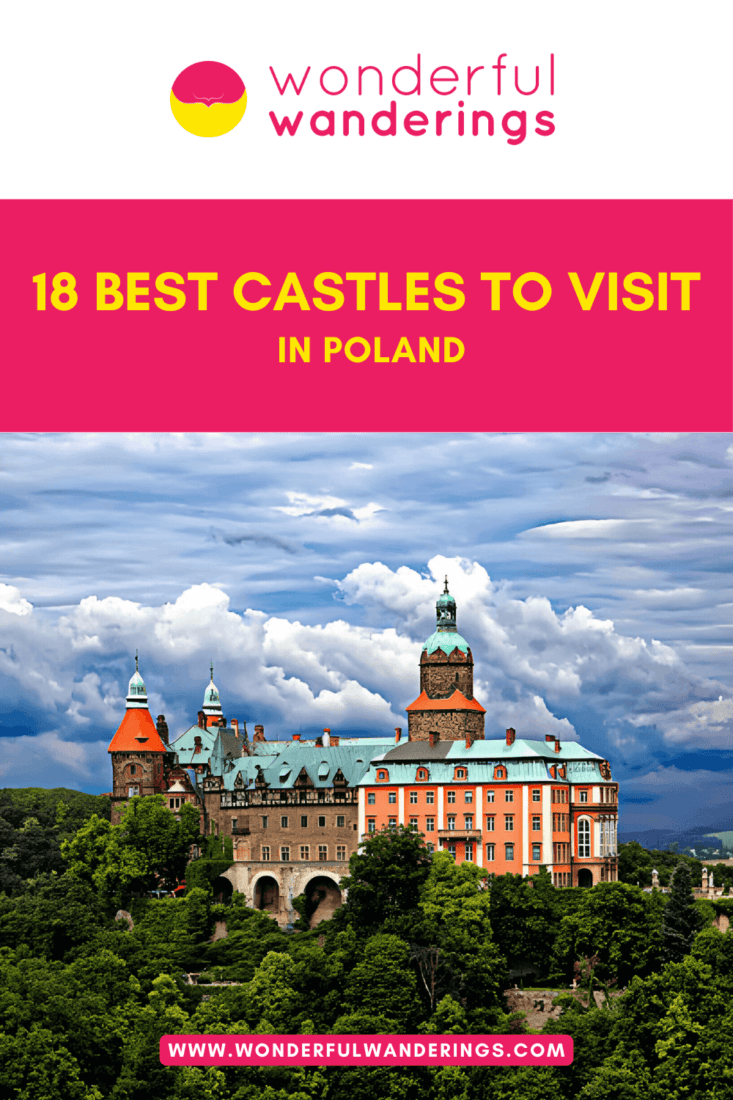
Poland has more than 500 castles and over 2,000 palaces, and the 15 below are the ones where the ticket buys you something you cannot see anywhere else. Malbork is the largest castle on earth by land area. Wawel holds the Polish crown jewels. Moszna looks invented. Every entry here gives the 2026 price in złoty, the day the doors are shut, whether you are allowed in on your own, and how to get there without a car.
Poland uses the złoty and has not adopted the euro, so every price on this page is a złoty price with conversions after it. Two rules catch most visitors out. Several of these castles let you in only with a guide or an audio guide, and several sell tickets for a fixed entry time that you cannot change. Malbork does both, and it caps entry at 500 people an hour.
The four castles to book before you arrive are listed below.
- Malbork. Entry is capped at 500 people an hour and the full route needs a guide or an audio guide.
- Wawel. Each exhibition is a separate ticket, and the free Monday passes are handed out at the box office only.
- Niedzica. Tickets carry a fixed entry time and cannot be reserved.
- Książ. The underground route runs to the minute printed on the ticket.
1. Malbork Castle, the largest castle in the world
Malbork Castle is the biggest castle on earth measured by land area, covering 143,591 m² (1,545,601 sq ft) on the bank of the Nogat in northern Poland. The Teutonic Knights started it in the 13th century and made it the order’s headquarters in 1309. Bohemian mercenaries sold it to King Casimir IV of Poland in 1457, and Polish kings held it until 1772. It is three castles inside one ring of walls, all of it brick, and UNESCO inscribed it in 1997.

Tickets and rules. The Historical Route covers the whole castle and you have to take either a guide or an audio guide, which is included: 80 zł (about €19, $22, £16) for adults and 60 zł (about €14, $16, £12) reduced, with under-7s free on a zero-price ticket collected at the desk. The shorter Castle Grounds route, which is courtyards, terraces, the Grand Masters’ garden, the moats and St Anne’s Chapel but no interiors, costs 35 zł (about €8, $9, £7). Audio guides run in English, German, French, Spanish, Italian, Czech, Lithuanian, Ukrainian, Hungarian, Russian and Polish sign language.
Hours and closed days. In the 2026 spring and summer season, which runs 25 April to 30 September, interiors and exhibitions close at 19:00 Tuesday to Sunday and the last Historical Route entry is 16:30. The Castle Grounds route only opens late in the day, 16:45 to 20:00, with a last entry at 18:30. Monday is different: the grounds are open 9:00 to 20:00 and Monday is the museum’s free day, grounds only, with the free ticket handed out at the box office and not available online. Winter hours are shorter, so check the museum’s own page if you are travelling between October and April. The Monastery Route is closed until further notice.
Getting there without a car. Trains from Gdańsk reach Malbork in 28 to 55 minutes depending on the service, and the castle is a short walk from the station, which makes it the easiest day trip in this list. Book rail tickets for Polish routes through Omio, which lists PKP Intercity and the regional operators in English.
2. Wawel Royal Castle, Kraków
Wawel is the castle to see if you only see one, because it holds the Polish crown jewels, the coronation sword Szczerbiec and the Sigismund Chapel, and it sits ten minutes’ walk from Kraków’s main square. Polish kings were crowned and buried on this hill for five centuries. The courtyard is free to walk into. Everything else is ticketed exhibition by exhibition, which is the part visitors get wrong.

Tickets. Castle floors 1 and 2 together cost 95 zł (about €22, $26, £19) with an audio guide included, or 57 zł (about €13, $15, £11) for either floor alone. The Crown Treasury and Armoury are 47 zł (about €11, $13, £9) each, the Castle Underground the same, the Royal Gardens 11 zł and the Dragon’s Den 15 zł. The combined Wawel for Enthusiasts ticket at 199 zł (about €46, $54, £40) covers every exhibition open on the day plus the branches at Pieskowa Skała and Stryszów. A guided route called Wawel the Most Precious runs Tuesday to Sunday at 155 zł.
Free Mondays, and what they do not include. Monday is free but restricted: the castle opens 10:00 to 16:00, only selected exhibitions are included, passes are handed out at the box office on the day of the visit, one person can take a maximum of five, and they run out. From October to December the free Monday list is the second floor of the castle, meaning the State Rooms and the Turkish tents, plus the Crown Treasury. Tuesday to Sunday hours are 9:00 to 17:00, with last entries between 20 and 120 minutes before closing depending on the route.
The cathedral is a separate ticket. Wawel Cathedral, the Royal Tombs, the Sigismund Bell and the Cathedral Museum are run by the parish, not by the castle museum, and the museum does not sell tickets to them. Buy those at the cathedral’s own ticket office across the courtyard.
Getting there without a car. Walk up from the Main Market Square, about 1 km (0.6 mi), or take a tram to the Wawel stop. There is more on the city in our guide to Kraków.
3. The Royal Castle in Warsaw
The Royal Castle in Warsaw is a reconstruction, and that is the point of it: the Germans blew up the original in 1944 and the rebuilt castle reopened in stages from 1974 using salvaged fragments. It stands on Castle Square at the entrance to the Old Town and holds the Royal Apartments of Stanisław August, the Senators’ Hall where the Constitution of 3 May 1791 was signed, and paintings by Rembrandt, Matejko and Bellotto.

New routes and 2026 prices. The castle reorganised its visiting routes on 2 May 2026 and opened rooms that had been closed for years, including the Yellow Room where Stanisław August held his Thursday dinners for artists and scholars. The Royal Route costs 60 zł (about €14, $16, £12) with an audio guide, the Museum Route the same, and the Castle Route combining both is 95 zł (about €22, $26, £19). The Pod Blachą Palace route is 30 zł (about €7, $8, £6) and the Golden Ticket, which covers everything in one visit, is 110 zł (about €25, $30, £22). A school ticket is 1 zł.
Free Wednesdays, and the catch. Wednesday admission stays free for the Pod Blachą Palace and a shortened castle route that includes the Lanckoroński Gallery with its two Rembrandts. Free passes are handed out at the box office immediately before the visit and the pool is limited. The Wednesday route leaves out the newly opened Yellow and Green Rooms and the Parliamentary Chambers, so it is not the same visit as a paid ticket. An audio guide on a free Wednesday costs 10 zł. The Castle Gardens are free every day.
Getting there without a car. The castle is in the Old Town, a ten-minute walk from the Ratusz Arsenał or Nowy Świat-Uniwersytet metro stations, and trams stop on the edge of the square. Our guide to Warsaw covers the rest of the centre.
4. Książ Castle, Wałbrzych
Książ is the third-largest castle in Poland and the one with the strangest recent history, because the Germans drove tunnels under it during the Second World War as part of the Riese complex and never finished whatever they were building. Duke Bolko I started the castle in the 13th century and the Hochberg family held it from the 16th century until 1945. It stands on a promontory above a wooded gorge 3 km (1.9 mi) from the centre of Wałbrzych.

Tickets and what each one covers. A ticket for the castle with an audio guide, the terraces and the Palm House costs 72 zł (about €17, $19, £14), and the version with a 90-minute guided tour is 82 zł (about €19, $22, £16). Adding the guided underground route, which takes about 45 minutes, brings it to 107 zł (about €25, $29, £21). The underground ticket is valid only for the date and time printed on it.
Guided or on your own. Individual visitors and parties of fewer than 15 tour the castle with an audio-guide set. The 90-minute guided walk is sold only to groups of 15 or more and has to be arranged by email in advance, in Polish or another language. In April to September the interiors open 9:00 to 18:00 Monday to Friday and 9:00 to 19:00 at weekends. The terraces are open 15 April to 30 September only, and the mausoleum is shut from 1 December to 31 March.
Two things worth knowing. The Palm House is not at the castle: it is 2 km (1.2 mi) away on ul. Wrocławska, about 25 minutes on foot, and its part of the ticket stays valid for 12 months. Trains run to Wałbrzych from Wrocław in about 1 hour 20 minutes and city buses cover the last stretch uphill.
5. Niedzica Castle above the Dunajec
Niedzica, properly called Dunajec Castle, is the one castle in Poland where you can stand on a medieval wall and look down on a hydroelectric reservoir. Kokos of Brezovica built it between 1320 and 1326 on what was then the Hungarian side of the border, and it guarded the Polish-Hungarian frontier for centuries. The Czorsztyn reservoir filled the valley below in the 1990s, which is why the ruined castle of Czorsztyn now faces it across open water.

Tickets carry a fixed entry time. A ticket for the castle and the coach house costs 40 zł (about €9, $11, £8) for adults and 30 zł (about €7, $8, £6) reduced, and the granary is 10 zł. The museum sells tickets both online and at the desk, cannot be asked to reserve one, and prints an entry time on every ticket that you are required to keep to. Visits run in guided groups with the guide included in the price, or individually, with groups capped at 55 people.
Hours and closed days. From 1 May to 30 September the castle and coach house open daily 9:00 to 19:00, with the last guided entry at 18:00 and individual entry until 18:20. From 1 October to 30 April they open 9:00 to 16:00 Tuesday to Sunday and are closed on Mondays, with the last guided entry at 15:00. The granary only opens in summer.
Getting there without a car. Buses run from Kraków and from Nowy Targ, 40 km (24.9 mi) away, and the castle is a walk up from the village. This corner of the Pieniny also has the Dunajec raft trip, which starts a short drive west.
6. Moszna Castle, the one that looks invented
Moszna is the castle people assume is a film set, a pile of turrets and gables in a village of 300 people south of Opole. The von Tiele-Winckler family, who made their money in Silesian coal, bought it in 1866 and rebuilt it after a fire in 1896, adding a neo-Gothic wing and then a neo-Renaissance one. They lived there until 1944. The building later served as a cardiology sanatorium, which is why parts of it still feel institutional inside.

Tickets are split by what you want to see. In April to October an adult pays 24 zł (about €6, $6, £5) to enter the park, 44 zł (about €10, $12, £9) for the towers and the park, 52 zł (about €12, $14, £10) for the state rooms on your own plus the park, 57 zł (about €13, $15, £11) for the rooms with a guide, and 72 zł (about €17, $19, £14) for all of it. Reduced tickets run roughly a third cheaper. The park opens 8:30 to 16:30 Monday to Thursday and 8:30 to 18:30 Friday to Sunday.
The guided window is narrow. Guided tours of the state rooms run 9:00 to 12:00 Monday to Thursday, and 9:00 to 12:00 plus 17:00 to 20:00 on Friday, Saturday, Sunday and public holidays. Arrive at 14:00 on a Tuesday and the guided option has gone for the day. From 7 November 2026 to 14 February 2027 the estate runs its Garden of Lights every evening from 16:00 to 21:00 at 45 zł (about €10, $12, £9), and that ticket includes a guided tour of the rooms if you arrive between 14:00 and 16:15.
Getting there without a car. Moszna is 30 km (18.6 mi) south of Opole and regional buses serve the village, though they are infrequent. If you are combining several Silesian castles in one trip, hiring a car is the practical answer: compare rates with DiscoverCars, which shows the Polish desks and their deposit rules side by side.
7. Czocha Castle, secret passages and a hotel
Czocha is the castle where the tour is about hidden doors, and it is also a hotel, which is the easiest way to see it properly. It stands on gneiss rock above Lake Leśnia in the far south-west, begun in the mid-13th century on the order of Wenceslaus I of Bohemia and heavily rebuilt after a 1793 fire and again from 1909. Greek refugees were housed here in the late 1940s and the Polish army took it over in 1952.

Tickets and hours. A guided visit of the castle costs 50 zł (about €12, $13, £10) for adults and 40 zł (about €9, $11, £8) reduced. A shorter guided walk of the courtyards and tower is 25 zł (about €6, $7, £5). Night tours run at 70 zł (about €16, $19, £14). Visits run daily from 10:00, with the last tour at 19:15, extended to 20:00 in July and August and cut back to 17:15 from November to April. Dogs are allowed in the courtyards.
Getting there without a car. Czocha is the hardest castle on this list to reach on public transport: it is 145 km (90.1 mi) from Wrocław, there is no station in the village of Sucha, and the usual approach is a bus to Leśna followed by a taxi. Staying in the castle hotel removes the problem and is the reason most visitors come for a night rather than an afternoon.
8. Krzyżtopór in Ujazd, a ruin on a giant scale
Krzyżtopór is a ruin, and it is on this list because of its size: when Krzysztof Ossoliński finished it around 1644 it was one of the largest palace residences in Europe. Swedish troops took it in 1655, it never recovered, and what stands now is a shell of towers, gateways and window openings on a bastion plan, with the castle’s carved cross and axe still over the entrance. You climb the turrets and look out over Świętokrzyskie farmland.
Tickets and the current restriction. Adult entry in the 2026 season costs 22 zł (about €5, $6, £4) and reduced 19 zł, with groups over 20 people at 18 zł each. In the tourist season, 1 April to 31 August, the site opens 8:00 to 20:00. On the first Sunday of each month from April to October a guide leads free group tours. Conservation work is under way and parts of the castle are fenced off, so the route is shorter than it looks on a plan. Night tours run on set dates through the season and have to be booked by phone.
Getting there without a car. Ujazd is 35 km (21.7 mi) from Sandomierz with no railway, so the realistic options are a bus via Opatów or Iwaniska, or a taxi from Sandomierz. Most visitors pair it with Sandomierz’s old town.
9. Łańcut Castle and its carriages
Łańcut is the aristocratic house to visit if you care about interiors rather than fortifications, because the Lubomirski and then Potocki families kept adding to it from 1629 until 1944 and the rooms survived the war furnished. The coach house holds one of the largest historic carriage collections in Europe. The estate also runs an orchid house and a collection of Orthodox church art, and the park around it is a working landscape rather than a lawn.

Tickets and hours. Łańcut sells its exhibitions separately, so the castle interiors, the stables and coach house, the orchid house, the icon collection and the second-floor rooms each carry their own ticket and their own hours. In the main season the interiors open Tuesday to Sunday from 11:00 to 18:00, with Monday cut back to 10:00 to 13:00, and the hours change several times a year. The Łańcut Music Festival, which reached its 65th edition in 2026, closes parts of the castle while concerts are on.
Getting there without a car. Łańcut is 17 km (10.6 mi) east of Rzeszów and regional trains cover the distance in about 20 minutes, which makes it a straightforward half-day from the city. The station is a walk from the gates.
10. Pieskowa Skała in Ojców National Park
Pieskowa Skała is the most photographed small castle in Poland, a white Renaissance house with an arcaded courtyard on a limestone crag inside Ojców National Park. King Casimir III the Great commissioned it in the first half of the 14th century, the Szafraniec family held it from 1377 to 1608 and gave it the courtyard, and it is now a branch of the Wawel Royal Castle museum. The Hercules’ Club, a free-standing limestone pillar, stands in the valley below it.
Tickets and what they cover. Because it belongs to Wawel, the combined Wawel for Enthusiasts ticket at 199 zł includes Pieskowa Skała as well as everything on Wawel Hill, which is worth checking if you are doing both. Bought on its own, the castle sells tickets by exhibition, and the permanent displays now include a Polish antiquities collection alongside the English interiors and the European styles rooms. The castle takes part in Juromania, the Kraków-Częstochowa upland festival, each September.
Getting there without a car. Buses run from Kraków towards Sułoszowa and Olkusz and stop near the castle, 27 km (16.8 mi) from the city. The better arrival is on foot: the trail up the Prądnik valley from Ojców takes a couple of hours and passes the Hercules’ Club.
11. Kórnik Castle near Poznań
Kórnik is the castle that looks English because it was meant to, rebuilt in the 1840s to a Gothic Revival design associated with Karl Friedrich Schinkel for Tytus Działyński. Its rooms are kept as the Działyński family left them, including a Moorish hall copied from the Alhambra, and the house now belongs to the Polish Academy of Sciences with one of the country’s oldest library collections. The arboretum beside it is the largest in Poland.

Hours and closed days. Kórnik is closed on Mondays and opens Tuesday to Sunday from 10:00 to 16:00, with the last entry at 15:15, and the tourist season ends on 30 November, so a December visit is not possible. Tickets are sold at the castle. The arboretum keeps its own hours and its own ticket, and is worth an hour in May when the magnolias are out.
Getting there without a car. Kórnik is 25 km (15.5 mi) south-east of Poznań and regional buses run from the city centre, taking about 40 minutes.
12. Bolków Castle, free on Wednesdays
Bolków is a hilltop fortress in Lower Silesia built between 1277 and 1293 by Bolesław I the Strict, and its wedge-shaped tower was designed to deflect stone shot, which is unusual enough that architectural historians still write about it. It guarded the trade route through the Kaczawa hills, passed through generations of Silesian Piast dukes, and today holds a museum on two floors with views over the town from the tower.

Tickets, and the free day with a catch. Adult entry is 20 zł (about €5, $5, £4) and reduced 15 zł, with groups over ten people at 15 zł each. Dogs are admitted on a 2 zł ticket that comes with a waste bag. Wednesday is free, but the exhibition rooms are closed on Wednesdays, so you get the walls, the courtyard and the tower rather than the museum. Wednesdays that fall on public holidays are charged as normal.
Hours and the days it shuts. Wednesday hours are 9:00 to 15:30 all year. Monday to Friday the castle opens 9:00 to 16:30 from 1 May to 30 September and 9:00 to 15:30 from 1 October to 30 April. Weekends run to 17:30 in high summer, 16:30 in April and October and 15:30 in winter. The castle is closed on 1 January, Easter Sunday and Monday, 11 November and 25 and 26 December. It also shuts to tourists for the Castle Party festival, which ran 17 to 19 July in 2026 and is the largest dark independent music festival in central Europe. Our guide to festivals in Poland has the wider calendar.
Getting there without a car. Buses run to Bolków from Jelenia Góra, 34 km (21.1 mi) away, and from Wrocław. The paid car park below the castle charges 3.00 zł for the first hour.
13. Gołuchów Castle, a French château in Greater Poland
Gołuchów is a Loire château that ended up in Poland, and it happened deliberately. Rafał Leszczyński built a defensive house here around 1560, and in the 1870s Izabella Działyńska, daughter of Prince Adam Czartoryski, rebuilt the ruin as a French Renaissance residence and moved her Paris art collection into it. Architects including Eugène Viollet-le-Duc and Maurice-Auguste Ouradou worked on the design. It is now a branch of the National Museum in Poznań.

What to see, and the park. The interiors hold what survived of the Działyński and Czartoryski collections, including antiquities and tapestries, and a Latin inscription over the courtyard door that translates as houses and kingdoms rise, fall and rise again. The surrounding park is large, open all year and free to walk, and a show enclosure with European bison stands inside it, which makes Gołuchów the easiest place in western Poland to see the animal covered in our guide to facts about Poland.
Getting there without a car. Gołuchów is 15 km (9.3 mi) north-east of Kalisz and buses run from the town, which is itself reachable by train from Poznań and Łódź.

14. Lidzbark Warmiński, the bishops’ castle
Lidzbark Warmiński is a Gothic bishops’ residence that survived largely intact, and it has a Copernicus connection most visitors miss: he lived here from 1503 to 1510 as physician and secretary to his uncle, the bishop of Warmia. The castle was built between 1350 and 1401 on a bend of the Łyna, with a square plan, corner turrets and a two-storey arcaded courtyard that still works as a piece of architecture. Ignacy Krasicki, the poet and the last bishop to live here, left in 1794.

What to see. The castle is a branch of the Museum of Warmia and Mazury in Olsztyn, and its collections cover Warmian art, the bishops’ history and the building’s own restoration. The vaulted Great Refectory and the courtyard are the two rooms to slow down in. The Krasicki hotel next door occupies the former bishops’ palace buildings and its restaurant is the practical lunch option in a small town.
Getting there without a car. Lidzbark Warmiński is 40 km (24.9 mi) north of Olsztyn and buses run from the Olsztyn bus station, taking about an hour. Olsztyn itself is on the rail network from Warsaw and Gdańsk.

15. Baranów Sandomierski, a Mannerist palace you can sleep in
Baranów Sandomierski is a Mannerist palace rather than a fortress, built between 1591 and 1606 for the Leszczyński family and attributed to the Florentine architect Santi Gucci, with later work by Tylman van Gameren. Its arcaded courtyard and the pair of corner towers are the reason it is sometimes called the little Wawel. The Dolański family held it until the Second World War.

What to see, and where to sleep. The interiors are open to visitors and the complex now runs as a hotel with a restaurant in the old kitchens, which means you can stay inside the walls rather than drive out at closing time. The grounds and the park are open to walk. Check current interior opening times before travelling, because they follow the hotel’s event calendar as well as the museum season.
Getting there without a car. The castle is 8.6 km (5.3 mi) from Tarnobrzeg, which has rail connections from Kraków and Rzeszów, and local buses cover the last stretch.
One castle to take off your list for now
Kwidzyn Castle closed to visitors in September 2026 and will stay shut until 2030 while a restoration worth more than 64 million zł is carried out, the largest work on the building in about 90 years. It is a Teutonic chapter house famous for its long latrine tower, the Gdanisko, set out over the river on arches, and it is a branch of the Malbork Castle Museum. Guides published before 2026 still list it with a ticket price and a tour time. If you are in the area, the Malbork museum’s two-castle ticket at 90 zł (about €21, $24, £18) now pairs Malbork with Sztum instead, and stays valid for 14 days.

How to plan a castle trip in Poland
Group the castles by region rather than by rank, because Poland is the ninth-largest country in Europe and the distances are real. Four clusters cover almost everything on this page.

- Pomerania and the north. Malbork, then Sztum on the same ticket, with Lidzbark Warmiński reachable from Olsztyn. Base yourself in Gdańsk.
- Lower Silesia. Książ, Czocha and Bolków sit within about 100 km (62.1 mi) of each other, and Moszna is a longer hop east. This is the cluster that genuinely needs a car.
- Lesser Poland. Wawel and Pieskowa Skała from Kraków, Niedzica in the Pieniny, and Łańcut and Baranów Sandomierski to the east.
- Greater Poland. Kórnik and Gołuchów from Poznań, both on public transport.
Trains link the cities that anchor each cluster, and the fares are low by western European standards. For the last few kilometres to a castle, count on a regional bus or a taxi rather than assuming a station. For accommodation, the towns beside these castles are usually much cheaper than the nearest city, and several of the castles are hotels themselves: compare what is available near each one on Booking.com’s Poland pages before you fix an itinerary. Our guide to transportation in Poland covers how the rail and coach network fits together.

Frequently asked questions about castles in Poland
Which is the biggest castle in Poland?
Malbork is the biggest castle in Poland and in the world by land area, at 143,591 m² (1,545,601 sq ft). Wawel in Kraków is the most historically significant, and Książ in Wałbrzych is the third largest in the country by size.
Do you need to book castle tickets in Poland in advance?
Book Malbork, Wawel and Książ in advance. Malbork caps admission at 500 people an hour, Wawel sells its exhibitions separately and the popular ones sell out on summer afternoons, and Książ prints a fixed time on its underground ticket. Niedzica sells timed tickets that cannot be reserved, so arrive with the day free rather than a plan.
Are any Polish castles free to visit?
Yes, several have a free day. Monday is free at Malbork for the grounds route only, Monday is free at Wawel for selected exhibitions with passes given out at the box office, Wednesday is free at the Royal Castle in Warsaw on a shortened route, and Wednesday is free at Bolków with the exhibition rooms closed. Castle parks at Gołuchów, Łańcut and Moszna are open without a ticket.
What is the Trail of the Eagles’ Nests?
The Trail of the Eagles’ Nests is a marked walking and cycling route of about 160 km (99.4 mi) between Kraków and Częstochowa that links around 25 medieval castles and ruins built on limestone crags, including Pieskowa Skała and the much-photographed ruin at Ogrodzieniec. It is the densest concentration of castles in Poland and works well over three or four days.
Can you stay overnight in a castle in Poland?
Yes. Czocha, Baranów Sandomierski, Kliczków and Książ all run hotels in or beside the historic buildings, and Lidzbark Warmiński has the Krasicki hotel in the former bishops’ palace. Staying over solves the transport problem at the castles that are awkward to reach, and gives you the grounds in the evening after the day visitors have gone.
What should you eat near a Polish castle?
Order żurek, the sour rye soup, and pierogi, which are on almost every castle restaurant menu in the country, and bigos in winter. Regional differences matter: in the Pieniny near Niedzica look for sheep’s cheese, and in Silesia near Moszna and Książ ask for rolada with kluski śląskie. Our guide to typical food in Poland goes through the dishes.
WonderfulWanderings Pro Tips
The five tips below come from checking each castle’s own site and ticket rules in September 2026.
- Treat Monday as the free day in the north and Wednesday in Warsaw. Malbork gives away grounds tickets on Mondays and Wawel gives away selected exhibitions on Mondays, while the Royal Castle in Warsaw and Bolków run their free entry on Wednesdays. None of those passes can be reserved online.
- Buy Malbork’s Historical Route ticket before you travel. Admission is capped at 500 people an hour in the 25 April to 30 September season and the last entry is 16:30, several hours before the castle itself closes.
- Check which Wawel exhibition you have actually bought. The Crown Treasury, the Armoury, each castle floor and the Underground are separate tickets, and the cathedral with the Royal Tombs is sold by the parish, not by the museum.
- Do not plan an afternoon guided tour at Moszna. Guided visits to the state rooms run only 9:00 to 12:00 from Monday to Thursday, with an evening slot of 17:00 to 20:00 added from Friday to Sunday.
- Drop Kwidzyn from any itinerary until 2030. The castle closed to visitors in September 2026 for a restoration of more than 64 million zł, and older guides still sell it as a half-day visit.
About the author. This guide is written and maintained by the Wonderful Wanderings editorial team. Wonderful Wanderings was founded in 2012 by Sofie Couwenbergh, and the team covers attractions in Poland for independent travellers, including the castles worth the ticket, the tours and trains that get you to them and the hotels nearby, and updates this page when prices, opening days and tour rules change. The full spread of the country is in our guide to regions and destinations in Poland.