 EN
EN
 Nederlands
 Français
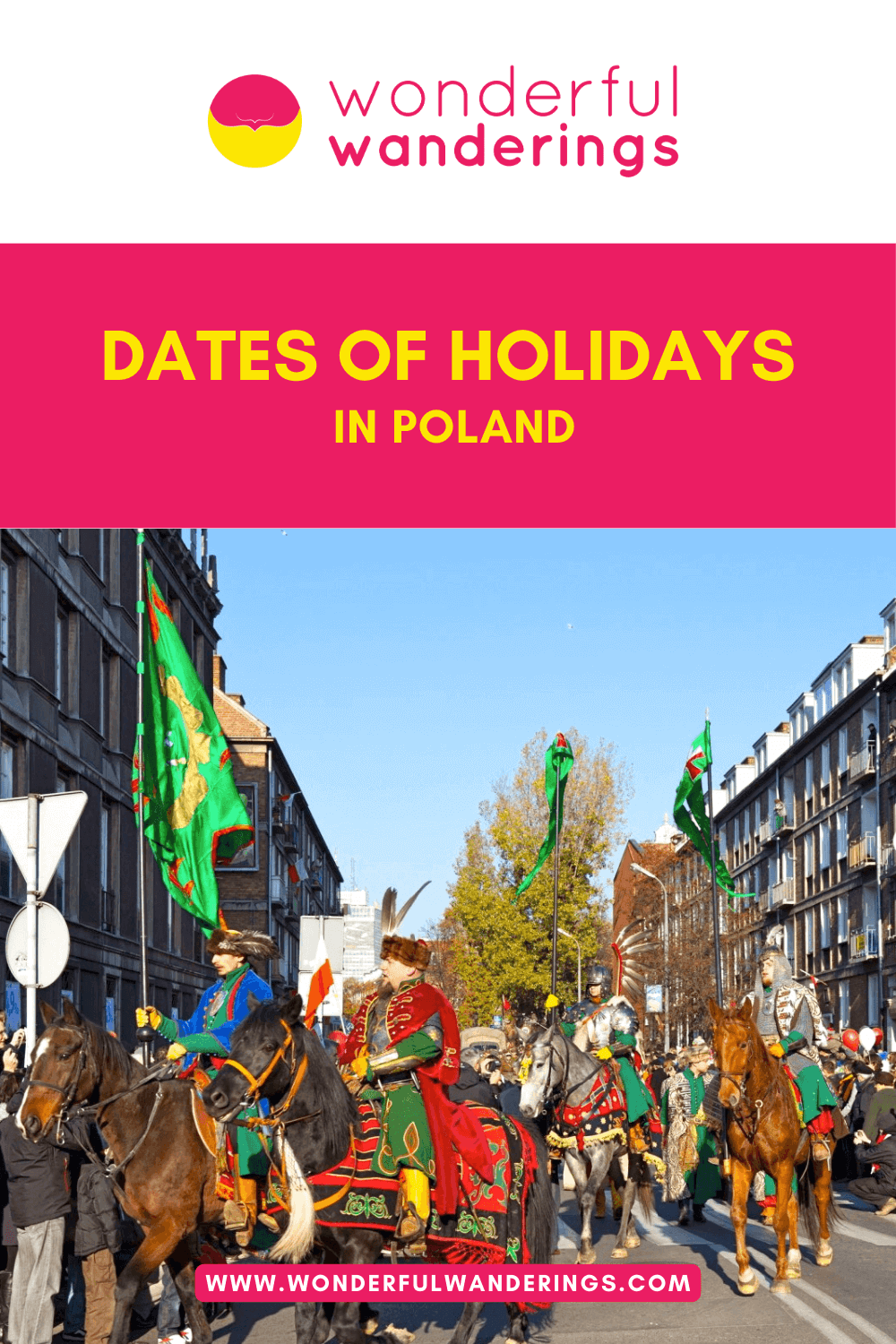
Poland has 14 public holidays a year, and every one of them is a statutory day off under the Act of 18 January 1951 on days off from work. Christmas Eve (24 December) became a day off from 2025, under a December 2024 amendment to the act, which brings the list to 14 public holidays. School holidays now come from the Ministry of National Education (MEN) timetables for the 2025/2026 and 2026/2027 school years, and the shop-closure section explains which Sundays stores may open under the 2018 Sunday-trading law.
Poland is the ninth-largest country in Europe by area, and its population of over 38 million makes it the fifth most populous member of the European Union. The country’s history produced figures such as Marie Curie, Frédéric Chopin and the footballer Robert Lewandowski, covered along with more national figures and numbers in the guides to famous people in Poland and facts about Poland. The major public holidays are New Year’s Day, Easter, Labour Day, Constitution Day, Assumption Day, All Saints’ Day, Independence Day and the three days of Christmas. The other Polish holidays mark the country’s Catholic calendar, its regained statehood and its labour movement.
What are the holiday dates in Poland?
Poland has 5 kinds of holiday dates: statutory public holidays, bank holidays, shop-closure days, school holidays and working observances. The 5 kinds of holiday dates are listed below.
- Statutory public holidays (dni ustawowo wolne od pracy). Statutory public holidays are the 14 dates in the Act of 18 January 1951 on days off from work: 1 January, 6 January, Easter Sunday and Easter Monday, 1 May, 3 May, Pentecost Sunday, Corpus Christi, 15 August, 1 November, 11 November, 24, 25 and 26 December. Every employee gets these days off, and the 2024 amendment to the act added 24 December for the first time in 2025.
- Bank holidays. Bank holidays are the same 14 dates, published each year by the National Bank of Poland (NBP) as its schedule of non-working days for interbank settlements. Banks, courts and public offices close on those days.
- Shop-closure days. Shop-closure days are the same 14 holidays, plus most Sundays, on which large shops must stay shut under the Act of 10 January 2018 on limiting Sunday and holiday trade. The act exempts petrol stations, pharmacies, bakeries, kiosks and a short list of other premises.
- School holidays (przerwy w nauce). School holidays are the breaks the Ministry of National Education (MEN) sets for every school year: a winter break, a Christmas break, an Easter break and the summer holidays.
- Working observances. Working observances are days with cultural or family significance, such as Grandmother’s Day, Valentine’s Day and Warsaw Uprising Day, on which schools, offices and shops stay open as normal.
These 5 categories overlap in practice, since a single date such as Christmas Eve is at once a statutory holiday, a bank holiday and a shop-closure day. The Poland travel guide on this site covers the practical side of a trip planned around these dates, such as transport, car rental and where to stay.
What are the dates of the public holidays in Poland for 2026?
The 14 public holidays in Poland for 2026 fall on the dates listed below, cross-checked against timeanddate.com’s Poland holiday calendar.
| Date | Weekday | Holiday | Polish name |
|---|---|---|---|
| 1 January 2026 | Thursday | New Year’s Day | Nowy Rok |
| 6 January 2026 | Tuesday | Epiphany | Święto Trzech Króli |
| 5 April 2026 | Sunday | Easter Sunday | Wielkanoc |
| 6 April 2026 | Monday | Easter Monday | Poniedziałek Wielkanocny |
| 1 May 2026 | Friday | Labour Day | Święto Pracy |
| 3 May 2026 | Sunday | Constitution Day | Święto Konstytucji 3 Maja |
| 24 May 2026 | Sunday | Pentecost (Whit Sunday) | Zielone Świątki |
| 4 June 2026 | Thursday | Corpus Christi | Boże Ciało |
| 15 August 2026 | Saturday | Assumption of Mary | Wniebowzięcie Najświętszej Maryi Panny |
| 1 November 2026 | Sunday | All Saints’ Day | Wszystkich Świętych |
| 11 November 2026 | Wednesday | Independence Day | Narodowe Święto Niepodległości |
| 24 December 2026 | Thursday | Christmas Eve | Wigilia Bożego Narodzenia |
| 25 December 2026 | Friday | Christmas Day | Pierwszy dzień Bożego Narodzenia |
| 26 December 2026 | Saturday | Second Day of Christmas | Drugi dzień Bożego Narodzenia |
The 2026 calendar gives Poles an easy 3-day May weekend, because 1 May falls on a Friday and 3 May falls on a Sunday, so no extra leave is needed to join them to the weekend. Corpus Christi on Thursday 4 June is the classic bridge holiday: taking Friday 5 June as leave turns it into a 4-day break. Independence Day on Wednesday 11 November sits in the middle of the working week. Christmas runs from Thursday 24 to Saturday 26 December, and taking the 4 working days from Monday 28 to Thursday 31 December as leave bridges straight into New Year’s Day on Friday 1 January 2027, for 11 days off in a row from just 4 days of annual leave. Two 2026 holidays, 15 August and 26 December, fall on a Saturday, which changes the working-time calculation rather than adding an extra day off, explained later in this guide.
How are the public holidays in Poland celebrated?
The public holidays in Poland are celebrated with family meals, church services and, on several dates, public parades and processions. The customs for each of the 14 public holidays are listed below.

- New Year’s Day (1 January). New Year’s Day follows a night of fireworks and parties on New Year’s Eve (Sylwester), and Poles spend 1 January itself recovering quietly, at a church service or on a walk. Many people make resolutions (postanowienia noworoczne) for the year ahead.
- Epiphany (6 January). Epiphany was restored as a public holiday in 2011 after being dropped from the calendar in 1961, and it now brings Orszak Trzech Króli parades of the Three Kings through city centres. Homes are blessed with chalk marked K+M+B (the initials of the Magi) above the front door.
- Easter Sunday (5 April 2026, 28 March 2027). Easter Sunday follows the blessing of Easter baskets (święconka), filled with eggs, bread and sausage, in church on Holy Saturday. Families attend the Rezurekcja dawn Mass before sitting down to a festive breakfast.
- Easter Monday (6 April 2026, 29 March 2027). Easter Monday is Śmigus-Dyngus, Poland’s most widely recognised Easter custom, when people playfully soak each other with water to mark the arrival of spring. Some towns add processions with scattered flower petals.
- Labour Day (1 May). Labour Day is a quiet day off for most Poles, folded into the “majówka” long weekend alongside Flag Day on 2 May (not itself a holiday) and Constitution Day on 3 May. Trade unions still hold marches in some cities.
- Constitution Day (3 May). Constitution Day marks the adoption of the 1791 Constitution, Europe’s first and the world’s second written constitution after that of the United States. Warsaw holds military and civilian parades, and flags fly on public buildings and many homes.
- Pentecost Sunday (24 May 2026, 16 May 2027). Pentecost Sunday, known in Poland as Zielone Świątki (the “Green Holiday”), marks the descent of the Holy Spirit and is observed with church services and homes decorated with fresh green branches. It has no distinct secular customs and is the quietest of the 14 holidays.
- Corpus Christi (4 June 2026, 27 May 2027). Corpus Christi always falls on a Thursday and is marked by street processions that stop at 4 flower-decked altars, with children who made their first communion that year scattering petals ahead of the Blessed Sacrament. Many workers add the Friday after it as leave to make a 4-day weekend.
- Assumption of Mary (15 August). Assumption of Mary coincides with Armed Forces Day (Święto Wojska Polskiego), which marks the Polish victory over Soviet forces at the Battle of Warsaw in 1920. Warsaw holds a military parade, and church processions mark the Marian feast elsewhere.
- All Saints’ Day (1 November). All Saints’ Day is when Poles visit family graves, so cemeteries nationwide are lit with thousands of candles (znicze) and the roads leading to them carry some of the year’s heaviest traffic. All Souls’ Day, 2 November, follows immediately but is not itself a public holiday.
- Independence Day (11 November). Independence Day marks the restoration of Polish statehood in 1918 after 123 years of partition between Russia, Prussia and Austria, with flag-raising ceremonies and wreath-laying at monuments. In Poznań the date coincides with the older feast of St Martin, marked by eating marzipan-filled croissants called rogale świętomarcińskie.
- Christmas Eve (24 December). Christmas Eve, or Wigilia, is the most important part of the Polish Christmas, with a meatless family dinner of 12 traditional dishes, an extra place set at the table for an unexpected guest, and the sharing of an opłatek wafer once the first star appears in the sky. Midnight Mass (Pasterka) follows the meal.
- Christmas Day (25 December). Christmas Day is quieter than Wigilia, spent with close family, at church and over a long lunch built from the previous night’s leftovers.
- Second Day of Christmas (26 December). Second Day of Christmas, also called St Stephen’s Day after the saint whose feast falls on 26 December, is for visiting relatives and friends not seen on the 24th or 25th. In some regions, carol singers (kolędnicy) still call from house to house with a star or a nativity scene.
What are the dates of the public holidays in Poland for 2027?
The 14 public holidays in Poland for 2027 fall on the dates listed below. The fixed dates follow the 1951 act as amended in 2024, and Easter Sunday falls on 28 March 2027.
| Date | Weekday | Holiday | Polish name |
|---|---|---|---|
| 1 January 2027 | Friday | New Year’s Day | Nowy Rok |
| 6 January 2027 | Wednesday | Epiphany | Święto Trzech Króli |
| 28 March 2027 | Sunday | Easter Sunday | Wielkanoc |
| 29 March 2027 | Monday | Easter Monday | Poniedziałek Wielkanocny |
| 1 May 2027 | Saturday | Labour Day | Święto Pracy |
| 3 May 2027 | Monday | Constitution Day | Święto Konstytucji 3 Maja |
| 16 May 2027 | Sunday | Pentecost (Whit Sunday) | Zielone Świątki |
| 27 May 2027 | Thursday | Corpus Christi | Boże Ciało |
| 15 August 2027 | Sunday | Assumption of Mary | Wniebowzięcie Najświętszej Maryi Panny |
| 1 November 2027 | Monday | All Saints’ Day | Wszystkich Świętych |
| 11 November 2027 | Thursday | Independence Day | Narodowe Święto Niepodległości |
| 24 December 2027 | Friday | Christmas Eve | Wigilia Bożego Narodzenia |
| 25 December 2027 | Saturday | Christmas Day | Pierwszy dzień Bożego Narodzenia |
| 26 December 2027 | Sunday | Second Day of Christmas | Drugi dzień Bożego Narodzenia |
The 2027 calendar is kinder around May than 2026: 1 May falls on a Saturday and 3 May on a Monday, so the weekend runs straight from Saturday 1 to Monday 3 May without using any leave. Easter forms a natural 3-day break from Holy Saturday 27 to Easter Monday 29 March. Corpus Christi on Thursday 27 May and Independence Day on Thursday 11 November are both bridge-day candidates, each turning into a 4-day weekend if the Friday after is taken as leave. Christmas 2027 is shorter than 2026’s: Christmas Eve falls on Friday 24 December, so the holiday runs only from Friday to Sunday 26 December before the working week resumes on Monday 27 December.
Which shops close on Polish public holidays?
Large shops must close on all 14 public holidays and on most Sundays, under the Act of 10 January 2018 on limiting Sunday and holiday trade. The ban covers Sundays and the 14 statutory holidays as two separate categories, so a store must also stay shut on a holiday that falls on a weekday, such as Corpus Christi or Independence Day, not only on the Sundays among the 14. Since a December 2024 amendment took effect in February 2025, Christmas Eve is a full non-trading day and shops must also close by 14:00 on Holy Saturday, the day before Easter. Poland allows only 8 trading Sundays a year since a further 2025 change added a third pre-Christmas Sunday to the exemption list. The trading Sundays for 2026 and 2027 are listed below.
- 2026 trading Sundays. The 8 trading Sundays in 2026 are 25 January, 29 March (Palm Sunday), 26 April, 28 June, 30 August, 6 December, 13 December and 20 December.
- 2027 trading Sundays. The 8 trading Sundays in 2027 are 31 January, 21 March (Palm Sunday), 25 April, 27 June, 29 August, 5 December, 12 December and 19 December.
Supermarkets and shopping centres in Warsaw, Kraków and other cities are closed on every other Sunday of the year and on all 14 holidays, while petrol stations, pharmacies, bakeries and cake shops (until 14:00), post offices, press kiosks, hotels, restaurants and shops run personally by their owner, such as many franchised convenience stores, may open regardless of the day. The State Labour Inspectorate (Państwowa Inspekcja Pracy) enforces the act, and an employer who rosters staff to work an illegal trading day risks a fine of 1,000 to 100,000 PLN (about €230 to €23,000, $250 to $25,000, £200 to £20,000).
What are the holiday dates in Poland that locals work?
The holiday dates in Poland that locals work are family and civic observances without legal holiday status, on which schools, offices and shops stay open. The working observances for 2026 and 2027 are listed below in calendar order.
- Grandmother’s Day and Grandfather’s Day (21 and 22 January). Grandmother’s Day and Grandfather’s Day are not public holidays, and children mark them with handmade cards, small gifts or a family visit.
- Valentine’s Day (14 February). Valentine’s Day is a commercial observance in Poland, as in many countries, with couples exchanging gifts and going out for dinner. Shops, offices and schools stay open.
- Women’s Day (8 March). Women’s Day is not a public holiday, but it is widely marked, and men give flowers or small gifts to the women in their lives at home and at work.
- Flag Day (2 May). Flag Day sits between Labour Day and Constitution Day, and Poles are encouraged to fly the national flag from their homes, although the day itself carries no time off work.
- Mother’s Day (26 May). Mother’s Day falls on 26 May every year in Poland, regardless of the day of the week, unlike the movable Mother’s Day dates used in many other countries, and children mark it with cards, gifts or a family meal.
- Children’s Day (1 June). Children’s Day is not a public holiday, but schools often mark it with games, trips or free entry to museums and zoos.
- Father’s Day (23 June). Father’s Day, like Mother’s Day, falls on a fixed date in Poland rather than a particular Sunday, and is marked with cards, gifts and family time rather than time off.
- Warsaw Uprising Day (1 August). Warsaw Uprising Day remembers the start of the 1944 uprising against German occupation. Warsaw marks it with air-raid sirens at 17:00 (“Godzina W”, the hour the uprising began) and a minute of silence, while the rest of the country works as normal.
- Name Day (Imieniny). Name Day is a Polish tradition in which people celebrate the day of the year associated with their given name, similar to a birthday in other countries, and the dates vary by name across the whole calendar.
What are the Poland school holidays in 2026 and 2027?
The Poland school holidays in 2026 and 2027 follow the calendars the Ministry of National Education (MEN) publishes for each school year, covering a winter break, a Christmas break, an Easter break and the summer holidays. The winter break (ferie zimowe) always runs for 2 weeks, but the exact fortnight depends on which of Poland’s 16 voivodeships (regions) a school sits in, so families travel at different times.
What are the Poland school holidays in 2026?
The Poland school holidays in 2026 are listed below, taken from MEN’s calendar for the 2025/2026 school year.
- Christmas break (22 to 31 December 2025). The Christmas break for the 2025/2026 school year ran from 22 to 31 December 2025, so it falls just before the 2026 calendar year covered by this page begins.
- Winter break (19 January to 1 March 2026, 2 weeks per voivodeship group). The winter break runs in 3 fortnight-long turns between 19 January and 1 March 2026, one turn per group of voivodeships, and the groups for 2026 are in the table below.
- Easter break (2 to 7 April 2026). The Easter break runs from Thursday 2 to Tuesday 7 April 2026, which joins Holy Thursday, Good Friday, the weekend and Easter Monday (6 April) into a single 6-day stretch away from school.
- Summer holidays (27 June to 31 August 2026). The summer holidays begin once lessons end on Friday 26 June 2026, and the 2026/2027 school year starts on Tuesday 1 September 2026.
| Winter break group 2026 | Voivodeships |
|---|---|
| 19 January to 1 February 2026 | Mazowieckie, Pomorskie, Podlaskie, Świętokrzyskie, Warmińsko-Mazurskie |
| 2 to 15 February 2026 | Dolnośląskie, Kujawsko-Pomorskie, Łódzkie, Zachodniopomorskie, Małopolskie, Opolskie |
| 16 February to 1 March 2026 | Podkarpackie, Lubelskie, Wielkopolskie, Lubuskie, Śląskie |
What are the Poland school holidays in 2027?
The Poland school holidays in 2027 are listed below, taken from MEN’s calendar for the 2026/2027 school year.
- Christmas break (23 to 31 December 2026). The Christmas break for the 2026/2027 school year runs from 23 to 31 December 2026, and lessons resume in the first days of January 2027.
- Winter break (18 January to 28 February 2027, 2 weeks per voivodeship group). The winter break rotates roughly a week earlier than in 2026 and again runs in 3 fortnight-long turns, and the groups for 2027 are in the table below.
- Easter break (25 to 30 March 2027). The Easter break runs from Thursday 25 to Tuesday 30 March 2027, which joins Holy Thursday, Good Friday, the weekend and Easter Monday (29 March) into a single 6-day stretch, mirroring the 2026 pattern.
- Summer holidays (26 June to 31 August 2027). The summer holidays begin once lessons end on Friday 25 June 2027, and the 2027/2028 school year starts on Wednesday 1 September 2027. The autumn and Christmas break dates for the second half of 2027 belong to the 2027/2028 calendar, which MEN had not published at the time of writing.
| Winter break group 2027 | Voivodeships |
|---|---|
| 18 to 31 January 2027 | Podkarpackie, Podlaskie, Dolnośląskie, Łódzkie, Śląskie, Opolskie |
| 1 to 14 February 2027 | Mazowieckie, Pomorskie, Świętokrzyskie, Lubelskie |
| 15 to 28 February 2027 | Lubuskie, Kujawsko-Pomorskie, Warmińsko-Mazurskie, Wielkopolskie, Zachodniopomorskie, Małopolskie |
What is the daylight saving time in Poland?
Daylight saving time in Poland runs from the last Sunday of March to the last Sunday of October, the same rule used across the European Union. The changes for 2026 and 2027 are listed below.
- 2026. The 2026 clock changes are Sunday 29 March (forward from 02:00 to 03:00) and Sunday 25 October (back from 03:00 to 02:00).
- 2027. The 2027 clock changes are Sunday 28 March (forward from 02:00 to 03:00) and Sunday 31 October (back from 03:00 to 02:00).
Poland uses Central European Time (CET, UTC+1) in winter and Central European Summer Time (CEST, UTC+2) in summer, the same zone as Germany, Czechia and Slovakia.
What happens when a Polish public holiday falls on a Saturday?
A Polish public holiday that falls on a Saturday does not create a substitute day off on another date. Instead, under Article 130 of the Labour Code, it reduces an employee’s required working hours for that settlement period by 8 hours, so a full-time employee simply works one fewer 8-hour shift somewhere in the period rather than gaining a fixed extra day off. In 2026, this applies to 15 August and 26 December, and in 2027 it applies to 1 May and 15 August, according to guidance from the State Labour Inspectorate.
Where can you see Poland’s biggest holiday celebrations?
Poland’s biggest public holiday celebrations happen in its largest cities, where markets, lights and parades add to the public holidays and the school breaks around them. In the north, Gdańsk runs a Christmas market at Targ Węglowy through Advent, set against the old port city’s restored merchant-house architecture. The capital, Warsaw, strings Christmas lights along Krakowskie Przedmieście and Nowy Świat and draws large crowds to the Old Town Square for New Year’s Eve. Pick the holiday date from the tables above first, then book a hotel in Warsaw or Gdańsk for the nights around it.
The country’s other major annual events, many timed around these same public holidays, are listed in the festivals in Poland guide. A fuller list of places to visit between the public holidays is in the guide to the top places to visit in Poland.
About the author. This guide is written and maintained by the Wonderful Wanderings editorial team. Wonderful Wanderings was founded in 2012 by Sofie Couwenbergh. The team covers Poland for independent travellers, from Gdańsk’s Christmas market to Warsaw’s New Year’s Eve celebrations, car rental and places to stay, and updates this page when public-holiday dates, school holidays and Sunday-trading rules change.