 EN
EN
 Nederlands
 Français
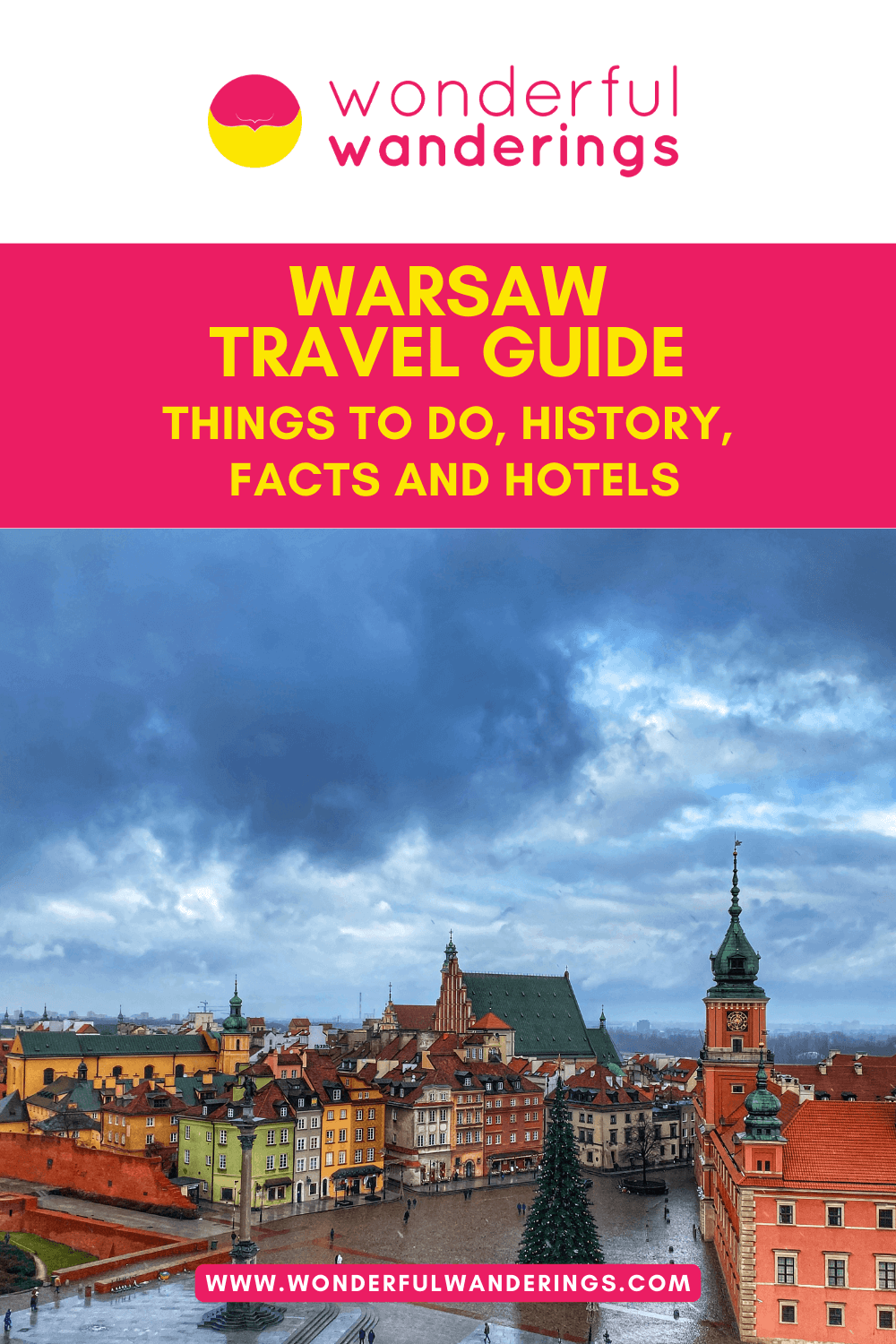
The 12 things to do in Warsaw below run from the Warsaw Rising Museum to Powązki Cemetery, and seven of them are free on at least one day of the week. Poland’s capital is the city the twentieth century happened to. Around 85% of Warsaw was rubble in 1945, the Old Town you walk through is a post-war reconstruction that UNESCO listed in 1980 for exactly that reason, and the museums that explain the destruction and the rebuilding are the reason to come. Prices on this page are in Polish złoty, because Poland uses the złoty and has not adopted the euro.
Every ticket price, closing day and free day below was taken from the venue’s own website in September 2026. Two things have moved since most Warsaw guides were written. The Neon Museum left the Soho Factory in Praga and reopened inside the Palace of Culture and Science in July 2025, and the Fryderyk Chopin Museum on Okólnik Street is closed to visitors for the whole of 2026 while it is renovated.
Why visit Warsaw instead of Kraków
Visit Warsaw when you want the twentieth century, and Kraków when you want the Middle Ages. Warsaw was flattened and put back together, so it reads as a decision rather than as an inheritance: a reconstructed Old Town on one side of the tracks, a Stalinist skyscraper in the middle, and Varso Tower, the tallest building in the European Union, finished in 2022 a few hundred metres from the central station.

Kraków, by contrast, came through the war with its royal castle, its market square and its churches standing, so it reads as one continuous city. That makes Warsaw the stronger city for museums and the weaker one for atmosphere. Warsaw is cheaper, less crowded and far larger, with 1,866,729 residents at the end of 2025 according to Poland’s statistical office, spread over 517 square kilometres (200 square miles). Go to Kraków if you have one weekend in Poland and want cobbles, and come to Warsaw if you want to understand how Poland got here.
12 things to do in Warsaw
The 12 things to do in Warsaw are listed below, most rewarding first.

- Warsaw Rising Museum. The Warsaw Rising Museum tells the story of the 63-day uprising of 1944 that led to the city’s destruction, through a full-size replica Liberator bomber, recreated sewer passages and survivor testimony. Tickets are 35 zł (about €8, $9, £7), reduced 30 zł (about €7, $8, £6). It opens Monday and Wednesday to Friday 08:00 to 18:00 and at weekends 10:00 to 18:00, and it is closed on Tuesdays. Allow two to three hours, and note that building work on an extension started in 2026, with the new wing due in 2029.
- POLIN Museum of the History of Polish Jews. POLIN covers the thousand years of Jewish life in Poland that preceded the Holocaust, on the site of the former Warsaw Ghetto at 6 Anielewicza Street. Its core exhibition costs 45 zł (about €11, $12, £9), reduced 35 zł, and anyone under 26 pays 1 zł at the ticket desk. Thursday entry is free and the museum is closed on Tuesdays. Give it three hours; the reconstructed painted ceiling of the Gwoździec synagogue is worth the queue on its own.
- Old Town and the Royal Castle. Warsaw’s Old Town is a 1950s reconstruction of the medieval quarter the Germans demolished after the uprising, and walking it costs nothing. The Royal Castle on Castle Square charges 60 zł (about €14, $16, £12) for either its Royal Route or its Museum Route, reduced 45 zł, and admission is free on Wednesdays. On the Old Town Market Square, the Museum of Warsaw fills eleven linked townhouses and charges 25 zł (about €6, $7, £5) for its core exhibition, free on Thursdays.
- Palace of Culture and Science. Stalin’s 1955 gift to Warsaw is still the building everything else is measured against, and its 30th-floor terrace at 114 metres (374 ft) is the classic view. Tickets are 30 zł (about €7, $8, £6), reduced 25 zł, and the terrace opens daily 10:00 to 20:00. A night terrace ticket at 35 zł is sold on Friday and Saturday evenings from 20:00, from the machines in the main hall only.
- Highline Warsaw at Varso Tower. Highline Warsaw is the newest thing on this list, a 360-degree terrace on the 53rd floor of Varso Tower that opened in September 2025 at 230 metres (754.6 ft). Online tickets start at 45 zł (about €11, $12, £9) and cost more at the door, so book before you go. It is the highest public viewing deck in the European Union and it looks straight down on the Palace of Culture, which is the point.
- Łazienki Park. Łazienki Park is 76 hectares of royal parkland in the middle of the city, with the Palace on the Isle, an amphitheatre, an orangery theatre and peacocks on the lawns. Entry to the park is free. Free Chopin recitals are played beside the Chopin Monument on Sundays from May to September, which matters more than usual in 2026 because the Chopin Museum is shut.
- Wilanów Palace. Wilanów is the baroque summer residence John III Sobieski began in 1677, about 10 km (6.2 mi) south of the centre at the far end of the Royal Route. A palace ticket, which also covers the park, is 70 zł (about €16, $18, £14) from April to October and 60 zł from November to March, reduced by half, with 1 zł tickets for visitors aged 8 to 26. Park-only entry is 15 zł (about €4, $4, £3), and the museum lists Thursday as its free day for both palace and park.
- Copernicus Science Centre. The Copernicus Science Centre is 400-odd hands-on exhibits on the Vistula bank at Wybrzeże Kościuszkowskie 20, with its own metro station. Exhibition tickets are 48 zł (about €11, $13, £10) on weekdays and 50 zł at weekends, in school holidays and on public holidays, reduced 34 zł and 36 zł. Its planetarium is closed for refurbishment until 12 October 2026, so a combined ticket is no use before then. The rooftop garden opens daily 10:00 to 17:00 from 2 September through October.
- Neon Museum. The Neon Museum keeps more than 200 restored neon signs from communist-era Poland, and since July 2025 it has been on the fourth floor of the Palace of Culture and Science, reached by the side lifts from level -1 off the Marszałkowska entrance. Tickets are 25 zł (about €6, $7, £5), concession 18 zł, sold at the door. It opens daily from 11:00, until 18:00 most days and 19:00 on Friday and Saturday. Older guides still send people to 25 Mińska Street in Praga, where the museum no longer is.
- National Museum in Warsaw. The National Museum holds Poland’s largest art collection, including Jan Matejko’s vast “Battle of Grunwald” and the Faras gallery of Nubian wall paintings. Permanent galleries cost 30 zł (about €7, $8, £6), reduced 15 zł, and 1 zł for anyone under 26 at the ticket office. Tuesday entry to the permanent galleries is free, Friday brings a 50% discount between 17:00 and 20:00, and the museum is closed on Mondays.
- Praga. Praga, on the east bank, kept more of its pre-war brickwork than any other part of Warsaw because the Red Army stopped there in 1944 while the left bank was destroyed. The Museum of Warsaw Praga overlooks the Różycki Bazaar and charges 15 zł (about €4, $4, £3) for its permanent exhibition, with free entry on Thursdays and a rooftop terrace for 1 zł. Warsaw Zoo is a ten-minute walk away, holds more than 12,000 animals across roughly 500 species on 40 hectares, and costs 45 zł from April to September and 35 zł from October to March.
- Warsaw Citadel and Powązki Cemetery. The Warsaw Citadel is the Russian fortress built in Żoliborz after the 1830 uprising, and it now holds three museums on one site. The Polish Army Museum at ul. Gwardii 4 charges 40 zł (about €9, $10, £8) and is free on Thursdays, closed Mondays; the Katyń Museum is free; the Museum of Polish History has an outdoor terrace with free access and temporary shows at 20 zł, but its permanent exhibition does not open until 2027. Powązki Cemetery in Wola is free, covers 43 hectares (106 acres) and holds the graves of Chopin’s parents and three sisters, along with Moniuszko, Lutosławski, Komeda and Kieślowski.
Warsaw museums with a free day
Eight of Warsaw’s main museums give away one day a week and a ninth is free whenever it opens, so a visit planned around those days costs very little in admissions. Five of the eight fall on Thursday, which makes Thursday the day to be in Warsaw and Tuesday the day to avoid. The free days, all verified against each museum’s own website in September 2026, are set out below.

| Museum | Free day | Normal ticket | Closed |
|---|---|---|---|
| POLIN Museum | Thursday | 45 zł | Tuesday |
| Museum of Warsaw | Thursday | 25 zł | Monday |
| Museum of Warsaw Praga | Thursday | 15 zł | Monday |
| Wilanów Palace | Thursday | 70 zł (Apr to Oct) | none listed |
| Polish Army Museum | Thursday | 40 zł | Monday |
| Royal Castle | Wednesday | 60 zł | none listed |
| National Museum in Warsaw | Tuesday | 30 zł | Monday |
| Museum of Polish History | Friday | 20 zł (temporary shows) | Monday |
| Katyń Museum | every day | free | Monday |
Free days fill up. POLIN and the Museum of Polish History hand out their free passes at the ticket desk rather than online, and the Royal Castle’s Wednesday queue is long, so arrive before 11:00 on any of the three.

How many days do you need in Warsaw?
Two full days cover Warsaw’s headline sights and three days do it without rushing. Day one takes the Old Town, the Royal Castle and the Palace of Culture terrace. Day two takes the Warsaw Rising Museum in the morning and POLIN in the afternoon, which is a heavy pairing but a coherent one. A third day gets you Wilanów or the Citadel, plus Praga in the evening. Warsaw is not a city you exhaust, and it is not a city that runs out of museums.

Getting from Warsaw’s airports into the city
Take a city rail (SKM) train from Warsaw Chopin Airport and you are in the centre in about 30 minutes. The S2 and S3 lines run from the station under the terminal to Warszawa Śródmieście and Warszawa Centralna, and the airport’s own site tells you to buy at least a 75-minute ticket, which costs 4.40 zł (about €1, $1, £0.90). The same ticket covers the transfer onto the metro or a tram. Bus 175 runs the route above ground for the same fare.

Warsaw Modlin, roughly 40 km (24.9 mi) north, is the Ryanair airport and is slower to leave. A shuttle bus runs between the terminal and Modlin railway station, where Koleje Mazowieckie trains continue to Warszawa Centralna, and a combined ticket runs to roughly 20 zł (about €5, $5, £4). Intercity coaches run direct from Modlin to the centre. Polish rail and coach fares are worth comparing on Omio before you buy at the station if you are carrying on to Kraków or Gdańsk, because the cheap advance fares on the express trains disappear as the date approaches.
Getting around Warsaw
Warsaw runs one ticket across its metro, trams, buses and city trains, so you never need to work out which operator you are on. A 20-minute ticket is 3.40 zł (about €0.80, $0.90, £0.70), a 75-minute single is 4.40 zł, a 90-minute ticket covering both fare zones is 7 zł (about €2, $2, £1) and a 24-hour ticket is 26 zł (about €6, $7, £5). Reduced fares are half of each. Validate on boarding, because inspectors work the tram lines into the Old Town hard.

Two metro lines cross under the centre at Świętokrzyska. Line M2 is the useful one for visitors: it stops at Centrum Nauki Kopernik for the science centre, at Nowy Świat-Uniwersytet for the Royal Route and at Dworzec Wileński for Praga. Almost everything in the Old Town and Śródmieście is walkable, and the riverside boulevards on the left bank make a good evening route.
Where to stay in Warsaw
Stay in Śródmieście if this is your first visit to Warsaw, because it puts the Palace of Culture, the central station and the Royal Route inside a 20-minute walk and it has the deepest choice of hotels. The Old Town is prettier and quieter but small, and it empties of anything except restaurants after dark. Powiśle, on the slope down to the river, is the neighbourhood locals send you to for bars and coffee. Praga is cheaper and more interesting, at the cost of a metro ride each way.

Room rates in Warsaw run well below those in Western European capitals, and the spread between districts is wide enough to be worth checking before you commit. Two Śródmieście hotels cover the two ends of the market, and a country-wide search covers everything between them.
- Hotel Bristol. Hotel Bristol stands on Krakowskie Przedmieście next door to the Presidential Palace, a neo-renaissance building with art deco interiors that has taken guests since 1901. Rooms and dates are at Hotel Bristol, a Luxury Collection Hotel.
- Hotel Polonia Palace. Hotel Polonia Palace occupies a 1913 building on Aleje Jerozolimskie opposite the Palace of Culture, one of the few central Warsaw hotels that came through the war, and it sits at mid-range rates. Availability is at Hotel Polonia Palace.
- Everything between them. Warsaw’s business hotels drop their prices at weekends while Kraków’s tourist hotels raise theirs, which makes a country-wide search worth the two minutes. Compare rates across hotels in Poland.

Where to eat in Warsaw
Eat at a milk bar at least once in Warsaw, because the bar mleczny is a genuinely Warsaw institution and a two-course lunch still costs less than a coffee in the Old Town. Bar Mleczny Prasowy at Marszałkowska 10/16 has been serving since the 1950s and opens Monday 09:00 to 20:00 and Tuesday to Sunday 09:00 to 19:00. Order at the counter, pay first, carry your own tray.

The dishes to look for are Polish rather than Warsaw-specific, with two exceptions. Wuzetka is Warsaw’s own cake, a chocolate sponge with cream and a blob of it on top, named after the W-Z route driven through the city in 1949 and listed as a traditional product of the Mazovian region. Wedel chocolate has been made in Warsaw since 1851, and the drinking chocolate at the Pijalnia Czekolady E.Wedel at Szpitalna 8, open daily until 22:00, is the version everyone means. Otherwise, order pierogi, żurek, bigos and a breaded schabowy, all covered in more detail in our guide to the food to eat in Poland.
Four Warsaw restaurants worth a booking are listed below, all confirmed open in September 2026.

- U Fukiera. U Fukiera occupies a townhouse at Rynek Starego Miasta 27 and calls itself the oldest restaurant in Warsaw, serving Magda Gessler’s version of Polish classics from 12:00 to 23:00, until 23:30 on Friday and Saturday.
- Hala Koszyki. Hala Koszyki fills a restored 1909 market hall at Koszykowa 63 with more than 20 kitchens and four cocktail bars under one roof, which makes it the easy answer for a group that cannot agree.
- Stary Dom. Stary Dom at Puławska 104/106 in Mokotów is the steady choice for tatare, duck and pierogi in a wood-panelled room, open daily until 23:30.
- Restauracja Belvedere. Restauracja Belvedere sits inside the New Orangery in Łazienki Park at Agrykola 1, which makes it the only formal dining room in Warsaw with a royal park outside the glass.
Warsaw’s restaurant scene turns over quickly, so check before you travel. Różana, which older Warsaw lists still recommend, closed its Warsaw dining room on 23 June 2025 and now operates only in Konstancin-Jeziorna, about 20 km (12.4 mi) outside the city.
What Warsaw costs
Warsaw is inexpensive by Western European capital standards, and everything is priced in złoty. A milk bar lunch runs to about 25 zł (about €6, $7, £5), a mid-range restaurant main to 50 to 80 zł (about €12 to €19, $13 to $21, £10 to £16), and a day of public transport to 26 zł. Museum admissions are the biggest variable and the easiest to cut, because most of the major museums waive them one day a week.

Cash is rarely needed. Cards and contactless work everywhere including ticket machines, and Polish banks charge nothing for using them. Refuse the “pay in your own currency” option on card terminals and cash machines, since the exchange rate offered is always worse than your bank’s. For a full breakdown, see our guide to prices in Poland.
Tours and day trips from Warsaw
Book a guided walk in Warsaw if you want the Old Town read as a reconstruction rather than as a medieval square, because that is the one thing the buildings themselves do not tell you. Warsaw Rising Museum tours, Jewish-heritage walks through Muranów and communist-era tours by Nysa van are the three formats that come up most often. Day trips run to Żelazowa Wola, Chopin’s birthplace about 46 km (28.6 mi) west, which stays open while the city museum is closed, and to Łódź and Toruń by train.

Warsaw FAQ
Is Warsaw worth visiting?
Yes, Warsaw is worth visiting, for its museums rather than its streetscape. The Warsaw Rising Museum and POLIN are two of the strongest history museums in Central Europe, and neither has an equivalent elsewhere in Poland. The counterweight matters too. Warsaw’s centre is a working capital of offices and wide roads, and travellers who want a picture-postcard Polish city are better served by Kraków or Gdańsk.
Is Warsaw safe to visit?
Yes, Warsaw is safe for visitors, with low rates of violent crime and a centre that stays busy late. The usual caution applies around Warszawa Centralna station and on crowded trams into the Old Town, where pickpocketing is the main risk. Walking back through Śródmieście or Powiśle at night is normal for locals.
What is Warsaw famous for?
Warsaw is famous for being destroyed and rebuilt. The 1943 Ghetto Uprising, the 1944 Warsaw Uprising and the post-war reconstruction of the Old Town are what the city is known for internationally, and all three have a museum. Beyond that, Warsaw is Poland’s business capital, the home of Chopin’s early years and the birthplace of Maria Skłodowska-Curie.
Who are the most famous people born in Warsaw?
Maria Skłodowska-Curie, born in Warsaw in 1867, is the city’s most famous native, the first woman to win a Nobel Prize and the only person to win one in two sciences. Irena Sendler, who smuggled around 2,500 Jewish children out of the Warsaw Ghetto, was born in the city in 1910. Robert Lewandowski, Poland’s all-time top scorer and captain, was born in Warsaw in 1988 and now plays in Major League Soccer. Fryderyk Chopin was born at Żelazowa Wola outside the city and moved to Warsaw as a baby. Pope John Paul II appears on several Warsaw lists and does not belong on them, because he was born in Wadowice, about 50 km (31.1 mi) from Kraków and 300 km from Warsaw. More on all of them in our guide to notable people from Poland.
Is Warsaw good for children?
Yes, Warsaw suits children well. The Copernicus Science Centre is built entirely around things children can touch, Warsaw Zoo holds more than 12,000 animals ten minutes from the Old Town, and Łazienki Park has rowing boats, peacocks and free concerts. Note that the Copernicus planetarium is shut until 12 October 2026, so buy an exhibitions ticket rather than a combined one before that date.
What festivals happen in Warsaw?
Warsaw’s fixed dates are the Warsaw Film Festival in October, Wianki on the Vistula at midsummer, and the Warsaw Uprising commemorations on 1 August, when the whole city stops for a minute at 17:00 and the sirens sound. The Christmas market on Castle Square runs from late November through December. Dates move year to year, so check our list of festivals in Poland before booking around one.
WonderfulWanderings Pro Tips
Five details will change how you plan a 2026 visit to Warsaw, and each one was checked against the venue’s own site in September 2026.

- Skip the Chopin Museum this year. The Fryderyk Chopin Museum at Okólnik 1 is closed to visitors from 1 January to 31 December 2026 for renovation. The free Sunday recitals in Łazienki Park from May to September, the composer’s heart in a pillar of the Holy Cross Church on Krakowskie Przedmieście, and his birthplace at Żelazowa Wola all stay open.
- Build your Thursday around the free days. POLIN, the Museum of Warsaw, the Museum of Warsaw Praga, the Polish Army Museum and Wilanów Palace are all free on Thursday. That is roughly 195 zł (about €46, $51, £40) of admissions in one day, if you can walk fast enough.
- Do not plan a Tuesday museum day. POLIN and the Warsaw Rising Museum, the two museums most visitors come for, both close on Tuesdays. The National Museum, which is free that day, closes on Mondays instead.
- Buy the Highline Warsaw ticket online. The 53rd-floor terrace at Varso Tower costs 45 zł booked in advance and more on the door, and slots are timed. It opened in September 2025, so it is missing from most Warsaw guides entirely.
- Ignore the old Neon Museum address. The collection moved out of the Soho Factory at 25 Mińska Street in Praga and reopened inside the Palace of Culture and Science in July 2025. Enter from Marszałkowska, take the side lifts from level -1, and go to the fourth floor.
About the author. This guide is written and maintained by the Wonderful Wanderings editorial team. Wonderful Wanderings was founded in 2012 by Sofie Couwenbergh, and the team covers Poland for independent travellers, including the Warsaw museums worth a ticket, the hotels and tours worth booking and the free days worth planning around. We check every price, closing day and free day on this page against each venue’s own website, and update it when they change.