 EN
EN
 Nederlands
 Français
Dubrovnik’s walls cost €40 ($47, £34) in high season, and the Dubrovnik Pass costs the same €40 and throws in Fort Lovrijenac, seven museums and 24 hours of city buses, which makes the plain walls ticket the worst-value purchase in the city. That single piece of arithmetic is the most useful thing anyone can tell you before you arrive. The rest of a good Dubrovnik trip is timing: cruise passengers reach the Old Town from about nine in the morning and thin out by late afternoon, so early and evening are when the lanes belong to everyone else. Croatia uses the euro and is in Schengen, so there is nothing to change and no border check on the way in.
What are the best things to do in Dubrovnik?
The 17 things to do in Dubrovnik below start on the walls and work outwards to the island, the mountain and the archipelago. Dubrovnik is small, about 41,500 people, and almost everything on this list sits within twenty minutes of Pile Gate.
- Walk the city walls. The walls run 1,940 m around the Old Town, stand up to 25 m high and take 1.5 to 2 hours to circle.
- Take the cable car up Srđ. The cable car climbs to the fort above the city in about four minutes and runs April to November.
- Cross to Lokrum. Lokrum is the forested nature reserve 600 m offshore, with peacocks, a monastery ruin and a saltwater lake.
- Go up Fort Lovrijenac. Fort Lovrijenac stands on a 37 m cliff outside the western wall and is covered by the same ticket as the walls.
- See War Photo Limited. War Photo Limited is the conflict-photography gallery in the Old Town, open April to October only.
- Sail to the Elaphiti Islands. The Elaphiti day trip visits Koločep, Lopud and Šipan, including the sandy Šunj beach.
- Kayak under the walls. Sea kayaking from Pile Bay goes around Lokrum and into caves the land routes cannot reach.
- Eat the local dishes. Ston oysters, black cuttlefish risotto, buzara and rožata are the four to order.
1. City Walls
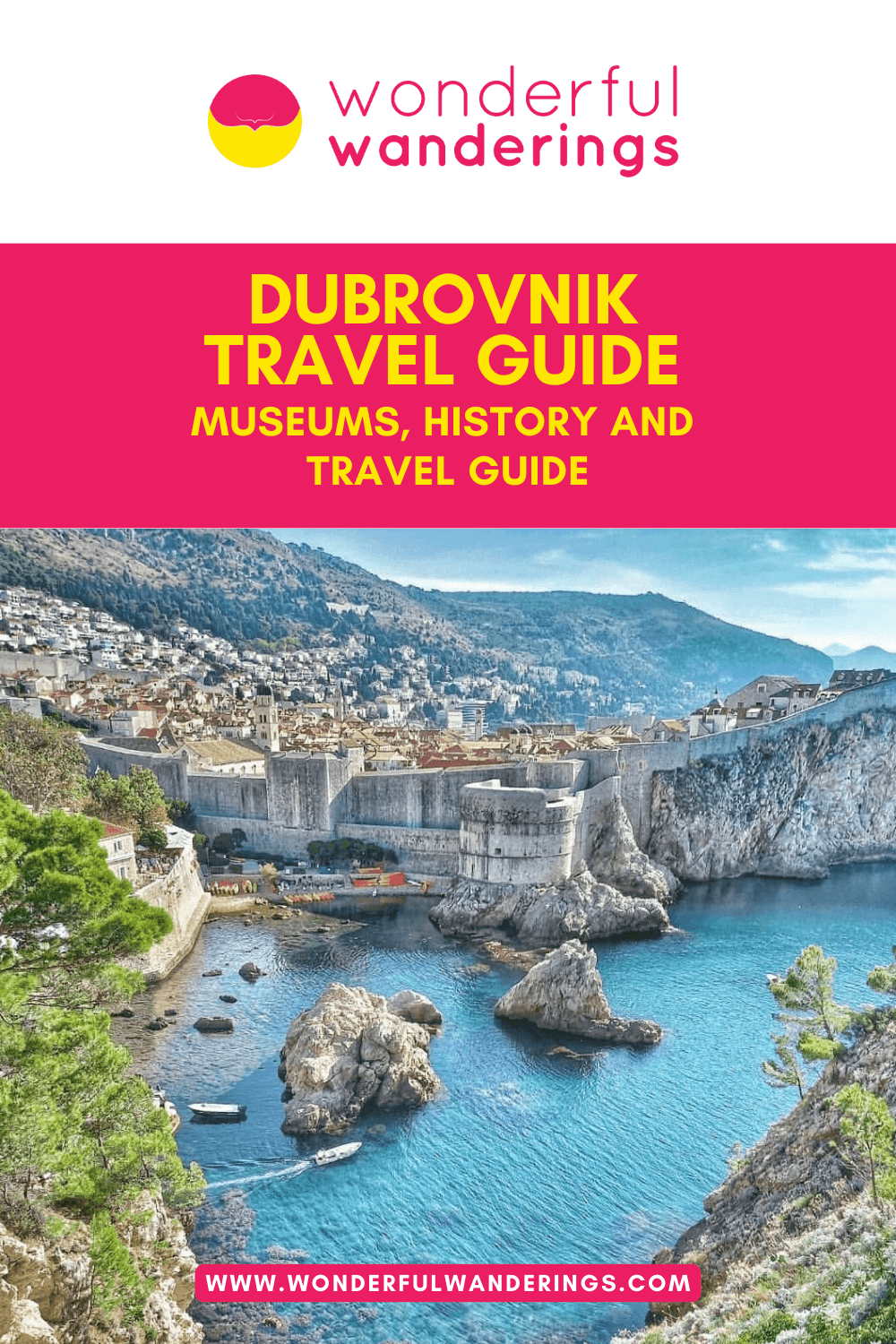
The city walls are the complete ring of medieval fortifications around Dubrovnik’s Old Town, and walking them is the thing everyone comes to do. The walls run 1,940 m, stand up to 25 m high and up to 6 m thick on the landward side, were built up mainly between the 13th and 17th centuries, and were never breached by an attacker. They form part of the UNESCO World Heritage listing with the Old Town of Croatia‘s far south.

The circuit is one-way, anti-clockwise, and takes 1.5 to 2 hours with stops. There are three entrances: the main one just inside Pile Gate, one at Ploče Gate and one by the Maritime Museum in St John’s Fortress. It is a lot of steps in full sun, with two small cafés on the route and almost no shade.
Adult admission is €40 ($47, £34) from March to October and €15 ($18, £13) from November to February, with children under 18 at €15 ($18, £13) and €5 ($6, £4). The same ticket covers Fort Lovrijenac and the Western Outer Wall for three days from the moment you enter. Since the one-day Dubrovnik Pass also costs €40 ($47, £34) and adds seven museums and unlimited city buses, buy the pass rather than the walls ticket unless it is winter.
2. Old Town
The Old Town of Dubrovnik is the walled, pedestrian-only medieval core, and it is the reason the city exists on every itinerary. The Old Town’s shape is not organic: a catastrophic earthquake in 1667 leveled most of it, and the city was rebuilt on a regular grid in Baroque style, which is why the side lanes climb in straight, even flights of steps off the main street.

Inside the walls are the Rector’s Palace, the Dominican and Franciscan monasteries, Onofrio’s Fountain, the Cathedral, Orlando’s Column and the Sponza Palace, all within a few hundred meters of one another. Cliff bars are cut into the outer wall on the south side, reached through a doorway in the stone.
Walking the Old Town is free and always open. The paving is polished limestone, slippery in rain, and the side lanes are stepped, so wheeled luggage and pushchairs are hard work here.
3. Lokrum Island
Lokrum is the uninhabited, forested island 600 m off the Old Town, run as a protected nature reserve. Lokrum holds the ruins of an 11th-century Benedictine monastery, a botanical garden planted in the 19th century, the small saltwater lake locals call the Dead Sea, the hilltop Fort Royal built by the French, rocky swimming spots including a naturist section, and a population of peacocks that a Habsburg archduke introduced and nobody has managed to remove since.

The official boat leaves from the Old Town harbor by Ploče Gate, takes about fifteen minutes and runs frequently through the season. A ticket is €30 ($35, £26) per person and includes both the return crossing and entry to the reserve, so it is one payment rather than two.
Sailings are seasonal and there is no service in deep winter. Nobody is allowed to stay on the island overnight, so the last boat back is a hard deadline, not a suggestion.
4. Kayaking tours
Sea kayaking from Dubrovnik is the one activity that shows you the walls from the outside, at sea level. Tours leave from Pile Bay, immediately below Fort Lovrijenac, run two and a half to three hours for the standard trip, and paddle around Lokrum with a stop to swim and snorkel, usually at Betina cave beach, which cannot be reached on foot.

Guides give basic instruction first and provide the boat, buoyancy aid and a dry bag. Longer versions run out to the Elaphiti Islands for a full day, and sunset trips finish with a drink on the water.
Reasonable fitness is enough; no experience is needed. The one thing to check before booking is the wind forecast, because trips are cancelled in a strong jugo or bura and the sea outside Pile Bay is genuinely open.
5. The cable car up Srđ
The Dubrovnik cable car runs from just above the Old Town to the top of Mount Srđ, 405 m up, in about four minutes. The cable car was built in 1969, destroyed during the siege of the city in 1991 and rebuilt in 2010, and it delivers the postcard view down onto the walls, the roofs and Lokrum.

At the top are a terrace restaurant, a buggy-safari operator, walking trails, and Fort Imperial, the Napoleonic fort that now holds the Homeland War museum about the 1991 to 1995 siege. That museum is the reason to linger rather than photograph and leave.
Adult tickets are €30 ($35, £26) return or €17 ($20, £14) one way, with children aged 4 to 12 at €8 ($9, £7) return, and under-fours free. It is closed from December through March, opens in April and runs to the end of November, with late hours in midsummer; the last car up leaves half an hour before closing.
6. Game of Thrones locations
Dubrovnik played King’s Landing, and its filming locations are ordinary sights that happen to be famous twice. Fort Lovrijenac was the Red Keep, the Jesuit Staircase beside St Ignatius’s church was Cersei’s walk of shame, Pile Bay and the fortress of St John appear in the harbor scenes, and Lokrum stood in for Qarth.

A guided walk usually runs two to three hours and links the sites with the history of the real city, which is the part that makes it worth doing rather than self-guiding. Some tours carry replica props for photographs.
The ground is steep and stepped throughout, so this suits older children and adults rather than toddlers. Every location on the route can also be visited free or on the walls ticket if you would rather work through them alone.
7. Porporela
Porporela is the stone breakwater curving out from the Old Town’s eastern harbor, and it is where Dubrovnik swims. Porporela was built in the 19th century to shelter the old port from the sea, and it is now a place for locals to swim off the ladders, sunbathe on the stone, and watch water polo in the bay.

There is no ticket and no facilities beyond the benches. On a winter day with a southerly running, waves break clean over the wall, which is a spectacle in its own right.
Find it by walking through Ploče Gate and past the fish market and St John’s Fortress. It takes five minutes from Stradun and it is the closest free swim to the walls.
8. Fort Lovrijenac
Fort Lovrijenac, St Lawrence’s Fortress, stands on its own rock 37 m above the sea just outside the western wall. Fort Lovrijenac is triangular, with walls 12 m thick facing the sea and barely 60 cm facing the city, a deliberate choice so that the Republic could destroy it quickly if its own garrison ever turned on Dubrovnik.

Above the entrance is the Republic’s motto, “Non bene pro toto libertas venditur auro”: liberty is not well sold for all the gold in the world. Inside are three terraces, a courtyard, cannon and the view straight back at the walls, and it is the main stage for Hamlet during the Dubrovnik Summer Festival.
Reaching it means about 200 steps up from Pile Bay. Entry is included in the city walls ticket for three days, so do not buy a second ticket and do not do it in the middle of a July afternoon.
9. Local food in Dubrovnik
Dubrovnik’s food is Adriatic seafood plus a few dishes that exist nowhere else in Croatia. Order oysters from Mali Ston on the Pelješac peninsula, raw with lemon; black risotto colored with cuttlefish ink; buzara, which is mussels or shrimp in garlic, parsley, white wine and breadcrumbs; and peka, meat or octopus baked under an iron bell, ordered a day ahead.

The sweet end is more unusual. Rožata is the local caramel custard scented with rose liqueur, arancini here means candied orange peel rather than rice balls, and stonska torta from Ston is a cake made with pasta, almonds and chocolate. Kumquat liqueur is the standard digestif.
Prices in the Old Town are the highest in Croatia, and they fall noticeably a ten-minute walk away in Lapad or Gruž. Our guide to the best local food to eat in Croatia covers the wider national list.
10. Wine tasting near Dubrovnik
Wine tasting from Dubrovnik means the Pelješac peninsula, an hour and a half up the coast, and the Konavle valley half an hour south. Pelješac grows Plavac Mali on slopes so steep the vines are worked by hand, and its two protected sites, Dingač and Postup, make the heaviest reds in the country; Konavle is the home of Dubrovačka Malvasija, a white that was nearly extinct and has been brought back by a handful of growers.

A half-day trip usually covers two or three cellars with a tasting flight at each; a full day adds Ston, its salt pans and its own long defensive wall. Most tours include transport, which matters because Croatia enforces a near-zero drink-drive limit.
Going independently means a car. If that is the plan, compare car hire in Croatia rather than taking the airport desk rate, and remember that the Pelješac Bridge has removed the old Bosnian border crossing from the drive north.
11. Dubrovnik’s museums
Dubrovnik’s museums are concentrated inside the walls and most of them are covered by one pass. The Rector’s Palace holds the Cultural History Museum and is the finest single building in the city after the walls themselves; the Maritime Museum sits in St John’s Fortress and tells the story of the Republic’s merchant fleet; the Museum of Modern Art occupies a 1930s villa in Ploče; and War Photo Limited is a gallery rather than a museum and hits far harder than either.

The Dubrovnik Pass covers the walls plus Fort Lovrijenac, the Rector’s Palace, the Maritime Museum, the Franciscan Monastery Museum, War Photo Limited, the Aquarium, the Natural History Museum, the City Museum and the Marin Držić House, along with unlimited city buses. One day costs €40 ($47, £34), three days €50 ($59, £43) and seven days €60 ($70, £51).
Two or three museums in a day is a realistic pace. They are also the coolest places in the city in August, which is not a small consideration.
12. Dubrovnik’s beaches
Dubrovnik’s beaches are pebble and rock rather than sand, and the nearest one is five minutes from the walls. Banje sits directly below the eastern wall with the postcard view back at the Old Town, sunbeds for hire and a beach club behind it; Sveti Jakov is a quieter pebble cove under pine, reached by a long flight of steps that keeps the crowds down; and Copacabana out on the Lapad peninsula is the family option, with showers, shade and water sports.

Betina cave beach is reachable only from the water, by kayak or small boat, which is why the kayak tours all stop there. Lokrum has rock platforms, a small pebble cove and a naturist section.
The beaches themselves are free; sunbeds, parasols and equipment are not. There are sandier options elsewhere in the country in our guide to the beaches in Croatia.
13. Franciscan Church and Monastery
The Franciscan Monastery stands just inside Pile Gate on Stradun and holds the third-oldest working pharmacy in Europe. The pharmacy has been in operation since 1317, was open to the public rather than only to the friars, and still sells creams and tonics made to the monastery’s own recipes; the small museum beside it shows the medieval mortars, ceramic jars, distilling gear and handwritten formularies.

The cloister is the other reason to go in. It dates from the mid-14th century, and every one of its paired columns carries a different carved capital: animals, human heads, leaves, no two alike. The library behind it holds more than 20,000 volumes and over a thousand manuscripts.
The church on Stradun is free to enter. The monastery, cloister and museum are ticketed at around €10 ($12, £9) for adults, and the visit is included in the Dubrovnik Pass.
14. Stradun
Stradun, officially Placa, is the limestone-paved main street running the length of the Old Town from Pile Gate to the Clock Tower. Stradun was once a channel of sea water separating the island settlement of Ragusa from the mainland village of Dubrovnik; it was filled in during the 12th century, and the street is the seam where the two halves joined.

The paving was laid in 1468 and has been polished to a shine by five centuries of feet, which makes it genuinely slippery in rain. At the Pile end is Onofrio’s Large Fountain, finished in 1438 as the outlet of an aqueduct bringing spring water 12 km into the city; at the far end are Orlando’s Column, the Sponza Palace and the Clock Tower.
Walking it costs nothing. Come at seven in the morning or after ten at night and it is empty; between those hours in summer it is the busiest 300 m in Croatia.
15. Day trip to the Elaphiti Islands
The Elaphiti Islands are the archipelago just northwest of Dubrovnik, and the standard day trip takes in the three inhabited ones. There are 13 islands and islets in the group; boats call at Koločep, Lopud and Šipan, usually leaving from Gruž port or the Old Town harbor and taking around 45 minutes to the first stop.

Koločep is the smallest and closest, with a blue cave you can swim into. Lopud has the one thing this coastline mostly lacks, a genuinely sandy beach at Šunj on the far side of the island, plus a ruined fortress and a Franciscan monastery. Šipan is the largest and quietest, with 15th and 16th-century noble summer houses scattered along its two villages.
Organised trips include lunch and swimming stops. The alternative is the Jadrolinija local ferry from Gruž, which is far cheaper, runs year-round, and lets you stay on one island all day instead of seeing three in a hurry.
16. Minčeta Tower
Minčeta Tower is the round fortress at the highest point of the city walls, on the landward northwestern corner. Minčeta was begun in 1319 as a square tower and was rebuilt into the thick round bastion you see now in 1464, when gunpowder made the old design obsolete, to a design worked on by the Florentine architect Michelozzo and finished by Juraj Dalmatinac.

Climbing to its top terrace gives the widest view in Dubrovnik: the whole grid of terracotta roofs, Stradun cutting through the middle, the sea beyond. It is also where the Game of Thrones House of the Undying scenes were shot.
There is no separate ticket. Minčeta is part of the walls circuit, so the walls ticket or the Dubrovnik Pass gets you in, and the climb to the top is steep.
17. War Photo Limited
War Photo Limited is a gallery of conflict photojournalism on Antuninska, a side lane off Stradun. It was founded in 2003 by the New Zealand photojournalist Wade Goddard, who covered the wars in the former Yugoslavia, and it runs over two floors and about 350 square meters.

The upper floor holds a permanent exhibition on the wars of the 1990s in the former Yugoslavia, which lands very differently in a city that was shelled for seven months. The lower floor rotates temporary shows from conflicts elsewhere. Nothing is softened, and it is not a place to take young children.
Adult admission is around €10 ($12, £9), with a lower student rate, and it is included in the Dubrovnik Pass. It is open from April to October and closed from November through March, with long evening hours from May to September.
When do the cruise ships arrive in Dubrovnik?
Cruise passengers reach the Old Town from about nine in the morning and are mostly gone by late afternoon, so the quiet windows are before nine and after five. Dubrovnik expects around 460 cruise calls and roughly 660,000 cruise passengers across 2026, and the city’s “Respect the City” agreement limits arrivals to about two ships at the Gruž terminal plus one anchored near the Old City, aiming to keep the combined figure near 8,000 passengers on the busiest days.
The Old Town also has a stated cap of 4,000 visitors inside the walls at once, monitored by cameras at the gates. In practice the pinch points are Pile Gate, the walls entrance above it, and Stradun between ten and two.
Two practical moves follow from this. Walk the walls at opening time or in the last two hours before closing, and check a cruise calendar for your dates, because a Tuesday with three ships in port is a different city from a Tuesday with none.
How do you get to Dubrovnik and around?
Dubrovnik is reached by air, by bus and by boat, and it is a dead end by road and rail: there is no railway, and the coastal highway stops here. Dubrovnik Airport is at Čilipi, about 20 km (12.4 mi) southeast of the city, and the main bus station and ferry terminal are together at Gruž, about 3 km (1.9 mi) west of the Old Town.
How do you get from Dubrovnik Airport to the city?
The official airport shuttle is run by Platanus, and it is the simplest way in. Buses are timed to flights, stop at Ploče Gate beside the Old Town and then at the main bus station in Gruž, and take 30 to 40 minutes outside peak traffic. Tickets are €10 ($12, £9) one way or €15 ($18, £13) for an open return valid 15 days, with under-sixes free.
Taxis and pre-booked transfers cost several times that and are worth it only for a group or a very early flight. If you are still choosing dates, compare flights to Dubrovnik first, because the airport is heavily seasonal and routes thin out sharply between November and March.
Which ferries run from Dubrovnik, and when?
Dubrovnik’s ferries leave from Gruž, not from the Old Town harbor, and the network here is thinner and more seasonal than Split’s. The year-round services are the ones to Mljet and Korčula: Jadrolinija runs a daily passenger catamaran to Sobra and Polače on Mljet and on to Korčula and Lastovo, and in winter that drops to roughly one sailing a day.
Everything else is a summer service. The Krilo catamaran from Dubrovnik up to Korčula, Hvar, Milna on Brač and Split runs from about 1 April to 31 October and then stops, which means that between November and March the only way north is the coach or the car. Dubrovnik to Brač and Dubrovnik to Hvar are April to October. The Old Town harbor handles only the Lokrum boat and small excursion craft, and Jadrolinija’s international sailing to Bari in Italy is seasonal.
Two consequences are worth planning around. A February trip cannot island-hop the way an August trip can, and a catamaran is foot passengers only, so a car has to go the long way round. Compare ferry, bus and train times in one search before fixing dates, and there is more in our guide to transportation in Croatia.
How do you get from Dubrovnik to Split and Zagreb?
Buses do both journeys, because there is no train to Dubrovnik at all. Split is about 229 km (142.3 mi) up the coast, roughly three and a half to four and a half hours by coach on a route that now crosses the Pelješac Bridge and skips the old Bosnian border checks entirely, and from April to October the Krilo catamaran covers the same route in daylight in about four and a half hours. There is a full guide to Split if you are pairing the two.
Zagreb is about 600 km (372.8 mi) away. Flying takes an hour and is the sane option; the coach takes 10 to 12 hours; and the rail route means a bus to Split first, then six to eight hours of train, so it is not a real alternative.
Where should you stay in Dubrovnik?
Choose between the Old Town, the beaches and the port, because they are three different holidays. The five areas below cover the trade-offs.
- Old Town. Old Town puts you inside the walls with everything on foot, and it is the most expensive and noisiest option. Bear in mind that nothing has a lift and most of it is reached by stairs.
- Ploče. Ploče is the slope east of the walls, five minutes from Ploče Gate, with the Banje beach view and the city’s grandest hotels.
- Pile. Pile is at the western gate, next to Fort Lovrijenac and the walls entrance, with the main bus stop for everywhere else.
- Lapad. Lapad is the green peninsula with the beaches, the seaside promenade and family hotels, 15 to 20 minutes from the Old Town by bus and far better value.
- Gruž. Gruž is the working port, with the ferry terminal, the bus station and the morning market. It is the cheapest base and the most ordinary, in a good way.
Prices in Dubrovnik run above the rest of the country and peak brutally in July and August. Look at what is available across Croatia before committing, because a night here in August can cost what a week costs inland, and there is a wider comparison in our guide to prices in Croatia.
Where should you eat in Dubrovnik?
Eat by location, because the same plate costs very different money inside and outside the walls. The three below are the Old Town’s long-established names.
- Nautika. Nautika sits above Pile Bay with terraces looking at Fort Lovrijenac and the walls, and it is the city’s formal seafood address. Reservations are essential in season.
- Proto. Proto is the oldest restaurant in the Old Town, on a side lane off Stradun, with a first-floor terrace and a menu built on grilled fish, lobster and black risotto.
- Restaurant 360. Restaurant 360 is built into the city walls above the old harbor and does the most ambitious cooking in Dubrovnik. It opens evenings only and closes in winter.
For everyday prices, walk to Lapad or Gruž, or buy at the Gundulićeva Poljana market in the morning. Konavle and Pelješac wines are on almost every list.
What should you know before visiting Dubrovnik?
Four practical points cover most of what catches people out. They are listed below.
- Currency. Croatia’s currency is the euro, adopted on 1 January 2023. The kuna is gone and cannot be spent or exchanged, so ignore any guide telling you to change money or to pay in kuna for a better rate. Cards work almost everywhere; decline an ATM’s offer to convert to your home currency.
- Borders. Croatia joined Schengen on the same date, and the Pelješac Bridge has taken the Neum corridor out of the drive between Dubrovnik and the rest of Croatia, so there is no longer a passport check on that road. Trips to Kotor in Montenegro and Mostar in Bosnia and Herzegovina do cross a real border and need your passport.
- Language and time. Croatian is the language, the local dialect is full of Italian loanwords, and English is spoken across the tourism trade. Dubrovnik is on Central European Time, UTC+1 in winter and UTC+2 from late March to late October. There are more facts about Dubrovnik, Croatia worth reading before you go.
- Power and data. Sockets are type C and F at 230 V, so North American visitors need an adapter. Roaming inside the EU is included in most European plans; from further afield, an eSIM for Croatia is cheaper than a carrier day pass and installs before you fly.
What festivals happen in Dubrovnik?
Dubrovnik’s two fixed points are a summer arts festival and an autumn food festival, and both take over the Old Town. They are listed below, and more are in our guide to Croatian destinations.
- Dubrovnik Summer Festival. The Dubrovnik Summer Festival runs from 10 July to 25 August, staging drama, classical music, opera and dance in open-air venues across the Old Town, including Hamlet at Fort Lovrijenac. It has run since 1950 and reached its 77th edition in 2026, opening with the raising of the Libertas flag in front of St Blaise’s church.
- Good Food Festival. The Good Food Festival takes over two weeks in October with tastings, workshops and set festival menus, and its centerpiece is a long communal table laid down the length of Stradun. The city tourist board has run it since 2014.
Frequently asked questions about Dubrovnik
How many days do you need in Dubrovnik?
Two full days cover Dubrovnik itself: the walls, the Old Town, Lovrijenac, the cable car and one or two museums. A third and fourth day buy Lokrum, the Elaphiti Islands, a Pelješac wine trip or a day in Kotor or Mostar.
Is the Dubrovnik Pass worth it?
Yes, the one-day Dubrovnik Pass is worth it from March to October, because it costs the same €40 ($47, £34) as the city walls ticket alone and adds Fort Lovrijenac, seven museums and 24 hours of city buses. In winter, when the walls drop to €15 ($18, £13) and several museums are closed, buy tickets separately.
Is Dubrovnik expensive?
Yes, Dubrovnik is the most expensive city in Croatia, and the gap widens in July and August. Accommodation and Old Town restaurant prices are the two places it shows; the walls, the cable car and the museums are one-off costs that a pass softens, and staying in Lapad or Gruž cuts the daily spend sharply.
When is the best time to visit Dubrovnik?
May, June, September and early October are the strongest months for Dubrovnik. The sea is warm from June to October, July and August bring the heaviest cruise traffic and the highest prices, and winter is quiet but the cable car, War Photo Limited and most island catamarans are shut.
Is Dubrovnik walkable?
Yes, the Old Town is entirely pedestrian and small enough to cross in ten minutes. It is not, however, flat or step-free: almost every lane off Stradun is a staircase, and getting from the bus stops at Pile or Ploče into the city means more of them.
WonderfulWanderings Pro Tips
The 5 tips below come from re-checking Dubrovnik’s tickets, seasons and operators against first-party sources in 2026, and each one changes what you pay or when you turn up.
- Buy the Dubrovnik Pass instead of the walls ticket. Both cost €40 ($47, £34) for one day in high season, but the pass adds Fort Lovrijenac, the Rector’s Palace, the Maritime Museum, the Franciscan Monastery Museum, War Photo Limited and unlimited city buses. The only time the plain ticket makes sense is November to February, when the walls drop to €15 ($18, £13).
- Your walls ticket already includes Fort Lovrijenac, for three days. Entry to the fortress and the Western Outer Wall runs from the moment you first enter the walls, so there is no need to do everything in one exhausting morning and no need to buy a second ticket at the fortress gate.
- Ignore every kuna price you read about Croatia. The euro replaced the kuna on 1 January 2023 and the old notes can no longer be exchanged at a bank, so any guide quoting kuna, or telling you to change money for a better rate, is years out of date.
- Check what is open before a winter trip. The Srđ cable car is closed from December through March, War Photo Limited is closed November through March, and the Krilo catamaran to Split and the islands runs only from about April to the end of October. A January visit to Dubrovnik is the walls, the Old Town and the museums, and not much else.
- Time the walls around the cruise ships. Passengers reach the Old Town from about nine in the morning, the city aims to keep no more than 4,000 people inside the walls at once, and 2026 is scheduled for around 460 cruise calls. Walk the circuit at opening or in the last two hours, and check a cruise calendar for your dates before you fix them.
About the author. This guide is written and maintained by the Wonderful Wanderings editorial team. Wonderful Wanderings was founded in 2012 by Sofie Couwenbergh and covers Croatia for independent travelers, from the Dubrovnik walls and the Srđ cable car to the Pelješac cellars and the Jadrolinija and Krilo sailings out of Gruž. The team checks the ticket prices, opening seasons and restaurants named on this page and updates it when a price, a season or an operator changes.