 EN
EN
 Nederlands
 Français
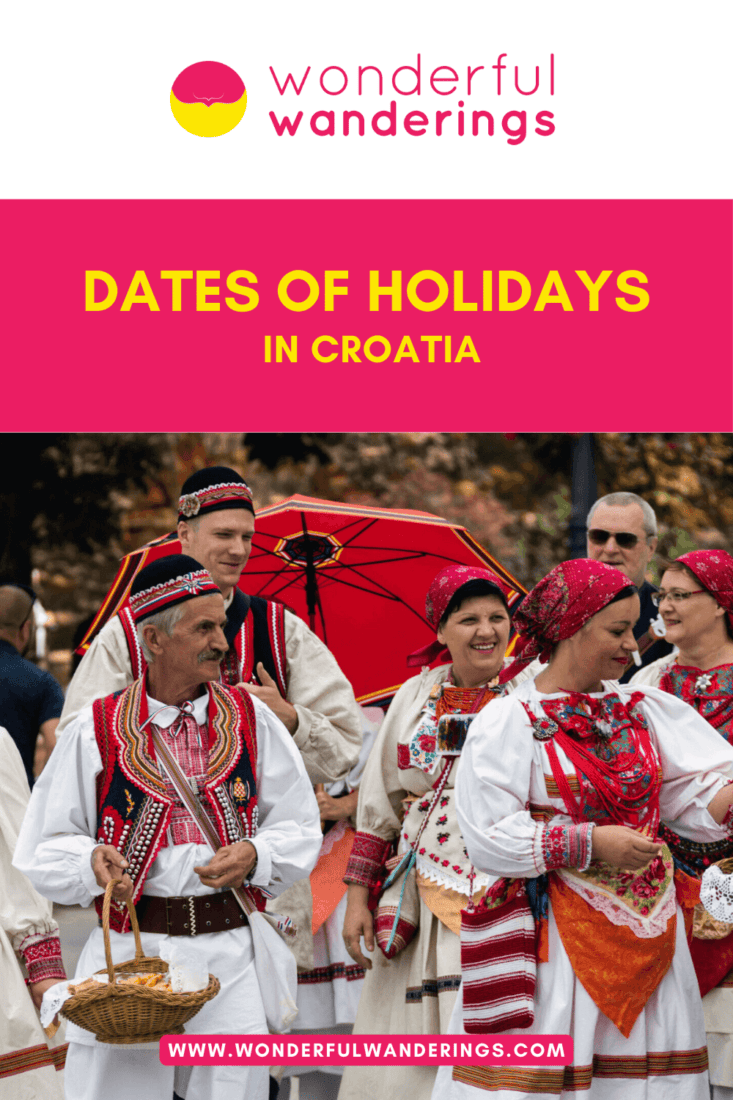
Croatia has 14 public holidays a year, and the 2 tables below give every 2026 and 2027 date with its weekday, from New Year’s Day on Thursday 1 January 2026 to St Stephen’s Day on Sunday 26 December 2027. This page was refreshed in September 2026 with the dates fixed by the Act on Holidays, Memorial Days and Non-Working Days (Narodne novine 110/2019, amended in 2025), the 2026 list published by the Ministry of Foreign and European Affairs, and the school calendars for 2025/26 and 2026/27 issued by the Ministry of Science, Education and Youth (MZOM). Two things changed since the last version: Corpus Christi no longer shares a date with Statehood Day (it moves with Easter and falls on 4 June 2026 and 27 May 2027), and Croatian schools return to a two-part winter break in 2026/27.
Croatia sits on the Balkan Peninsula along the Adriatic Sea, with more than 1,200 islands, islets and reefs off its coast. Zagreb is the capital and the country’s historic and cultural hub, Split is built around Diocletian’s Palace, Rijeka is the main port, Osijek is the baroque heart of Slavonia and Zadar keeps Roman and medieval remains on its peninsula. Public holidays in Croatia include New Year’s Day, Epiphany, Easter, Labour Day, Statehood Day, Corpus Christi, Victory Day, the Assumption, All Saints’ Day, Remembrance Day and Christmas. Croatians mark them with church services, family meals, processions, memorial ceremonies and, in summer, open-air concerts. Schools, banks, government offices and most shops close on these days, so the dates matter when you plan a trip.
What are the holiday dates in Croatia?
Croatia has 6 kinds of holiday dates, and only the first kind gives everyone a day off. The 6 kinds are public holidays, memorial days, religious days off for minority faiths, bank holidays, school holidays and commercial holidays, and each is described below.
- Public holidays (blagdani i neradni dani). Public holidays are the 14 non-working days listed in Article 1 of the Act on Holidays, Memorial Days and Non-Working Days: 1 January, 6 January, Easter Sunday, Easter Monday, 1 May, 30 May, Corpus Christi, 22 June, 5 August, 15 August, 1 November, 18 November, 25 December and 26 December. Employees receive their normal pay on these days. A public holiday that falls on a Sunday is not moved to the Monday, because Article 4 of the act rules out substitute days.
- Memorial days (spomendani). Memorial days are working days that the state marks with ceremonies, such as Independence Day on 25 June, the Day of the Croatian Parliament on 8 October, Europe Day and Victory over Fascism Day on 9 May and, since 1 May 2025, the Day of Remembrance for Children Killed in the Homeland War on 3 May. Shops, banks and offices stay open on memorial days.
- Religious days off for minority faiths. Religious days off are granted by Article 3 of the act to individual believers rather than to the whole country: Orthodox Christians can take 7 January for Christmas and the Julian-calendar Easter Monday, Muslims can take 1 day each for Eid al-Fitr and Eid al-Adha, and Jewish employees can take 1 day each for Yom Kippur and Rosh Hashanah.
- Bank holidays. Bank holidays are the same 14 dates as the public holidays, because the Croatian National Bank and the commercial banks close on every public holiday. Croatia has used the euro since 1 January 2023, so you can withdraw euros from any cash machine on a holiday and pay by card in most places; the old kuna is no longer accepted. Croatia joined the Schengen area on the same day, so there are no passport checks at the land borders with Slovenia and Hungary, on holidays or on any other day.
- School holidays. School holidays are the breaks set each year by the Ministry of Science, Education and Youth for primary and secondary schools: a winter break over Christmas and New Year, a spring break around Easter and a summer break from mid-June to early September. The 2026/27 calendar brings back a 1-week second winter break in late February. The exact dates are in the school holidays section of this guide.
- Commercial holidays. Commercial holidays are days such as Valentine’s Day on 14 February and Black Friday (27 November 2026 and 26 November 2027) that are not recognised by law but drive sales and promotions. Black Friday discounts have been advertised in euros since 2023, so a €50 ($54, £43) deal reads the same as it would in Italy or Germany.
The practical consequence for visitors is the shop rule. Shops are closed on Sundays and on public holidays under the Trade Act amendment that took effect on 1 July 2023 (Narodne novine 33/2023), and each retailer may open on only 16 Sundays a year. Shops inside airports, railway and bus stations, ports, petrol stations, hospitals, hotels, museums, marinas and campsites are exempt, and newspaper kiosks may open from 7 am to 1 pm. In coastal resorts in July and August you will barely notice the rule, because most retailers spend their 16 working Sundays on the summer season. In Zagreb, Osijek or any inland town in the off-season, expect closed doors on every date in the tables below.
What are the dates of the public holidays in Croatia in 2026?
The public holidays in Croatia in 2026 fall on the 14 dates listed below, and 4 of them (Statehood Day, the Assumption, All Saints’ Day and St Stephen’s Day) land on a weekend and are not carried over. The dates come from the Act on Holidays, Memorial Days and Non-Working Days and match the 2026 list published by the Ministry of Foreign and European Affairs.
| Date | Weekday | Holiday | Croatian name |
|---|---|---|---|
| 1 January 2026 | Thursday | New Year’s Day | Nova godina |
| 6 January 2026 | Tuesday | Epiphany | Bogojavljenje, Sveta tri kralja |
| 5 April 2026 | Sunday | Easter Sunday | Uskrs |
| 6 April 2026 | Monday | Easter Monday | Uskrsni ponedjeljak |
| 1 May 2026 | Friday | Labour Day | Praznik rada |
| 30 May 2026 | Saturday | Statehood Day | Dan državnosti |
| 4 June 2026 | Thursday | Corpus Christi | Tijelovo |
| 22 June 2026 | Monday | Anti-Fascist Struggle Day | Dan antifašističke borbe |
| 5 August 2026 | Wednesday | Victory and Homeland Thanksgiving Day and the Day of Croatian Defenders | Dan pobjede i domovinske zahvalnosti i Dan hrvatskih branitelja |
| 15 August 2026 | Saturday | Assumption of Mary | Velika Gospa |
| 1 November 2026 | Sunday | All Saints’ Day | Svi sveti |
| 18 November 2026 | Wednesday | Remembrance Day for the Victims of the Homeland War and of Vukovar and Škabrnja | Dan sjećanja na žrtve Domovinskog rata |
| 25 December 2026 | Friday | Christmas Day | Božić |
| 26 December 2026 | Saturday | St Stephen’s Day | Sveti Stjepan |
The long weekends in 2026 are Easter (Friday 3 April is a normal working day, but many people take it off), 1 to 3 May, 4 to 7 June if you bridge Friday 5 June, 20 to 22 June and 25 to 27 December. The 2026 holidays still ahead after this refresh are All Saints’ Day, Remembrance Day, Christmas Day and St Stephen’s Day.
How are the public holidays in Croatia celebrated?
The public holidays in Croatia are celebrated in the ways listed below, in calendar order.
- New Year’s Day (Nova godina). New Year’s Day opens the year with fireworks at midnight, concerts on the main squares of Zagreb, Split and Rijeka, and a slow 1 January of family lunches. Many Croatians attend Mass in the morning, and the belief that the year will go the way New Year’s Eve went keeps the parties long.
- Epiphany (Sveta tri kralja). Epiphany on 6 January closes the Christmas season: priests bless homes and water, families take down their trees and Christmas markets pack up. In coastal towns the blessing of the sea is part of the day.
- Easter Sunday (Uskrs). Easter Sunday is the main religious feast of the year. Families bring baskets of food to church for a blessing on Holy Saturday, decorate eggs known as pisanice and gather for a long lunch of ham, spring onions and a sweet bread called pinca.
- Easter Monday (Uskrsni ponedjeljak). Easter Monday continues the celebration with visits to relatives, egg-tapping contests and leftover Easter food. Shops stay closed, so buy what you need on Saturday.
- Labour Day (Praznik rada). Labour Day on 1 May is marked by trade-union rallies, concerts and picnics. In Zagreb the traditional event is the free bean stew served in Maksimir Park, and across the country it is the first outdoor day of the year for many families.
- Statehood Day (Dan državnosti). Statehood Day on 30 May commemorates the first session of the democratically elected multi-party Croatian Parliament on 30 May 1990. Official ceremonies, a flag-raising and wreath-laying at the Altar of the Homeland on Medvednica above Zagreb mark the day.
- Corpus Christi (Tijelovo). Corpus Christi is a Catholic feast held on the Thursday 60 days after Easter, so it moves every year: 4 June in 2026 and 27 May in 2027. Towns hold Eucharistic processions through streets decorated with flowers and altars, and it is a full public holiday.
- Anti-Fascist Struggle Day (Dan antifašističke borbe). Anti-Fascist Struggle Day on 22 June commemorates the formation of the First Sisak Partisan Detachment in the Brezovica forest on 22 June 1941, the first armed anti-fascist unit in occupied Yugoslavia. Wreath-laying ceremonies take place at the Sisak memorial and in other towns.
- Victory and Homeland Thanksgiving Day and the Day of Croatian Defenders (Dan pobjede i domovinske zahvalnosti i Dan hrvatskih branitelja). Victory Day on 5 August commemorates the recapture of Knin during Operation Storm on 5 August 1995. The central state ceremony is held in Knin, with a flag-raising on the fortress, military honours and events for war veterans across the country.
- Assumption of Mary (Velika Gospa). The Assumption on 15 August is the biggest pilgrimage day of the year. Tens of thousands of people walk to Marian shrines such as Marija Bistrica near Zagreb, Sinj in the Dalmatian hinterland and Trsat above Rijeka, and coastal towns hold processions and fairs.
- All Saints’ Day (Svi sveti). All Saints’ Day on 1 November is a quiet day of cemetery visits. Families clean and decorate graves and light candles, and Zagreb’s Mirogoj cemetery glows with thousands of lights after dark.
- Remembrance Day for the Victims of the Homeland War and of Vukovar and Škabrnja (Dan sjećanja na žrtve Domovinskog rata). Remembrance Day on 18 November marks the fall of Vukovar on 18 November 1991 and the killings in Škabrnja on the same day. The main event is the Column of Remembrance in Vukovar, a silent procession from the town hospital to the Memorial Cemetery, and candles are lit in windows nationwide.
- Christmas Day (Božić). Christmas Day on 25 December follows midnight Mass and a Christmas Eve of fasting dishes such as salt cod. Families exchange gifts, eat roast turkey or pork with mlinci, and the Advent markets in Zagreb run until early January.
- St Stephen’s Day (Sveti Stjepan). St Stephen’s Day on 26 December is a second family day of visits to relatives and friends. Everything except restaurants and hotel services stays closed.
What are the dates of the public holidays in Croatia in 2027?
The public holidays in Croatia in 2027 fall on the 14 dates listed below, and 5 of them (Labour Day, Statehood Day, the Assumption, Christmas Day and St Stephen’s Day) land on a weekend. Easter is early in 2027, on 28 March, which pulls Easter Monday to 29 March and Corpus Christi to 27 May.
| Date | Weekday | Holiday | Croatian name |
|---|---|---|---|
| 1 January 2027 | Friday | New Year’s Day | Nova godina |
| 6 January 2027 | Wednesday | Epiphany | Bogojavljenje, Sveta tri kralja |
| 28 March 2027 | Sunday | Easter Sunday | Uskrs |
| 29 March 2027 | Monday | Easter Monday | Uskrsni ponedjeljak |
| 1 May 2027 | Saturday | Labour Day | Praznik rada |
| 27 May 2027 | Thursday | Corpus Christi | Tijelovo |
| 30 May 2027 | Sunday | Statehood Day | Dan državnosti |
| 22 June 2027 | Tuesday | Anti-Fascist Struggle Day | Dan antifašističke borbe |
| 5 August 2027 | Thursday | Victory and Homeland Thanksgiving Day and the Day of Croatian Defenders | Dan pobjede i domovinske zahvalnosti i Dan hrvatskih branitelja |
| 15 August 2027 | Sunday | Assumption of Mary | Velika Gospa |
| 1 November 2027 | Monday | All Saints’ Day | Svi sveti |
| 18 November 2027 | Thursday | Remembrance Day for the Victims of the Homeland War and of Vukovar and Škabrnja | Dan sjećanja na žrtve Domovinskog rata |
| 25 December 2027 | Saturday | Christmas Day | Božić |
| 26 December 2027 | Sunday | St Stephen’s Day | Sveti Stjepan |
The long weekends in 2027 are 1 to 3 January, 27 to 29 March, 27 to 30 May if you bridge Friday 28 May, 5 to 8 August with a bridge on Friday 6 August, 30 October to 1 November and 18 to 21 November with a bridge on Friday 19 November. The year has no extra day off at the end, because Christmas Day and St Stephen’s Day both fall on the weekend.
What closes on public holidays in Croatia?
Government offices, courts, banks, post offices, schools and most shops close on all 14 public holidays in Croatia. The rules and exceptions that matter to a visitor are listed below.
- Government offices and banks. Government offices and banks close completely, and the Ministry of Foreign and European Affairs lists the same 14 dates as non-working days for embassies and consulates. Cash machines work as normal and dispense euros.
- Shops and supermarkets. Shops and supermarkets close under the Trade Act, with the exceptions listed in the holiday dates section for airports, stations, petrol stations, hotels and tourist areas. Buy food the day before, especially for Easter Monday, Christmas Day and St Stephen’s Day, when the closure covers 2 or 3 days in a row with a Sunday.
- Public transport. Public transport runs on a Sunday or holiday timetable, which the Croatian National Tourist Board warns means fewer bus and train departures and some routes not running at all. Check the day’s sailings before you travel between the islands, because ferry operators such as Jadrolinija adjust departures on holidays. A rental car takes the timetable out of the equation on those days, and you can compare car rental in Croatia before you commit to a bus route.
- Restaurants, museums and attractions. Restaurants, hotels and most museums and national parks stay open, because the closure rule does not apply to them. Plitvice Lakes, Krka and the Pula Arena open on most public holidays; check each site’s calendar for Christmas Day and New Year’s Day.
- Working on a holiday. Employees who work on a public holiday are paid at a higher rate under the Labour Act, and Article 6 of the holidays act lets the government name the public bodies that must stay open, such as hospitals, police and emergency services.
What are the holiday dates in Croatia that locals work?
The holiday dates in Croatia that locals work are Father’s Day, Mother’s Day, Valentine’s Day, Black Friday and the state memorial days, and each is described below.

- Father’s Day (Dan očeva). Father’s Day is celebrated on 19 March, the feast of St Joseph, and it is a normal working day. Children give cards and small gifts, and families gather for a meal in the evening. In 2026 it falls on a Thursday and in 2027 on a Friday.
- Mother’s Day (Majčin dan). Mother’s Day is celebrated on the second Sunday of May, which is 10 May 2026 and 9 May 2027. Flowers, cards and a family lunch are the custom, and shops follow their normal Sunday pattern because the day is already a Sunday.
- Valentine’s Day (Valentinovo). Valentine’s Day on 14 February is a cultural rather than a public holiday, so work and school run as usual. Restaurants in Zagreb, Split and Dubrovnik fill up with couples, and 14 February 2027 falls on a Sunday.
- Black Friday. Black Friday on 27 November 2026 and 26 November 2027 is a shopping day imported from the United States, with discounts advertised in euros across malls and online shops. It is a working day and shops open their normal hours.
- Memorial days (spomendani). Memorial days such as Independence Day on 25 June, the Day of the Croatian Parliament on 8 October and the Day of Remembrance for Missing Persons in the Homeland War on 30 August are marked with official ceremonies, but shops, offices and schools stay open. Independence Day on 25 June is the one visitors most often mistake for a public holiday; it was a non-working day until 2019 and has been a working memorial day since the current act took effect on 1 January 2020.
What are the Croatia school holidays in 2026 and 2027?
The Croatia school holidays in 2026 and 2027 are the spring break from 30 March to 6 April 2026, the summer break from 15 June 2026, the two-part winter break from 24 December 2026 to 5 January 2027 and from 22 to 26 February 2027, the spring break from 25 March to 2 April 2027 and the summer break from 16 June 2027. The school holidays are set by 2 decisions of the Ministry of Science, Education and Youth: the 2025/26 decision published in Narodne novine 88/2025 and the 2026/27 decision signed on 25 May 2026 and published in Narodne novine 58/2026. The dates apply to all primary and secondary schools and are listed below.
| School break | Dates | Classes resume |
|---|---|---|
| Winter break 2025/26 | 24 December 2025 to 9 January 2026 | Monday 12 January 2026 |
| Spring break 2026 | 30 March 2026 to 6 April 2026 | Tuesday 7 April 2026 |
| Summer break 2026 | from Monday 15 June 2026 (last day of classes Friday 12 June; Friday 22 May for final-year secondary pupils) | Monday 7 September 2026 |
| Winter break 2026/27, part 1 | 24 December 2026 to 5 January 2027 | Thursday 7 January 2027 |
| Winter break 2026/27, part 2 | 22 February 2027 to 26 February 2027 | Monday 1 March 2027 |
| Spring break 2027 | 25 March 2027 to 2 April 2027 | Monday 5 April 2027 |
| Summer break 2027 | from Wednesday 16 June 2027 (last day of classes Tuesday 15 June; Friday 21 May for final-year secondary pupils) | early September 2027, date not yet published |
The school year 2026/27 runs from Monday 7 September 2026 to Tuesday 15 June 2027, in 2 semesters: 7 September to 23 December 2026 and 7 January to 15 June 2027. Schools must deliver at least 175 teaching days (160 for final-year secondary classes), and vocational pupils on work placements can have a different pattern as long as their total break is at least 45 working days. The 2026/27 calendar restores the second winter break in late February that the 2025/26 year had dropped, so the ski resorts in Slovenia and Austria and the Croatian coast see a wave of Croatian families in the week of 22 February 2027. The 2027/28 decision is normally published in late May or June 2027; until then, assume classes start in the first full week of September 2027.
What is daylight saving time in Croatia?
Daylight saving time in Croatia runs from the last Sunday of March to the last Sunday of October, following the EU rule that applies to all member states. Croatia is on Central European Time (CET, UTC+1) in winter and Central European Summer Time (CEST, UTC+2) in summer, and the change dates for 2026 and 2027 are listed below.
- Sunday 29 March 2026. Clocks went forward 1 hour at 2 am to 3 am, and summer time started.
- Sunday 25 October 2026. Clocks go back 1 hour at 3 am to 2 am, and standard time returns; sunset in Zagreb drops to before 5 pm within days.
- Sunday 28 March 2027. Clocks go forward 1 hour at 2 am to 3 am.
- Sunday 31 October 2027. Clocks go back 1 hour at 3 am to 2 am.
The changes happen on the same night as in Italy, Slovenia, Hungary and the rest of the EU, so ferry and flight timetables from neighbouring countries stay in step. Easter Sunday 2027 falls on 28 March, the same day the clocks change, so Easter morning Mass starts an hour earlier than your body expects.
What are the astronomical events in Croatia in 2026 and 2027?
The astronomical events worth planning around in Croatia between now and the end of 2027 are 2 meteor-shower peaks in late 2026, a lunar eclipse in February 2027, a partial solar eclipse in August 2027 and the 2027 Perseids and Leonids. The 2 eclipses of summer 2026 have passed: the partial solar eclipse of 12 August 2026 covered 76.5% of the Sun over Zagreb just before sunset, and the partial lunar eclipse of 28 August 2026 was visible in the early morning. The remaining events, with times for Zagreb from Time and Date, are listed below in calendar order.
- Leonid meteor shower, 17 to 18 November 2026. The Leonids peak on the night of Tuesday 17 to Wednesday 18 November 2026, when Earth crosses the debris of comet Tempel-Tuttle. The Moon reaches first quarter on 17 November and sets around midnight, so the hours before dawn are dark. The radiant in Leo rises after midnight, so the darkest window is between 2 am and dawn from a dark spot such as the Velebit or Papuk hills.
- Geminid meteor shower, 13 to 14 December 2026. The Geminids peak on the night of Sunday 13 to Monday 14 December 2026 and can produce up to 120 meteors an hour under dark skies. The Moon is a thin waxing crescent 4 days after the 9 December new moon and sets in the early evening, which makes 2026 a good year for this shower.
- Penumbral lunar eclipse, 20 to 21 February 2027. The penumbral lunar eclipse begins at 10:12 pm on Saturday 20 February 2027, peaks at 12:12 am and ends at 2:13 am on 21 February, Zagreb time. Only the outer part of Earth’s shadow touches the Moon, so expect a slight dimming of the full Moon rather than a red disc.
- Partial solar eclipse, 2 August 2027. The total solar eclipse of Monday 2 August 2027 crosses southern Spain, Morocco, Algeria, Libya and Egypt; from Croatia it is a partial eclipse that starts at 10:04 am and peaks at 11:17 am in Zagreb, with a larger bite out of the Sun the further south you are. You need certified eclipse glasses or a pinhole projector for every phase, because no part of the eclipse is safe to view with the naked eye from Croatia.
- Perseid meteor shower, 12 to 13 August 2027. The Perseids peak on the night of Thursday 12 to Friday 13 August 2027, during the busiest week on the Croatian coast. The Moon is about 10 days old at the peak, between the 9 August first quarter and the 17 August full Moon, so wait for it to set after midnight and watch from a beach or island away from resort lighting.
- Leonid meteor shower, 17 to 18 November 2027. The Leonids return on the night of 17 to 18 November 2027, 3 days after the full Moon of 14 November. The waning gibbous Moon is up for most of the night, so only the brightest fireballs show through the moonlight.
What are the best things to do in Croatia during the holidays?
Croatia offers 6 things worth building a holiday-date trip around, listed below in the order we would do them.
- The Museum of Broken Relationships in Zagreb. The Museum of Broken Relationships displays personal objects and the stories of the failed relationships behind them, in the Upper Town a few steps from St Mark’s Church. It opens on most public holidays, when the rest of the city is closed, and tops our list of things to do in Zagreb.
- Lokrum Island off Dubrovnik. Lokrum Island is a 15-minute boat ride from Dubrovnik’s old harbour and holds a Benedictine monastery, a Napoleonic fort, a botanical garden and rocky swimming spots. It is the easiest half-day escape from the old town crowds on a summer holiday.
- The Roman amphitheatre in Pula. The Pula Arena was built around the end of the 1st century BCE and is one of the 6 largest surviving Roman amphitheatres. It hosts summer concerts and the Spectacvla Antiqva gladiator shows, and many of the festivals in Croatia cluster around the summer holiday dates in this guide.
- Wine tasting on the Pelješac peninsula. Pelješac is the home of the plavac mali grape and the Dingač and Postup wines made from it, and its family wineries around Potomje and Orebić offer tastings from spring to autumn. Assumption Day on 15 August is a lively time to visit, with processions in the villages.
- The baroque town of Varaždin. Varaždin was the capital of Croatia from 1767 to 1776 and keeps a pedestrianised centre of baroque and rococo palaces. The Varaždin Baroque Evenings fill the churches with concerts for 2 weeks every September, and Špancirfest, the street festival, runs in late August.
- The Blue Cave on Biševo. The Blue Cave on Biševo, next to the island of Vis, glows blue when the late-morning sun bounces off the white sea floor. Day trips run from Split, Hvar and Komiža from about May to October, and the cave is closed in rough seas.
Who are the most famous people in Croatia?
Croatia’s 5 most famous people, for most visitors, are Mirko Filipović, Luka Modrić, Rade Šerbedžija, Janica Kostelić and Nikola Tesla, and they are described below.
- Mirko Filipović. Mirko Filipović, known as Cro Cop, is a retired mixed martial artist, kickboxer and amateur boxer who won titles in both K-1 kickboxing and PRIDE mixed martial arts. He was born in Vinkovci on 10 September 1974.
- Luka Modrić. Luka Modrić is Croatia’s most decorated footballer, the winner of the 2018 Ballon d’Or and of multiple Champions League titles with Real Madrid, and the captain who led Croatia to the 2018 World Cup final. He was born in Zadar on 9 September 1985.
- Rade Šerbedžija. Rade Šerbedžija is an actor, director and musician known internationally for roles in films such as Eyes Wide Shut, Snatch and Mission: Impossible 2. He was born in Bunić, in the Lika region, on 27 July 1946.
- Janica Kostelić. Janica Kostelić is an alpine skier with 4 Olympic gold medals and 3 overall World Cup titles. She was born in Zagreb on 5 January 1982.
- Nikola Tesla. Nikola Tesla was born in Smiljan near Gospić, in the Lika region of present-day Croatia, on 10 July 1856. His work on alternating current made electricity generation and distribution practical at scale, his patents underpin radio and modern wireless communication, and he heads our guide to famous people from Croatia.
What are the most interesting facts about Croatia?
The 5 most interesting facts about Croatia for a first-time visitor are listed below. Our full guide to facts about Croatia covers more of them.
- Croatia has more than 1,200 islands, islets and reefs. The islands run the length of the Adriatic coast from Istria to the Montenegrin border, and fewer than 50 are inhabited. Their beaches, historic towns and marine life, including loggerhead turtles and the rare Mediterranean monk seal, make island tourism a pillar of the coastal economy.
- The largest white truffle on record at the time was found in Istria. Giancarlo Zigante and his dog Diana dug up a 1.31 kg (2.9 lb) white truffle in the Motovun forest near Livade on 2 November 1999, and Guinness World Records confirmed it as the biggest ever found. White truffles are prized for their aroma and are hunted in Istria every autumn.
- About 9% of Croatia’s territory is protected. The Ministry of Environmental Protection counts 409 protected areas covering 9.3% of the national territory, including 8 national parks such as Plitvice Lakes, Krka and Kornati. Lynx, bears and wolves live in the Velebit and Gorski kotar ranges.
- Dubrovnik played King’s Landing in Game of Thrones. Dubrovnik’s medieval walls, Gothic palaces and stone streets stood in for the capital of Westeros, with scenes shot on the city walls, at Fort Lovrijenac and in the old harbour, which doubled as Blackwater Bay.
- The necktie comes from Croatia. Croatian mercenaries serving in France in the 17th century wore knotted neckcloths that the French called cravates, from the word for Croats, and the fashion became the modern tie. Croatia marks Cravat Day on 18 October.
What are the best cities to visit in Croatia?
Croatia’s 5 cities to visit around the holiday dates are Zagreb, Split, Rijeka, Osijek and Zadar, and they are described below.
- Zagreb. Zagreb is the capital and the country’s historical and cultural hub, a free royal town since the Golden Bull of 1242, with Zagreb Cathedral, St Mark’s Church and the Museum of Broken Relationships as its key sights. The climate is continental, so spring and autumn are the comfortable seasons, and Advent in December fills the squares with markets and concerts. Plan at least 3 days, book a hotel in Zagreb once your dates are fixed, and see our list of places to visit in Croatia for the day trips around it.
- Split. Split is Croatia’s second-largest city and is built into and around Diocletian’s Palace, a Roman imperial residence from the early 4th century, with the Cathedral of St Domnius and Marjan Hill as the other landmarks. Late spring and early June bring warm sea without the August crowds, and 3 days cover the city and 1 island.
- Rijeka. Rijeka is the third-largest city and the main port, with a history that runs from the Byzantine Empire to Austria-Hungary. Trsat Castle, St Vitus Cathedral and the Korzo promenade are the highlights, and 1 to 2 days are enough, more if you come for the Rijeka Carnival in the weeks before Lent.
- Osijek. Osijek is the largest city in Slavonia, in the flat east of the country, and is known for the Tvrđa baroque fortress quarter, the neo-Gothic co-cathedral of St Peter and St Paul and the promenade along the Drava river. The climate is continental, and 3 to 5 days give you time to add the Kopački rit wetlands.
- Zadar. Zadar keeps the Roman Forum, the 9th-century Church of St Donatus and the modern Sea Organ and Greeting to the Sun on its old-town peninsula. The Mediterranean climate makes May to September the pleasant season, and 1 to 2 days are enough for the town itself.
About the author. This guide is written and maintained by the Wonderful Wanderings editorial team. Wonderful Wanderings was founded in 2012 by Sofie Couwenbergh, and the team covers Croatia for independent travellers, including the public holiday and school holiday dates in this post, the festivals and cities worth planning a trip around, and the guides to Zagreb, the islands and the coast, and updates this page when dates and rules change.