 EN
EN
 Nederlands
 Français
Traditional Croatian food splits along one line: the Adriatic coast cooks with olive oil, seafood and Mediterranean herbs, while the continental interior cooks with paprika, pork, cream and slow-braised meat. Zagreb sits inland but pulls from both, which is why a single city lets you work through most of this list. The 24 dishes below cover both halves of the country, with what each one is, where it comes from and what kind of place in Zagreb serves it well.
The eight dishes that best introduce Croatian cooking are listed below.
- Peka. Peka is a cooking method: meat, octopus or vegetables baked under a bell-shaped iron lid buried in hot coals for two to three hours. Order it a day ahead at a konoba, because it is cooked to order. Bread comes with it to soak up the pan juices.
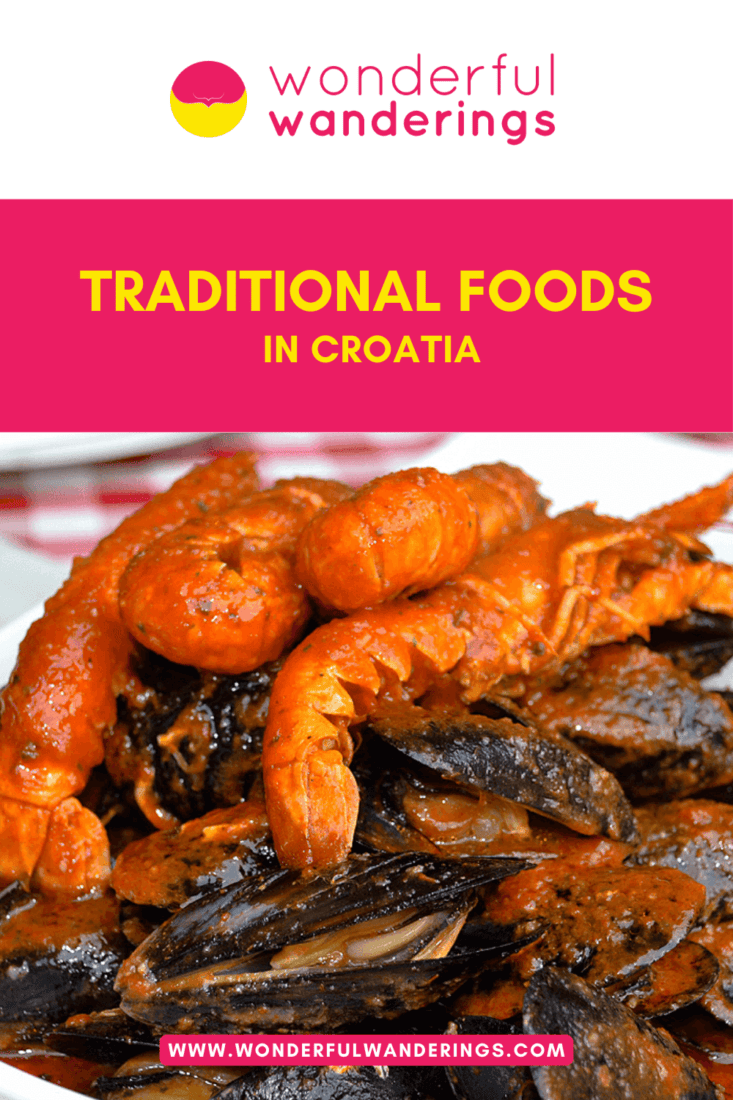
- Crni rižot. Crni rižot is black risotto, colored and flavored by cuttlefish or squid ink and usually mixed with squid, shrimp or mussels. It belongs to the Adriatic coast and turns up in Zagreb’s seafood restaurants. Pair it with a Croatian white such as Malvazija.
- Fritule. Fritule are small deep-fried doughnuts flavored with citrus zest and rum, eaten at Christmas and Carnival. They are best straight from the oil, crisp outside and soft inside, dusted with icing sugar. Zagreb’s Advent market is where most visitors meet them.
- Paški sir. Paški sir is a hard, salty sheep’s milk cheese from the island of Pag, where the sheep graze on wild sage and herbs. Serve it at room temperature with cured meat, olives and honey. Buy it at Dolac market or a Zagreb wine shop.
- Fuži. Fuži is hand-rolled Istrian pasta twisted into little tubes, served under game goulash or truffle sauce. It is made from egg, olive oil and durum flour. Istria is where to eat it properly.
- Štrukli. Štrukli are filled dough parcels from the Zagorje region, most often with fresh cheese, baked or boiled. They are heavy enough to be a main course. Zagreb has a restaurant that serves almost nothing else.
- Ćevapi. Ćevapi are small skinless grilled sausages of minced beef and lamb, served in flatbread with raw onion, kajmak and ajvar. They came to Croatia from the Ottoman Balkans and stayed. Eat them at a ćevabdžinica, not a restaurant.
- Brudet. Brudet is an Adriatic fish stew of mixed white fish and shellfish in tomato, onion, garlic and white wine. It is served family-style from the pot. Crusty bread on the side is not optional.
1. Peka
Peka is both a Croatian cooking technique and the bell-shaped iron lid that gives it its name. Peka works by placing meat, seafood or vegetables in a pan, covering it with the domed lid, and burying the whole thing under hot coals for two to three hours. The food steams in its own juices, comes out very tender, and picks up smoke from the embers.

Common proteins are lamb, veal, octopus, chicken and fish, with potatoes and onions underneath and rosemary, thyme, sage and bay through it. Garlic-infused olive oil goes over the top before serving. It is a dish for a table of people, not for one, and Dalmatian octopus peka goes particularly well with a Malvazija.
Order peka a day in advance, because no kitchen can produce it on demand. In Zagreb, the Dalmatian konobas do it best: Konoba Didov San at Mletačka 11 in the Upper Town is the reliable one, and its veal peka is what regulars go back for.
2. Crni rižot
Crni rižot, black risotto, is rice cooked in squid or cuttlefish ink until it turns jet black, usually with squid, shrimp or mussels stirred through it. Crni rižot comes from the Adriatic coast, where the ink and the seafood arrive together, and it is served as a starter or a main straight from the pan.

The ink does the work of a sauce, so nothing else is needed beyond a squeeze of lemon, a grind of black pepper and garlic-rubbed grilled bread for the dark juices at the bottom. Some versions add chili. The rice can be al dente or loose and porridge-like depending on the cook.
In Zagreb, look for it at seafood restaurants that bring fish up from the coast rather than at general konobas. Ribice i Tri Točkice is the value pick for exactly this kind of cooking, and Takenoko has been Zagreb’s Japanese restaurant for two decades if you want the seafood treated differently.
3. Fritule
Fritule are small deep-fried doughnuts, crisp outside and soft inside, flavored with lemon zest, raisins and a splash of rum or brandy. Fritule belong to the Croatian coast and to the Christmas and Carnival seasons, when they are fried in batches and sold by the bag.

Eat them within minutes of frying, plain or with a dusting of icing sugar, and drink strong black coffee or a sweet wine alongside. Some regions use potato dough or corn flour instead of wheat, and some versions get walnuts, dried fruit or chocolate. The classic is plain.
Zagreb’s Advent market in the city center is where most visitors meet fritule, sold from stalls and mobile fryers through December. Outside the season they turn up in bakeries and at Carnival.
4. Paški sir
Paški sir is a hard, salty sheep’s milk cheese made only on the island of Pag. Paški sir gets its flavor from what the Paška sheep eat, which is wild sage, sea fennel and other herbs growing on rock that the bura wind salts with sea spray, and it has protected status as a result.

Serve it at room temperature, sliced or broken into shards, with cured meat, figs, grapes, olives and Pag’s sage honey. A little extra virgin olive oil over the top brings out the salt. Young Pag cheese aged two to seven months is milder and semi-soft; aged for a year or more it goes grainy and develops crystals.
Sirana Gligora on Pag is the producer that has taken the cheese furthest, with a Super Gold at the 2018 World Cheese Awards and a gold in 2022. In Zagreb, buy it at Dolac market or at Vinoteka Bornstein on Kaptol, which has been selling Croatian wine and food from a brick cellar for decades.
5. Fuži
Fuži is hand-rolled pasta from the Istrian peninsula, cut into diamonds and twisted around a stick into short tubes. Fuži takes its name from the Italian “fuso”, meaning spindle, which is the shape it copies, and it is made from egg, olive oil and durum flour.

It is served under something rich: game goulash of veal or venison, a truffle cream sauce, or a tomato-based meat sauce. Grated hard sheep’s cheese and a little olive oil finish it. Istrian wines are the natural pairing, whether Malvazija, Teran or Muškat.
Fuži is genuinely Istrian rather than Zagreb food, so the honest advice is to eat it in Istria, ideally in a hill village around Motovun during truffle season. In Zagreb, a restaurant with a proper Istrian section on its menu will do it justice; a general tourist konoba usually will not.
6. Štrukli
Štrukli are dough parcels filled with fresh cheese, either baked until the top blisters or boiled and served in their cooking cream. Štrukli come from the Zagorje region north of Zagreb and they are the closest thing the capital has to a signature dish.

They are heavy. A portion is a main course, not a side, and it usually arrives with a salad. Sweet versions exist too, filled with walnuts, apples, plums, cherries or chocolate, and savory ones with meat or mushrooms. No sauce is needed, because the cream in the dish is the sauce.
La Štruk on Skalinska, in the old town below the cathedral, serves almost nothing but štrukli in about a dozen versions, and it is the single best answer to “where do I try this”. Traditional Zagreb restaurants such as Vinodol on Teslina and Stari Fijaker 900 on Mesnička keep them on the menu as well.
7. Ćevapi
Ćevapi are small skinless grilled sausages of minced beef, often with lamb, seasoned with little more than salt, pepper and garlic. Ćevapi came to Croatia from the Ottoman Balkans and are now eaten across the country, though Bosnia and Herzegovina remains their heartland.

Eat them hot off the grill inside lepinja flatbread, with chopped raw onion, kajmak and ajvar. That combination is the whole point, and no extra sauce belongs anywhere near it. Regional styles vary: Banja Luka ćevapi come joined in fours, Travnik ćevapi use veal, and Sarajevo portions are counted in fives and tens.
In Zagreb, go to a ćevabdžinica rather than a restaurant. The grills around Dolac market, Plac Kitchen & Grill among them, do the straightforward version well, and Zagreb also has a long line of Bosnian-run places in the outer districts where the portions are bigger and the prices lower.
8. Brudet
Brudet is an Adriatic fish stew built from whatever the boats brought in, stewed with onion, garlic, tomatoes and white wine. Brudet is a coastal dish through and through, cooked in one pot and served from it, with the fish left on the bone.

The fish changes with the catch: sea bass, sea bream, grouper, monkfish, scorpionfish or eel, with mussels, clams, shrimp or squid alongside. Octopus and crab turn up too. The stewing liquid becomes the sauce, so all it needs is olive oil, a lemon wedge and bread.
Zagreb is 150 km (93 miles) from the sea, so brudet here depends on a restaurant that buys fish daily rather than weekly. Ribice i Tri Točkice is the one to try first.
9. Skradinski rižot
Skradinski rižot is a risotto made by braising veal and onions in broth for hours until the meat falls apart, then cooking rice in that sauce. Skradinski rižot comes from Skradin on the Krka river, and the cooking is often measured in half-days rather than hours.

The long reduction is what makes it: a thick, savory rice with shreds of veal through it, eaten with crusty bread and a Dalmatian white. Recipes are closely held family property, so versions differ in whether prosciutto goes in, whether chicken stock joins the beef, and whether sheep’s cheese finishes it.
This one is genuinely local to Skradin and is rarely on a Zagreb menu. If you are heading to Krka National Park, eat it in Skradin itself. In Zagreb, the konobas serve other risottos well but not this one.
10. Pašticada
Pašticada is a Dalmatian beef pot roast, marinated for a day or more and then braised slowly in red wine, vinegar and dried fruit until it can be cut with a spoon. Pašticada is celebration food in Dalmatia, cooked for weddings, saints’ days and Christmas rather than on a weeknight.

The sauce is the point: sweet and sour together, from prunes or figs, nutmeg, clove and cinnamon, reduced down with the vegetables. It is served with homemade gnocchi or pasta, and bread for the rest of the sauce. Plavac Mali is the classic wine with it.
Traditional Croatian restaurants in Zagreb keep Dalmatian classics on the menu alongside the continental ones, so Vinodol and Stari Fijaker 900 are both reasonable starting points. Ask whether it is on that day, because a kitchen that makes it properly makes it in batches.
11. Salata od hobotnice
Salata od hobotnice is octopus salad: octopus boiled until tender, chopped, and dressed with olive oil, vinegar, garlic and parsley. Salata od hobotnice is served cold as a starter or a light lunch, sometimes over leaves, always with bread.

Additions vary by household. Tomatoes, onion, roasted red peppers, rocket or boiled new potatoes all turn up, and more rustic versions keep the skin on for texture. The dressing does everything, so no sauce is needed. A Dalmatian white cuts through it.
In Zagreb, it belongs on the same menus as brudet and crni rižot, which means the seafood restaurants rather than the meat-focused konobas. Ribice i Tri Točkice again.
12. Sarma
Sarma is cabbage rolls: soured or pickled cabbage leaves wrapped around minced meat and rice, then braised for hours. Sarma is eaten across the Balkans, Turkey and central Europe, and in Croatia it is winter food, particularly around Christmas.

It is heavy and comes as a main course, with bread, pickles and sour cream or yogurt on the side. The filling can be pork, beef, lamb or a mix, with onions, carrots, garlic and herbs. The braising liquid is the sauce. Ajvar is a common condiment alongside.
Zagreb restaurants that cook continental Croatian food serve it in the colder months. Kod Pere on Cvjetka Rubetića is a family restaurant of exactly that kind, and Stari Fijaker 900 covers the same ground closer to the center.
13. Istarski pršut
Istarski pršut is dry-cured ham made only on the Istrian peninsula, and it carries EU Protected Designation of Origin status. Istarski pršut is distinguished from its Dalmatian cousin by being skinned before curing and rubbed with sea salt and herbs rather than smoked.

Serve it thinly sliced at room temperature with olives, cheese, bread and figs, or shave it over risotto, pasta or salad. Aged around 12 months it is soft and lightly salty; at 18 months or more it darkens, firms up and develops crystals, and white mold on the outside adds its own flavor.
In Zagreb, buy it at Dolac market or at a specialist food shop, and drink Malvazija with it. Istria itself, around Motovun, Buzet and Buje, is where the smokehouses are.
14. Mlinci
Mlinci are thin sheets of unleavened dough, baked dry and then broken up and soaked in hot meat juices. Mlinci come from Zagorje in northern Croatia and from neighboring Slovenia, and they exist to go under a roast.

The classic pairing is turkey with mlinci, which is the Zagorje Sunday lunch, though duck and chicken work the same way. The dry sheets drink the pan drippings and go soft in the middle while staying chewy at the edges. Some people eat them plain and crisp as a snack, and sweet versions dusted with sugar exist.
Look for turkey with mlinci on the menu at Zagreb restaurants cooking continental Croatian food, especially in autumn and winter. Vinodol and Kod Pere both work in that register.
15. Punjena paprika
Punjena paprika is bell peppers hollowed out, stuffed with minced meat, rice and onion, and baked or simmered in tomato sauce. Punjena paprika is shared across Croatia, Serbia, Bosnia, Hungary and Bulgaria, and each of them will tell you their version is the original.

It is a main course, served with bread, mashed potato or yogurt. The filling is usually pork and beef with rice, though vegetarian versions with mushrooms are easy to find now. Ajvar on the side is standard.
This is home cooking more than restaurant cooking, so the places to find it are the family-run Zagreb restaurants that serve a daily menu rather than the tourist-facing ones. Kod Pere is the type.
16. Burek
Burek is a coiled or layered pie of paper-thin filo brushed with fat and filled with minced meat, cheese, spinach or potato. Burek arrived with the Ottomans and became a Balkan staple, eaten in Croatia for breakfast, as a late-night meal, or whenever a bakery is open.

It is meant to be eaten by hand, hot, with the filo cracking apart. Strained yogurt on the side is the traditional partner and cuts the fat. In Croatia and Bosnia, strictly speaking, only the meat version is burek; the cheese one is sirnica and the spinach one zeljanica.
Buy it from a bakery rather than a restaurant. The pekare around Dolac and in Zagreb’s outer districts, particularly the Bosnian-run ones, turn it out through the day, and a portion costs a few euros.
17. Zagrebački odrezak
Zagrebački odrezak is a veal cutlet stuffed with ham and cheese, breaded and fried, and it is Zagreb’s own dish. Zagrebački odrezak sits somewhere between a cordon bleu and a Wiener schnitzel, and it appeared on Zagreb menus in the middle of the 20th century.

Eat it as soon as it lands, while the crust is still crisp and the cheese inside is molten. It comes with chips or rice and a lemon wedge, and tartare sauce is the usual condiment. Pork or chicken sometimes stands in for veal, and gouda or edam for the cheese, but the construction stays the same.
The traditional restaurants in the center all do it. Stari Fijaker 900 on Mesnička has been serving Zagreb classics for around thirty years, and Vinodol on Teslina and Agava on Tkalčićeva are the other two obvious stops.
18. Čobanac
Čobanac is a shepherd’s stew from Slavonia in eastern Croatia, made from several kinds of meat cooked for hours in a paprika-heavy broth. Čobanac was originally cooked outdoors in a copper cauldron over a fire, and it is still made that way at village events and festivals.

Beef, pork, lamb, venison and game birds all go in, sometimes several at once, with onions, paprika and potatoes. The heat varies: sweet paprika is the base and hot peppers are optional. It is served from the pot with bread, and Graševina, Slavonia’s white grape, is what to drink with it.
In Zagreb it is a winter menu item at restaurants cooking continental Croatian food rather than an everyday dish. Slavonia itself, around Osijek and Đakovo, is where to eat it if you get that far east.
19. Rožata
Rožata is a Dubrovnik caramel custard, set in a mold and turned out so the dark caramel runs down the sides. Rožata is flavored with rose liqueur, which is where the name comes from, and that is what separates it from a plain crème caramel.

Serve it cold, straight from the fridge, on its own or with berries. Traditional Dubrovnik rožata has no flour in it and stays soft; versions elsewhere add flour or cornstarch and end up firmer and more cake-like.
Zagreb restaurants with Dalmatian menus put it on the dessert list, and it is worth ordering over the imported tiramisu. In Dubrovnik itself, almost every restaurant in the old town has a version.
20. Orahova potica
Orahova potica is a rolled yeast cake filled with a thick paste of ground walnuts, sugar and butter, baked and sliced to show the spiral. Orahova potica is shared with Slovenia, where potica is a national dish, and in Croatia it belongs to the northern regions and to holidays.

Eat it at room temperature with coffee, at breakfast or as dessert. Christmas and Easter are its seasons, though bakeries sell it year-round. Fillings vary to poppy seed, sweet cheese, raisins, apple or chocolate, and savory versions with meat or mushrooms exist. Icing sugar over the top is the only finish it needs.
Buy it from a bakery in Zagreb rather than hunting for it on a restaurant menu, or from a stall at Dolac. It also travels well, which makes it a better souvenir than most.
21. Kremšnita
Kremšnita is a custard slice: a thick layer of vanilla custard and whipped cream between two sheets of puff pastry, cut into squares. Kremšnita is claimed most loudly by Samobor, a small town 25 km (15.5 miles) west of Zagreb, where samoborska kremšnita is the local institution.

It is served cold and eaten with a fork and a certain amount of engineering, because the pastry shatters and the custard escapes. There are firmer versions made with flour or cornstarch and softer ones without, and Zagreb’s Bledi-style variant leans further towards cream.
Two pastry shops on Samobor’s main square, Slastičarnica U Prolazu and Kavana Livadić, are the ones locals send you to, and the trip out takes half an hour by bus or car. In Zagreb, the older slastičarnice and coffee houses all keep a tray of them.
22. Kulen
Kulen is a cured, smoked pork sausage from Slavonia and Baranja, minced fine, heavily paprika’d and packed into a pig’s caecum, which gives it its fat, teardrop shape. Kulen is aged for months, and the good stuff is hot enough to notice without being punishing.

Serve it thinly sliced at room temperature as a starter, with a sharp sheep’s cheese like paški sir, bread, mustard, pickles or figs, and a glass of Graševina. Some kulen carries a white mold on the outside, which is intended. It needs no condiment, though mustard, horseradish and cornichons all work.
In Zagreb, buy it at Dolac market or from a specialist food shop, and expect to pay for the real Slavonian article rather than the supermarket version. Kulenijada, the kulen competition in Požega, is where producers show off in late summer.
23. Pršut
Pršut is dry-cured ham made from a whole pork leg, salted, pressed and air-dried for a year or more in the coastal wind. Pršut is Croatia’s answer to prosciutto, and the bura, the cold dry wind coming off the mountains, is the part of the process that cannot be copied inland.

Serve it thin, at room temperature, with cheese, olives, bread or figs, or shave it over risotto and salad. Croatia has four protected regional pršuts: Istarski, Dalmatinski, Drniški and Krčki. Istrian pršut is skinned and herbed; Krk and Dalmatian are cured with the skin on; Drniš pršut is smoked as well as air-dried.
Dolac market and the specialist food shops in central Zagreb are where to buy it, and Vinoteka Bornstein will put a plate together with wine to match. Malvazija is the standard pairing.
24. Maneštra
Maneštra is an Istrian bean and vegetable soup, thick enough to stand a spoon in, cooked slowly with a piece of cured pork for depth. Maneštra is Istria’s version of minestrone, and the Istrian markers are sweet corn, a prosciutto bone and a splash of vinegar at the end.

It changes with the season and with whatever is in the garden: potatoes, tomatoes, onions, carrots, turnips, cabbage, pasta shapes and beans of several kinds. The long cooking makes the broth, so it needs nothing but olive oil and bread.
Like fuži, it is properly Istrian rather than Zagreb food, and it is worth ordering in an Istrian agrotourism if you are over that way. In Zagreb it appears as a soup of the day at restaurants with Istrian leanings.
What are the signature dishes of Croatia that every visitor should try?
The signature dishes of Croatia that every visitor should try are listed below.
- Crni rižot (black risotto). Crni rižot is the Dalmatian coast’s calling card, a rice dish colored and flavored with cuttlefish or squid ink. It started as fishermen’s food using the whole catch and became a coastal restaurant fixture.
- Pašticada. Pašticada is a braised beef roast in a sweet-sour sauce of wine, vinegar and dried fruit. It is Dalmatian celebration cooking, made for holidays and family occasions rather than everyday meals.
- Ćevapi. Ćevapi are small grilled minced-meat sausages eaten in flatbread with onion and ajvar. They arrived under Ottoman rule and became the everyday grill food of the whole region.
- Peka. Peka is meat or octopus baked for hours under an iron bell buried in coals. It is the most distinctly Croatian cooking method on this list and has to be ordered ahead.
- Pršut. Pršut is air-dried ham cured for a year in the coastal wind, and four regional versions carry protected status. It opens most meals along the coast.
- Kotlovina. Kotlovina is pork and sausage cooked in a wide iron pan over an open flame, a speciality of the countryside around Zagreb and Samobor. It is festival and fair food, cooked in quantity and eaten outdoors.
What foods are a must-try for first-time visitors to Croatia?
The must-try foods for a first-time visitor to Croatia are listed below, chosen because each one is easy to find and hard to get a bad version of.
- Ćevapi. Ćevapi are the easiest entry point: cheap, everywhere, and served the same way from Zagreb to Split. The paprika, garlic and grill smoke give you the Balkan half of Croatian cooking in one bite.
- Crni rižot. Crni rižot is the coastal counterpart and looks like nothing else you will order. The ink tastes far less strong than its color suggests, and it is a good introduction to how Croatia treats seafood.
- Peka. Peka needs a day’s notice and a group, which makes it the meal to plan rather than stumble into. It is worth the organising.
- Fritule. Fritule are the Christmas and Carnival sweet, sold hot from stalls. If you are visiting in December, Zagreb’s Advent market is full of them.
- Paški sir. Paški sir is the cheese that tastes of the island it comes from, salty and herbal from what the sheep eat. Try it plain first, before olive oil or honey.
What are the local desserts in Croatia?
The local desserts of Croatia are listed below.
- Rožata. Rožata is a Dubrovnik caramel custard flavored with rose liqueur, chilled and turned out of its mold. It is served plain or with berries.
- Fritule. Fritule are small fried doughnuts with rum and raisins, rolled in sugar. They belong to Christmas and Carnival on the coast.
- Kroštule. Kroštule are ribbons of sweet dough twisted, fried and dusted with sugar. They are a Carnival sweet, common in Istria and Dalmatia, and closely related to Austrian and Italian versions.
- Palačinke. Palačinke are thin pancakes rolled around chocolate spread, jam, walnuts or curd cheese. They cross over into breakfast and street food.
- Kremšnita. Kremšnita is the custard-and-cream slice that Samobor built a reputation on. It is the dessert to plan a day trip around.
What are the best starters or snacks to eat in Croatia?
The starters and snacks worth ordering in Croatia are listed below.
- Pršut. Pršut is air-dried ham sliced paper thin, and it opens almost every coastal meal. Order it with cheese and olives as a shared plate.
- Paški sir. Paški sir is the hard sheep’s cheese from Pag, salty and herbal. It is the other half of that same plate.
- Masline. Masline are olives, and Istria and Dalmatia both produce them alongside some of Europe’s better-rated olive oils. A dish of them arrives before you ask.
- Ražnjići. Ražnjići are cubes of pork or veal grilled on skewers, sold at markets, festivals and roadside grills. They are the portable version of Croatian grill food.
- Soparnik. Soparnik is a thin Swiss chard pie from the Poljica region near Split, baked directly on a hearth under embers and rubbed with garlic and oil. It carries protected status and is naturally vegan.
What are the best foods to eat for breakfast in Croatia?
The best breakfasts in Croatia are listed below, and most of them come from a bakery rather than a kitchen.
- Burek. Burek is the filo pie Croatians pick up from a bakery on the way to work. It is filling, cheap and available from early morning.
- Jogurt s voćem. Jogurt s voćem is thick yogurt with fresh fruit, the light option and the usual partner to a burek.
- Jaja i pršut. Jaja i pršut is eggs with dry-cured ham, the protein breakfast, common in guesthouses and coastal hotels.
- Sir i vrhnje. Sir i vrhnje is fresh cow’s cheese with sour cream, eaten with bread and often with paprika sprinkled over it. Dolac market sells both from the same stalls.
- Palačinke. Palačinke are thin pancakes, sweet or savory, and they double as breakfast when there is time to sit down.
What are the best street foods in Croatia?
The best street foods in Croatia are listed below.
- Burek. Burek leads this list too, because a bakery is never more than a few streets away and it is the cheapest hot food in the country.
- Ćevapi. Ćevapi are the grill counterpart, wrapped in lepinja with onion and ajvar and eaten standing up.
- Palačinke. Palačinke are cooked to order on griddles at stands and markets, filled with chocolate spread, jam, cheese or ham.
- Kremšnita. Kremšnita is sold by the slice at bakeries and pastry shops, and it is the sweet most likely to end up in a paper box on a bench.
- Langoši. Langoši are discs of deep-fried dough topped with garlic, cheese and sour cream, borrowed from Hungarian lángos and common at fairs and markets in northern Croatia.
- Sirnica. Sirnica is the cheese-filled sibling of burek, flaky outside and soft inside, and it comes out of the same bakery ovens.
What are the top vegan foods in Croatia?
The vegan options in Croatia are listed below, and several of them are traditional rather than adapted.
- Soparnik. Soparnik is the Poljica chard pie, made from flour, water, chard, onion and oil, and it is vegan as long as the cheese is left off the top.
- Fritule. Fritule in their basic form are flour, yeast, oil, citrus zest and rum, with no egg or dairy, so the traditional recipe is already vegan.
- Paprenjaci. Paprenjaci are hard spiced biscuits with black pepper and honey, and versions made without honey are vegan. They have been made in Croatia since at least the 16th century.
- Maneštra. Maneštra is an Istrian bean and vegetable soup that is vegan whenever the cured pork is left out, which many places will do if you ask.
- Blitva. Blitva is Swiss chard boiled with potatoes, garlic and olive oil, and it is the standard vegetable side on the whole coast.
What are the dining customs or etiquette in Croatia?
Three customs cover most of what a visitor needs to know about eating in Croatia. First, arrive on time when you are invited to someone’s home, and call ahead if you are going to be late, because the host has been cooking. Bring something: wine, coffee, cake or flowers. Second, wait for the host to start, and expect to be offered more food than you can eat. Refusing a second helping outright is less polite than accepting a small one. Third, tipping in restaurants is modest rather than expected: rounding up, or about 10% for good service, is normal, and it is often given in cash even when the bill is paid by card.
What local ingredients are commonly used in Croatia?
The ingredients that define Croatian cooking are listed below.
- Olive oil. Olive oil runs through the whole coast and the islands, used for cooking, dressing and dipping. Istrian oils in particular rate among Europe’s best in annual guides, and the good ones taste peppery and bitter.
- Truffles. Truffles come from the Motovun forest in Istria, one of the strongest truffle grounds in Europe. The white truffle season runs through autumn, the black one for much of the year.
- Seafood. Seafood is the backbone of coastal cooking, from Mali Ston oysters to squid and cuttlefish for crni rižot. Croatia’s stretch of Adriatic and its islands keep the supply short and local.
- Cured pork. Cured pork covers pršut on the coast and kulen in Slavonia, air-dried and smoked with fruitwood, oak or chestnut. Each region defends its own method.
- Paprika. Paprika is the continental signature, sweet or hot, and it colors everything from čobanac to kulen. Slavonia grows it and grinds it.
- Wild game. Wild game, meaning deer, boar and rabbit, comes out of the inland forests and into goulash and ragù, seasoned with juniper and rosemary.
How do the local spices and flavors differ from those in other regions?
Croatian flavors differ by region because the country sits on a seam between two food cultures. The five reasons are listed below.
- Geography. Croatia lies between central Europe and the Mediterranean, so the seasoning changes as you cross the mountains. The coast reaches for rosemary, sage, bay and oregano; the interior reaches for paprika, garlic and pepper.
- History. Austro-Hungarian rule left goulash, schnitzel and strudel in the interior, while Venetian rule left risotto, pasta and olive oil on the coast. Ottoman rule left ćevapi, burek and ajvar across both.
- Climate. Mediterranean winters let herbs grow year-round on the coast, which is why they are used fresh. Continental winters push cooking towards preserved paprika, dried beans and cured meat.
- Ingredients. Truffles and olive oil come from Istria, sheep’s cheese from Pag, freshwater fish from the Danube and Drava, peppers for ajvar from Slavonia. The seasoning follows what grows nearby.
- Regional habit. The same dish is made differently 100 km (62.1 miles) apart. Stuffed peppers use rice in Dalmatia and buckwheat in parts of Zagorje, and štrukli are savory in one village and sweet in the next.
Are there any traditional cooking methods in Croatia?
Yes, and four of them are still in everyday use. Peka is the best known: food is placed under a domed iron lid, buried in embers and left for hours, which steams and roasts it at the same time. Spit-roasting whole lamb, goat or pig over embers is the method for festivals and family gatherings, with potatoes roasting in the dripping fat underneath. Baking bread under a metal dome called a sač is the continental equivalent, concentrating the heat of a wood fire around a single loaf. And curing pršut by air-drying salted pork legs in the bura wind for 12 to 24 months is less a cooking method than a regional industry, one that depends on a wind no oven can imitate.
Are there any regional variations in Croatian cuisine?
Yes, and Croatia is easiest to understand as four kitchens rather than one. Dalmatia and the islands cook seafood simply, with olive oil, garlic, parsley and a grill, and add peka for the long, slow dishes. Istria overlaps with Italy: fuži and other fresh pastas, truffles, olive oil, maneštra and its own pršut, with Malvazija and Teran to drink. Zagorje and the region around Zagreb are central European, with štrukli, mlinci, turkey, cream and strudel. Slavonia in the east is the paprika country, with kulen, čobanac, freshwater fish paprikaš and Graševina.
What are the best Croatian dish recipes to cook yourself?
Five Croatian dishes are worth attempting at home, and they are listed in order of difficulty. First, ćevapi need only minced beef and lamb, garlic, salt, pepper and a very hot grill, and the trick is resting the mixture overnight so it binds. Second, fritule are a straightforward yeast batter with lemon zest, raisins and rum, dropped into hot oil by the spoonful. Third, crni rižot needs squid ink, which is the hardest ingredient to source outside Croatia, but the technique is ordinary risotto technique. Fourth, pašticada takes three days: marinate the beef in wine and vinegar, braise it slowly, then reduce the sauce with prunes and spices. Fifth, peka needs equipment you probably do not own, but a heavy casserole with a tight lid in a very low oven gets surprisingly close.
Are there any traditional drinks that complement the local food in Croatia?
The traditional Croatian drinks worth ordering with food are listed below.
- Wine. Wine has been made here for more than 2,000 years, and the native grapes are the interesting part: Plavac Mali for reds on the Dalmatian coast, Malvazija and Teran in Istria, Graševina in Slavonia. Match the wine to the region the dish comes from and you will rarely go wrong.
- Rakija. Rakija is fruit brandy, made from plums, grapes, cherries, pears or herbs, and it is offered before a meal as an aperitif and after it as a digestif. Refusing the first glass is harder than it sounds.
- Craft beer. Craft beer arrived in Croatia in the 2010s and Zagreb now has a solid scene of independent breweries and taprooms. It goes better with ćevapi and burek than wine does.
- Coffee. Coffee is a social institution rather than a drink in Croatia, and sitting over one for two hours is the national pastime. Order it after a meal, never during.
- Herbal teas and juices. Herbal teas from wild-picked sage, chamomile and mint are common after heavy meals, and the islands press strong fruit juices from figs, cherries and citrus.
What are the best restaurants to eat in Zagreb as a visitor?
The Zagreb restaurants worth booking are listed below, from the fine-dining end to the traditional one.
- Noel. Noel holds one Michelin star and is the most ambitious kitchen in the city, working modern European technique over Croatian ingredients. Book well ahead.
- Dubravkin Put. Dubravkin Put also holds a Michelin star, in a glass-walled room at the edge of the Tuškanac forest a few minutes’ walk from the old town. Its cooking leans Mediterranean and seafood-heavy.
- Bistro Apetit. Bistro Apetit sits in leafy Jurjevska in the Upper Town, where chef Marin Rendić works a changing seasonal menu. It is the quieter, more precise option of the three at this level.
- Vinodol. Vinodol is the reliable traditional choice, on pedestrian Teslina in the center, open from midday to midnight with a long wine list and Croatian classics done properly.
- Stari Fijaker 900. Stari Fijaker 900 on Mesnička has been serving Zagreb food for about thirty years and is where to order Zagrebački odrezak and štrukli in one sitting.
- Le Bistro. Le Bistro is the Esplanade Zagreb Hotel’s brasserie, open since 1986 and run by executive chef Ana Grgić Tomić. If you want to stay in the building, check dates at the Esplanade Zagreb Hotel, which guests rate 9.5 for location.
What are the best food tours in Zagreb?
Zagreb food tours run two to four hours, cover five to ten tastings and almost all of them start at or pass through Dolac market. A good one gets you into the places you would not push the door of on your own: the cheese and cured-meat stalls under the red umbrellas, a bakery for burek, a konoba for štrukli, and a wine cellar for a Graševina or a Plavac Mali. Small-group walking tours are the common format, and private versions cost more but move at your pace and can be steered towards what you actually want to eat. Book a morning slot if the tour includes Dolac, because the market winds down by early afternoon.
What are the most unique facts about Croatia and Zagreb?
Zagreb collects oddities, and five of them are listed below. First, the city was founded as two rival hilltop towns, Kaptol and Gradec, separated by a stream and by centuries of arguing; the bridge between them was called Krvavi most, the Bloody Bridge, and the stream now runs underground beneath Tkalčićeva Street. Second, the Grič cannon has been fired from Lotrščak Tower at noon every day since 1877. Third, the Zagreb funicular connecting the Upper and Lower Towns is 66 m (216.5 ft) long and takes 64 seconds, which makes it one of the shortest public funiculars anywhere. Fourth, Zagreb Cathedral reopened to visitors in April 2026 after six years of repairs following the March 2020 earthquake that brought down one of its spires. Fifth, more facts about Croatia than will fit here, including the fact that the necktie is a Croatian invention.
What are the most fun things to do in Zagreb?
The most enjoyable things to do in Zagreb are listed below, and the first of them is where this whole food list starts.
- Dolac Market. Dolac is the open-air market on the terrace above the main square, open from 07:00 to around 15:00 on weekdays and Saturdays and until 13:00 on Sundays. Produce, cheese, cured meat and flowers are upstairs under the red umbrellas, with the fish market and bakeries below. Bring cash and go early.
- Zagreb Cathedral. Zagreb Cathedral reopened in April 2026 after post-earthquake reconstruction, and its neo-Gothic interior, altars and stained glass are back on view. It sits a minute’s walk from Dolac.
- Zagreb Funicular. The funicular has run since 1890 and covers 66 m (216.5 ft) in about a minute, connecting Tkalčićeva to Lotrščak Tower and the Strossmayer promenade. It is a cheap ride and a good one.
- Museum of Broken Relationships. The Museum of Broken Relationships displays donated objects from failed relationships with the stories behind them. It began as a travelling exhibition and settled into a permanent home in the Upper Town in 2010.
- Tkalčićeva Street. Tkalčićeva is the bar and café street running below Gradec, built over the covered stream that once divided the two towns. It is the obvious place to end up in the evening, and there are more things to do in Zagreb within ten minutes of it.
What is the best time to visit Zagreb and Croatia?
The best times to visit Croatia are late spring and early autumn, when the weather is warm and the coast is not full. May, June, September and early October give you swimming weather without July and August crowding and pricing, and they are better for hiking, sailing and city walking. July and August are peak season: hottest, busiest and most expensive, with accommodation on the islands booked months ahead. Zagreb works differently from the coast, because its own peak is December, when the Advent market runs and the city is at its best for food. Whichever window you pick, compare flights to Croatia early, since the coastal routes thin right out between November and March. Plan the food side around the season too, and see what else is on in the festivals in Croatia calendar before you fix dates.
Are there any food festivals in Croatia?
Yes, and five of them are worth planning around. The Good Food Festival in Dubrovnik takes over two weeks in October with tasting menus, workshops and a long open-air table down Stradun. Zigante Truffle Days in Livade, in the Istrian truffle country, runs on weekends from early October to the start of November and is named after the truffle hunter who dug up a record white truffle nearby in 1999. The Mali Ston Oyster Festival fills four days in March on the Pelješac peninsula, where the flat oysters have protected status and 500 years of farming behind them. Kulenijada in Požega puts Slavonia’s kulen producers in competition in late summer. And a cheese festival in Svetvinčenat in central Istria pairs an agricultural fair with cheese judging each September.
Who are the best Croatian chefs?
The Croatian chefs with the biggest reputations are listed below, with the kitchens they actually run.
- Ana Grgić Tomić. Grgić Tomić is executive chef at the Esplanade Zagreb Hotel, running Zinfandel’s and Le Bistro, and she was the first woman to lead that kitchen when she took it over in 2012. She started at the same hotel more than two decades earlier.
- David Skoko. Skoko is chef-patron of Batelina in Banjole, near Pula in Istria, a family konoba built on his father’s fishing boat and known for cooking the parts of the catch other restaurants throw away. Batelina is in the Michelin Guide and Skoko is also a well-known television cook in Croatia.
- Mate Janković. Janković is one of Croatia’s most recognizable chefs and runs Sol in Zagreb, a Croatian take on shared small plates that is listed in the Michelin Guide. He hosted Anthony Bourdain during his Croatian filming.
- Bruno Vokal and Mario Mandarić. Vokal and Mandarić are the names behind Noel in Zagreb, which holds one Michelin star and is the reference point for fine dining in the city.
- Marin Rendić. Rendić runs Bistro Apetit in Zagreb’s Jurjevska street, and Gault&Millau has rated it among the best in the city. His cooking is Mediterranean, seasonal and deliberately restrained.
You can read about more famous Croatian people and chefs if you want the wider list.
How do the country’s geographic and climatic conditions influence Croatian cuisine?
Croatia’s geography does most of the work in explaining its food. The country wraps around the Dinaric mountains, with a long Mediterranean coast on one side and the Pannonian plain on the other, and the two sides eat differently because they always have. The coast has olive trees, herbs, fish and mild winters, so the cooking is light, oil-based and grilled. The interior has cold winters, forests and arable land, so the cooking is meat-heavy, paprika-spiced and slow. Between them, the karst uplands support sheep, which is where the cheeses and the lamb come from. The bura wind that funnels down to the Adriatic is what makes pršut possible, and the calcareous soil of the Motovun forest is what makes Istrian truffles possible. Almost every regional speciality traces back to a specific bit of terrain.
How do seasonal changes affect the availability and variety of dishes in Croatia?
Seasons move Croatian menus more than they move most European ones. Winter in the interior is stew season: sarma, čobanac, roast pork with mlinci, and the paprika-heavy dishes that use preserved rather than fresh vegetables, plus the pršut and kulen that were hung the previous autumn. Spring brings wild asparagus, which Istrians turn into fritaja with eggs, along with nettle, wild garlic and the first cherries. Summer is the coast’s season: grilled fish, octopus salad, tomatoes, figs and peka cooked outdoors in the evening. Autumn is the best eating of the year, with the truffle harvest in Istria, the olive pressing, the grape harvest, chestnuts, game from the inland forests, and the oyster and mussel beds at Mali Ston coming good again. If you are choosing when to come for the food rather than the beaches, come in October and book somewhere in Croatia close to whichever harvest you care about.
WonderfulWanderings Pro Tips
The 4 tips below come from re-checking every dish, market and venue on this page against Croatian sources in 2026, and each one changes what you actually order or when you turn up.
- Ask for sirnica or zeljanica, not “cheese burek”. In Croatia and Bosnia only the meat pastry is burek; the cheese one is sirnica and the spinach one zeljanica, and a bakery will hand you meat if you use the wrong word. English-language food guides mix all three up constantly.
- Shop Dolac in the morning and bring cash. The market runs 07:00 to about 15:00 Monday to Saturday and closes at 13:00 on Sunday, and the cheese, pršut and produce stalls thin out well before closing. Book a food tour for a morning slot for the same reason.
- Ask which pršut you are being served. Croatia has 4 protected regional hams and they are cured differently: Istarski is skinned and rubbed with herbs, Drniški is smoked as well as air-dried, and the Krk and Dalmatian versions keep the skin on. The answer tells you more about the plate than the price does.
- Put Zagreb Cathedral back on the list. It reopened in April 2026 after six years of post-earthquake reconstruction, and it stands a minute from Dolac, so a guide that still describes it as closed for repairs is out of date.
About the author. This guide is written and maintained by the Wonderful Wanderings editorial team. Wonderful Wanderings was founded in 2012 by Sofie Couwenbergh and covers Croatia for independent travelers, from the konobas of Zagreb’s Upper Town to the truffle country of Istria and the oyster beds of Mali Ston. The team checks the restaurants, markets and festivals named on this page and updates it when a venue closes, moves or changes hands.