 EN
EN
 Nederlands
 Français
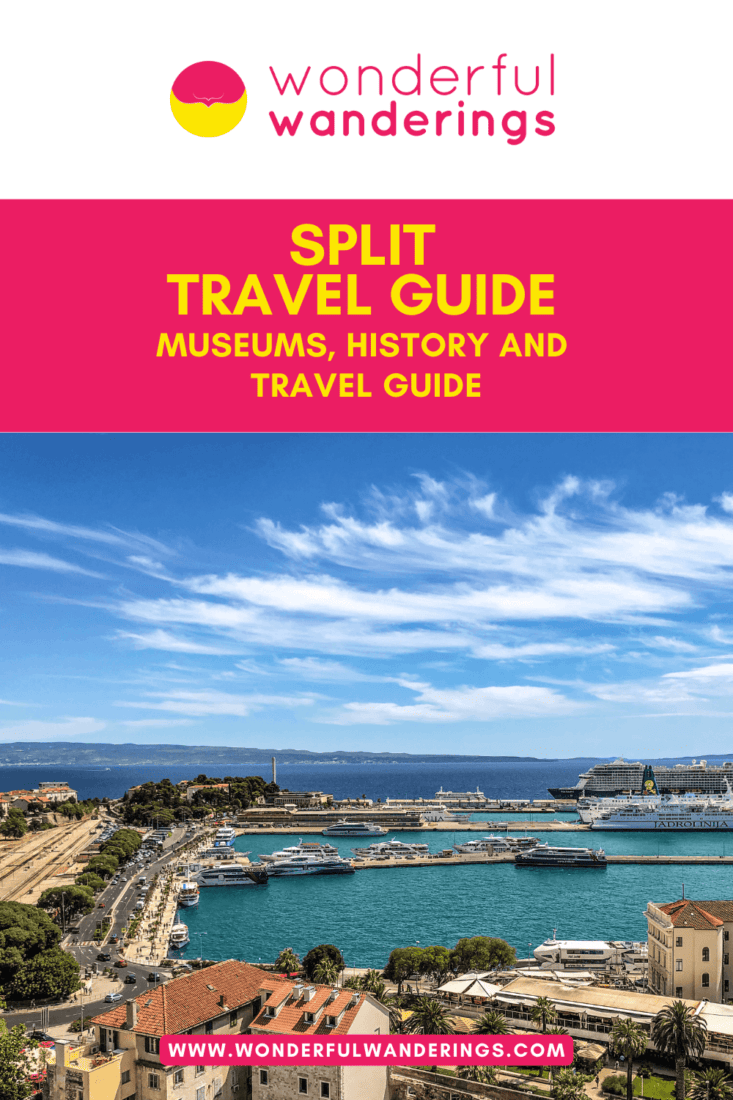
Split is built inside a Roman palace, which is the single fact that shapes a visit: the old town is Diocletian’s Palace, and you walk through it for free at any hour. Two days cover the palace, the Riva, Marjan Hill and one museum; a third buys an island or the Salona ruins. Split is also Dalmatia’s ferry hub, so the city doubles as the gateway to Brač, Hvar, Vis and Korčula, and it is a cheaper, more lived-in base than Dubrovnik. Croatia uses the euro and is in the Schengen area, so there is no money to change and no border queue coming from Italy, Slovenia or Hungary.
What are the best things to do in Split?
The 26 things to do in Split below start inside Diocletian’s Palace and work outwards to the hill, the ruins and the coast. Split is compact enough that the first eight are within a fifteen-minute walk of each other, and it sits at the center of one of Croatia’s best cities to visit.
- Diocletian’s Palace. Diocletian’s Palace is a 4th-century Roman retirement residence that became the old town of Split. Walking the complex is free.
- The bell tower. The bell tower of the Cathedral of Saint Domnius climbs 57 m (187 ft) above the Peristyle and is the one paid climb everyone makes.
- Marjan Hill. Marjan Hill is the forested peninsula west of the center, with viewpoints, chapels, trails and two swimming coves, all free.
- Klis Fortress. Klis Fortress sits on a limestone saddle 15 km (9.3 mi) northeast of Split and stood in for Meereen in Game of Thrones.
- Salona. Salona in Solin is the ruined Roman capital of Dalmatia, with an amphitheater that held 18,000 people.
- The Riva. The Riva is the palm-lined seafront promenade along the harbor, open around the clock and free.
- Bačvice and the Marjan coves. Bačvice is the sandy city beach where picigin is played; Kašjuni and Bene are the shaded pebble coves under Marjan.
- The Green Market. The Green Market, called Pazar, runs along the palace’s eastern wall and is where Split actually shops.
1. Diocletian’s Palace
Diocletian’s Palace is the Roman palace complex that forms the historic center of Split, Croatia. Diocletian’s Palace was built at the turn of the 4th century AD as the retirement residence of the emperor Diocletian, covers roughly 30,000 square meters and stands on the water at Obala hrvatskog narodnog preporoda, with its southern wall facing the harbor.

Nothing about it is roped off. People live and work inside the walls, so the palace reads as a neighborhood rather than a monument, and the free parts are the ones you will spend longest in: the narrow lanes, the four gates named after metals, and the Peristyle courtyard at the center.
Four things inside carry separate tickets: the Cathedral of Saint Domnius with its treasury and crypt, the bell tower, the substructures under the southern half, and the Temple of Jupiter. The cathedral complex sells a combined ticket that covers most of them, sold at the door on the Peristyle.
2. The bell tower
The bell tower of the Cathedral of Saint Domnius is the 57 m (187 ft) Romanesque campanile that rises over the Peristyle and gives Split its skyline. The bell tower was begun in the 13th century and rebuilt almost completely between 1890 and 1908, which is why it looks newer and more regular than the Roman mausoleum it stands beside.

The climb is a narrow open stone staircase with long drops either side, so it is not for anyone uneasy with heights, and there is no lift. The view at the top takes in the palace roofs, the harbor, Marjan and the islands of Brač and Šolta.
Buy the tower ticket at the cathedral entrance on the Peristyle. Go first thing or in the last hour, because the stair is single-file and backs up badly between mid-morning and late afternoon in summer.
3. Split Old Town
Split Old Town is the UNESCO-listed historic core of the city, and it is the same place as Diocletian’s Palace plus the medieval quarter that grew west of it. Split Old Town became a town by accident: after the fall of the Western Roman Empire, refugees from Salona moved into the abandoned palace in the 7th century and built houses into its halls.

That history is visible everywhere. A Roman wall carries a Gothic window, a medieval house sits on an imperial foundation, and the lane called Pusti me proć, “let me pass”, is barely shoulder-width.
Walking it costs nothing and works at any hour. Mornings before the cruise groups arrive and evenings after they leave are the two windows when the lanes are quiet, and the old town was inscribed on the UNESCO list in 1979.
4. Republic Square (Prokurative)
Republic Square is the large open square just west of the Riva, framed on three sides by red neo-Renaissance arcades that locals call Prokurative. Republic Square was laid out in the 19th century under Austrian rule to a design modelled on St Mark’s Square in Venice, and the arcaded buildings are what gives the square its nickname.

The fourth side is open to the harbor, which is why the city uses it as a stage. The Split Music Festival has been held here since the 1960s, and the square fills with concerts and open-air events through the summer.
Cafés occupy the ground-floor arcades year-round. It is a two-minute walk from the palace’s western Iron Gate, so it slots into any old town walk without a detour.
5. Museum of Croatian Archaeological Monuments
The Museum of Croatian Archaeological Monuments is the only museum in Croatia devoted to the medieval Croats, and it stands at Meštrovićevo šetalište 18 on the way to Marjan. The Museum of Croatian Archaeological Monuments was founded in Knin in 1893 and moved into its purpose-built Split home in 1976.

The collection runs to more than 20,000 objects from the 7th to the 15th centuries: jewelry, weapons, tools and, above all, carved stone from early Croatian churches. Its holdings of early medieval interlace carving and Latin inscriptions are the largest anywhere.
It is a specialist museum, so it rewards anyone interested in the period and will bore anyone who is not. The walk from the Riva takes about fifteen minutes and passes the Meštrović Gallery.
6. Marjan Hill
Marjan Hill is the protected forest park on the peninsula immediately west of the old town, and it is the green half of Split. Marjan Hill covers over 300 hectares of pine, trails, viewpoints, small medieval chapels and two swimming coves, and it has been public parkland in one form or another since Roman times.

Entry is free and there is no gate. The usual route starts in the Varoš quarter, a ten to fifteen minute walk west along the Riva, and climbs the Marjanske stube steps to the Vidilica terrace, which gives the widest free view over the palace and harbor.
Keep going and the ridge path reaches the summit with its flagpole, St Nicholas’s chapel from the 13th century, and paths down to Kašjuni and Bene on the south shore. Locals run, cycle and climb here, so it is busiest at dawn and at sunset.
7. Klis Fortress
Klis Fortress is the medieval stronghold on the limestone pass 15 km (9.3 mi) northeast of Split, wedged between the Mosor and Kozjak ranges. Klis Fortress began as an Illyrian hillfort in the 2nd century BC and was then held, lost and rebuilt by Romans, Byzantines, Croatian kings, Hungarians, Venetians, Ottomans and Austrians, which is why it is a pile of mismatched walls rather than a single design.

Three walled sections step up the ridge, and you are left to wander them with almost no barriers or signage. The old tower, St Vitus’s church, the governor’s house and a small arms collection are the fixed points; the view down the Kaštela bay to Split and the islands is the reason to climb.
Game of Thrones used Klis as the exterior of Meereen. Buses run up from Split, the last stretch to the gate is steep, and the fortress opens daily with longer hours in summer than in winter.
8. The Riva
The Riva is Split’s pedestrian seafront promenade, running between the palace’s southern wall and the harbor. The Riva is where the city goes in the evening, lined with palms, café terraces and benches facing the water, and it is free and open at all hours.

Stand anywhere along it and you get the working harbor on one side and the palace on the other: fishing boats, the Jadrolinija ferries loading at the terminal to the east, and a wall of Roman masonry behind the café awnings.
It is the obvious meeting point and the obvious first walk. Buses stop at both ends, and the bus station and ferry port sit at its eastern end.
9. Split’s beaches: Bačvice, Kašjuni and Bene
Split’s beaches are a short walk or bus ride from the old town, and only one of them is sand. Bačvice, ten minutes east of the palace, is the shallow sandy bay where picigin is played, a Split game of keeping a small ball out of the ankle-deep water that has protected heritage status in Croatia.

Žnjan, about 3 km (1.9 mi) southeast, is the long pebble stretch with the most facilities, rentals and beach bars, and its shallow water suits stand-up paddleboarding and beginners. Kašjuni, 2.5 km (1.6 mi) west under Marjan, is a calmer pebble cove backed by pine and cliff. Bene, further out on the Marjan peninsula, is the shadiest of the three.
All of them are free to enter and all are pebble apart from Bačvice, so bring water shoes. There are more options along the coast in our guide to the beaches in Croatia.
10. Salona
Salona is the ruined Roman city at Solin, 5 km (3.1 mi) northeast of Split, and it was the capital of the province of Dalmatia. Salona was founded in the 3rd century BC, grew to more than 60,000 inhabitants, and was abandoned after Slavic and Avar raids in the 7th century, when its people fled into Diocletian’s palace and founded Split.

What survives is an open field of ruins you walk through rather than a reconstructed site: early Christian basilicas, sarcophagi, baths, the city walls, and an amphitheater built in the 2nd century for around 18,000 spectators. The Venetians dismantled much of the amphitheater in the 17th century, but its oval is still legible on the ground.
The Tusculum building at the entrance holds the ticket desk and a small display on the excavations. Paths are uneven, so wear real shoes, and note that the site closes earlier in winter. A combined ticket with Split’s Archaeological Museum is sold.
11. Cooking classes
Cooking classes in Split teach Dalmatian home cooking, usually over three to four hours with a market trip attached. A class typically starts at the Green Market and the fish market, then moves to a kitchen inside or just outside the palace walls.

What you cook depends on the day’s catch and the season, but the standards are black risotto, fresh fish, and meat or octopus baked under a peka, the iron bell buried in embers. Most classes end with you eating what you made, with wine.
Book ahead, because group sizes are small and summer dates go early. If you want the background before you book, our guide to the best food to eat in Croatia covers the dishes you will meet.
12. Game of Thrones locations
Game of Thrones locations in and around Split stand in for Meereen, and two of them are the city’s main sights anyway. The palace substructures, the vaulted Roman cellars under the southern half of Diocletian’s Palace, were Daenerys’s throne room and the chamber where she chained her dragons.

Klis Fortress, 15 km (9.3 mi) up the pass, played the exterior of Meereen, including the march on the city and the crucifixion of the masters. Both are open to ordinary visitors with ordinary tickets, so a guide is optional rather than necessary.
Žrnovnica, a village east of Split, was used for the Sons of the Harpy scenes but has nothing to see as a set. Fans usually pair the cellars with Klis in one half-day.
13. Putalj Winery
Putalj Winery is a small family winery at Kaštel Sućurac, between Split and the airport, and it is worth the trip for anyone interested in Dalmatian wine. Putalj was founded in 2008 by Anton Kovač, whose vineyards climb to about 400 m on the slopes of Kozjak and are worked by hand.

The winemaker’s tour is the reason to go: pickup from Split, a walk through the vineyard and cellar, and a seated tasting of the Plavac Mali, the Zinfandel and the rosé with bread, cheese, prosciutto and the family’s own olive oil. Anton normally runs it himself.
Visits are by arrangement, not drop-in. The winery shop keeps afternoon hours by appointment, but the shop visit does not include the vineyard or the cellar, so book the tour if that is what you want.
14. Zinfandel Food & Wine
Zinfandel Food & Wine is the wine bar and bistro at Marulićeva 2, inside the palace between Pjaca and Voćni trg. Zinfandel opened in 2013 and built its list around Croatian producers, with a deep run of bottles and a rotating selection by the glass.

The name points at the grape. Zinfandel was traced by DNA analysis at the University of California, Davis to Crljenak Kaštelanski, a Dalmatian variety from the Kaštela coast just west of Split, which makes this one of the few places you can drink the grape where it started.
It suits a first evening: the staff will walk you through Plavac Mali, Pošip and Malvazija without ceremony, and the kitchen does small plates alongside. The location is central enough to reach from anywhere in the old town.
15. Jaman Art Center
Jaman Art Center is the gallery of the Split painter Danijel Jaman, at Dobrić 14 in the old town. Jaman works in a pop art and neo-expressionist register, which stands out in a city whose galleries are mostly seascapes and religious painting.

The rooms hold original canvases, limited prints, posters and phone cases, and the artist is often there. Entry is free and buying is optional, so it functions as a ten-minute stop rather than a museum visit.
Jaman keeps a second, smaller gallery at Šubićeva 3. Both sit inside the palace walls, a couple of minutes apart.
16. Grgur Ninski statue
The Grgur Ninski statue is the giant bronze bishop standing just outside the palace’s northern Golden Gate. The statue was made by Ivan Meštrović in 1929 and shows Gregory of Nin, the 10th-century bishop who pushed for church services in Old Church Slavonic rather than Latin so that Croatians could understand them.

It originally stood on the Peristyle, was dismantled during the Italian occupation in the Second World War, and was re-erected outside the Golden Gate in 1954. It is over 4 m tall on its plinth.
Everyone rubs the big toe for luck, which is why that one toe is polished gold while the rest is dark. Viewing it costs nothing and takes a minute on the way in or out of the Golden Gate.
17. Meštrović Gallery
The Meštrović Gallery is the museum of Croatia’s most widely known modern sculptor, on the southern slope of Marjan at Šetalište Ivana Meštrovića 46. The gallery is the villa and studio Meštrović designed and built for himself between 1931 and 1939; he gave it to the Croatian state in 1952 and it opened as a gallery in 1955.

Inside are sculptures in marble, bronze, wood and plaster, along with drawings, architectural plans and furniture he designed, arranged through the original rooms. Outside, the terraced garden holds more work and looks straight out to sea.
Adult admission is €12 ($14, £10) and reduced is €8 ($9, £7), and the ticket also covers Kaštilac, Meštrović’s chapel complex a short walk along the shore. The building is undergoing an energy-efficiency refurbishment, so check the gallery’s own site before you set out in case part of it is shut.
18. Froggyland
Froggyland is a one-room taxidermy museum at Kralja Tomislava 5 holding 507 stuffed frogs arranged into scenes of human life. Froggyland is the work of the Hungarian taxidermist Ferenc Mere, who mounted them between 1910 and 1920 using a technique that left no visible cuts, and around 1,000 were made of which 507 survive in good condition.

The frogs fence, play cards, sit in a classroom, join a circus and run a workshop, across 21 dioramas. It is either the strangest thing in Split or the most pointless, depending on the visitor, and it takes about half an hour.
Photography inside is not allowed. It works well with children and it is indoors, which makes it a rain option in a city with very few.
19. Green Market (Pazar)
The Green Market, known to everyone in Split as Pazar, is the open-air produce market against the eastern wall of Diocletian’s Palace. Pazar runs every morning and is where the city buys fruit, vegetables, cheese, cured meat, olive oil, honey and flowers, with the separate fish market, Ribarnica, a few minutes west off Marmontova.

Go early. Stalls set up at dawn, the good produce is gone by late morning, and the atmosphere thins out with it. Prices are marked but bargaining over quantity is normal.
Bring cash and a bag. It is the most rewarding fifteen minutes in Split for anyone who cooks, and it is the starting point for most of the city’s cooking classes and food tours.
20. Poljud Stadium
Poljud Stadium is the home ground of Hajduk Split, about 1 km (0.6 mi) north of the old town. Poljud was built for the 1979 Mediterranean Games and holds around 35,000 after seats were fitted in the 1990s, down from a standing capacity of roughly 55,000.

Its shape is the point. The architect Boris Magaš roofed it with two sweeping concrete arches spanning 205 m (672.6 ft) across the east and west stands, giving an open shell form that is still one of the most distinctive stadiums in Europe.
A Hajduk home match is the local experience here, particularly in the Torcida end. The stadium also hosts athletics meetings and large summer concerts.
21. Eastern (Silver) Gate
The Eastern Gate, or Silver Gate, is one of the four original Roman entrances to Diocletian’s Palace, on the corner of Hrvojeva and Krešimirova next to the Green Market. Its Roman name was Porta Orientalis, and it was a secondary gate to the main northern Golden Gate.

It was walled up for centuries and only reopened after bomb damage in the Second World War cleared the buildings that had blocked it, which is why the stonework around it looks patched. Walk through and you are on Decumanus, the Roman east-west street that still runs to the Peristyle.
There is no ticket and no queue. It is the natural way into the palace if you are coming from the market or the bus station.
22. Archaeological Museum
The Archaeological Museum at Zrinsko-Frankopanska 25 is the oldest museum in Croatia, founded in 1820. Its collection of about 150,000 objects covers Greek colonization of the Adriatic, Roman Dalmatia, early Christianity and the medieval period, and a large share of it was dug out of Salona.

The strongest part is outdoors: the arcaded lapidarium around the courtyard is packed with Roman gravestones, portraits and sarcophagi, and you can stand close enough to read the carving. Indoor cases run chronologically with English labels.
Adult admission is €8 ($9, £7) and reduced is €4 ($5, £3), with a combined ticket available for Salona. The museum is a fifteen-minute walk north of the Riva and closes on Sundays.
23. Ethnographic Museum
The Ethnographic Museum sits inside the palace at Iza Vestibula 4, in a Gothic building that was once Split’s town hall. It holds over 20,000 objects from Dalmatia and the Dinaric hinterland: folk dress, jewelry, tools, weapons, toys and reconstructed interiors, with the embroidery and lace from Pag and Hvar as the standouts.

The reason most people go is the roof. The ticket includes access to the terrace above the palace vestibule, which gives a rooftop view over the old town that costs a fraction of the bell tower.
Adult admission is €3 ($4, £3) and reduced is €1.50 ($2, £1). It is closed on Sundays, and it is two minutes from the Peristyle.
24. Temple of Jupiter
The Temple of Jupiter is the small Roman temple in the western half of Diocletian’s Palace, on Kraj Svetog Ivana. It was built with the palace between 295 and 305 AD and dedicated to Jupiter, and its barrel-vaulted coffered ceiling is one of the most intact Roman ceilings anywhere.

A headless Egyptian granite sphinx sits at the door, one of a set Diocletian shipped from Egypt. Inside, the building was converted into a Christian baptistery of St John, so you now find a 13th-century font, medieval sarcophagi and a bronze St John by Ivan Meštrović under a pagan roof.
It is tiny and takes five minutes. Entry is ticketed, and the cathedral ticket office on the Peristyle sells the combination that includes it.
25. Kaštel Gomilica
Kaštel Gomilica is one of the seven fortified villages strung along Kaštela bay between Split and Trogir, about 8 km (5 mi) northwest of the city. Its core, Kaštilac, was built on a small islet between 1529 and 1537 by Benedictine nuns as protection against Ottoman raids, and a short bridge still connects it to the shore.

The stone lanes inside are barely wide enough for two people, and the whole thing is lived in rather than restored. Game of Thrones used it as Braavos, which is the reason most visitors now find it.
Entry is free and there is nothing to buy a ticket for. Local buses and the Kaštel Gomilica train stop both serve it from Split, and it makes a sensible stop on the way to or from the airport.
26. Croatian National Theater
The Croatian National Theater, HNK Split, stands on Trg Gaje Bulata a few minutes north of the palace. It opened in 1893, built in neoclassical style by the local architects Emilio Vecchietti and Ante Bezić, and it is one of the oldest working theaters in Dalmatia.

The 1,000-seat house burned in 1970 and was rebuilt. It now runs a full season of drama, opera and ballet, several hundred performances a year, and it is one of the main venues of the Split Summer Festival.
Tickets are sold at the box office and online, and prices vary by production. Even without a show, the square in front is a good place to see how Split lives outside the palace.
How do you get to Split and around it?
Split is reached by plane, ferry, bus, train and car, and the airport, bus station and ferry port are all easy to use without a car. Split Airport (SPU) is at Resnik, 24 km (14.9 mi) northwest of the city, and the bus station, train station and ferry terminal sit together at the eastern end of the Riva, which is the most useful piece of geography in the city.
How do you get from Split Airport to the city?
Three options run from Split Airport to the city center, and the difference between them is price rather than time. The official airport shuttle bus is run by Platanus, which took the route over from Pleso Prijevoz in 2026, and it runs between the terminal and Split’s main bus station in about 30 minutes for €10 ($12, £9) one way or €15 ($18, £13) return, with under-sixes free.
Promet city bus 37 is the cheap option. It stops on the main road just outside the airport grounds rather than at the terminal door, runs every 20 to 30 minutes, and takes roughly 50 minutes into Split because it calls at every Kaštela village on the way. A taxi or pre-booked transfer costs several times the shuttle.
Hiring a car makes sense only if you are leaving Split, because the old town is pedestrianized and city parking is scarce and expensive. If that is the plan, compare car hire at Split Airport before you land rather than at the desk.
Which ferries run from Split, and when?
Split Ferry Port at Gat sv. Duje is the busiest passenger port in Croatia and the hub for the central Dalmatian islands, but the important thing to understand is that car ferries run all year while most catamarans do not. Split’s year-round car ferry routes are the ones you can count on in February: Jadrolinija line 631 to Supetar on Brač, about 50 minutes; line 635 to Stari Grad on Hvar, about two hours; and line 604 to Vela Luka on Korčula, with some sailings continuing to Ubli on Lastovo. Šolta and Vis are also served year-round.
Catamarans are a different matter. They are faster, take foot passengers only, and most of them are seasonal: Jadrolinija’s Split to Hvar Town catamaran 641 runs on a summer timetable, and the Split to Hvar, Vela Luka and Ubli catamaran adds sailings from spring to autumn. The long Krilo catamaran from Split down to Dubrovnik via Milna, Hvar, Korčula and Pomena on Mljet runs roughly from the start of April to the end of October and then stops completely; out of season the only way south is the bus or the car. Krilo’s own summary is that every line except Split to Hvar to Korčula operates in the summer season only.
Two more things matter in practice. Frequencies roughly double in July and August and thin out sharply from November, so a route that has eight daily sailings in August may have three in January. And Jadrolinija’s international sailings to Ancona in Italy run through the year, two or three times a week, while the Bari route is seasonal. Check ferry, bus and train times in one place before you commit to a date, and book island crossings ahead in high summer if you are taking a car.
How do you get from Split to Zagreb and Dubrovnik?
Buses are the default for both, because Croatia’s rail network does not follow the coast. Split to Zagreb is about 400 km (248.5 mi) on the A1 motorway, which takes around four hours by car with tolls, five to six hours by coach with departures through the day, and six to eight hours by train on two daily services, so the train is the slow option rather than the fast one. Flights take about 45 minutes.
Split to Dubrovnik is about 229 km (142.3 mi) by road and takes roughly three to four hours by bus. The route crosses the Pelješac Bridge, so there is no longer a passport check at the Neum corridor. From April to October the Krilo catamaran covers the same journey in about four and a half hours in daylight, which is the better trip if the season fits. There is more detail in our guide to transportation in Croatia.
Where should you stay in Split?
Stay inside or immediately around the palace if it is your first visit, and further out if you want quiet or a beach. The five areas below cover the useful trade-offs.
- Old Town (inside the palace). Old Town puts you inside the walls, thirty seconds from the Peristyle and five minutes from the Riva. It is also the noisiest option in summer, because the bars are in the same lanes as the apartments.
- Veli Varoš. Veli Varoš is the old fishermen’s quarter on the slope between the palace and Marjan, all stone houses and stepped lanes. It is a two-minute walk from the center and considerably quieter.
- Bačvice. Bačvice puts you by the sandy beach and the bus and ferry terminals, ten minutes east of the palace. It has the most nightlife outside the old town.
- Meje. Meje is the residential slope between Marjan and the sea, near the Meštrović Gallery and Kašjuni beach. It suits families and anyone with a car.
- Dobri and Manuš. Dobri and Manuš sit just north of the palace, within walking distance of everything but priced for locals rather than visitors.
Rooms inside the walls sell out first and cost most in July and August, so book early or move one street out. It is worth comparing what is available across Croatia if your dates are flexible, because a night in Split in August costs what three nights cost in May.
Where should you eat in Split?
Eat where Split eats, which usually means a konoba rather than a restaurant with a photo menu on the Riva. The four below are long-established and central.
- Villa Spiza. Villa Spiza is a counter-service konoba on Petra Kružića inside the palace, with a handwritten daily menu and about eight seats. It takes no reservations, so arrive when it opens or expect to wait.
- Konoba Fetivi. Konoba Fetivi is a family seafood tavern on Tomića stine in Veli Varoš, a few minutes west of the palace. Its fish soup and grilled catch are what regulars order.
- Brasserie on 7. Brasserie on 7 is on the Riva itself, doing French-leaning food and pastry with harbor views and a long day, from breakfast through to late.
- Corto Maltese Freestyle Food. Corto Maltese is on Obrov near the fish market, mixing Croatian and Italian plates with black risotto as the signature.
Book Fetivi ahead in summer. For the dishes to look for on a Dalmatian menu, from pašticada to black risotto and rožata, our guide to Croatian food has the full list.
Is Split good with children?
Yes, Split works well with children, mainly because the sights are outdoors and free. Bačvice has sand and water shallow enough to stand in, Marjan has trails, playgrounds and a small zoo enclosure, and the palace lanes are a maze that most children take to immediately.
Froggyland is the reliable indoor half-hour. The palace substructures are cool in summer and feel like a dungeon, which helps.
Practical points: the old town is cobbled and stepped, so a carrier beats a pushchair, and there is very little shade on the Riva at midday. Most restaurants take children as a matter of course and eat late.
What should you know before visiting Split?
Four practical facts cover most of what trips people up in Split. They are listed below.
- Currency. Croatia’s currency is the euro, adopted on 1 January 2023. The kuna no longer exists and cannot be spent or exchanged at a bank, so ignore any guide that tells you to change money or to pay in kuna for a better rate. Cards are accepted almost everywhere and ATMs are common; decline the machine’s offer to convert to your home currency.
- Borders and travel documents. Croatia joined the Schengen area on the same day it adopted the euro, so arrivals from Italy, Slovenia, Hungary and the rest of Schengen face no passport check. The land route south to Dubrovnik now uses the Pelješac Bridge and bypasses Bosnia and Herzegovina entirely.
- Language and time. Croatian is the language, English is widely spoken in Split, and Italian and German are common. The local dialect is Chakavian and carries a lot of Venetian vocabulary, which is one of the interesting facts about Split and Croatia that shows up the moment anyone orders coffee. Split is on Central European Time, UTC+1 in winter and UTC+2 from late March to late October.
- Power and data. Sockets are type C and F at 230 V, so North American visitors need an adapter. Roaming inside the EU is included in most European plans; if you are coming from further afield, an eSIM for Croatia is cheaper than a carrier day pass and installs before you fly.
What does a trip to Split cost?
Split is cheaper than Dubrovnik and more expensive than it was five years ago, and the gap between July and May is the largest single factor. Accommodation is where the season shows: a room that is good value in May or October costs two to three times as much in the first three weeks of August.
Museums are the cheap part of the city. The Ethnographic Museum is €3 ($4, £3), the Archaeological Museum €8 ($9, £7), the Meštrović Gallery €12 ($14, £10), and the palace lanes, the Riva, Marjan, the beaches and the Grgur Ninski statue cost nothing at all.
Transport is modest: a city bus fare is a couple of euros, the airport bus is €10 ($12, £9), and a deck ticket on a car ferry to Brač or Hvar is in single figures. For a fuller breakdown across the country, see our page on prices in Croatia.
What festivals happen in Split?
Split’s calendar is busiest between February and September, and four events shape it. They are listed below in the order they fall in the year, and there are more Croatian festivals across the country.
- Split Carnival. Split Carnival fills the squares with masked parades, balls and a children’s carnival in February, in the days before Lent.
- Saint Domnius Day. Saint Domnius Day on 7 May honors the city’s patron with a mass, a procession through the old town, market stalls and concerts.
- Ultra Europe. Ultra Europe is a three-day electronic music festival at Park Mladeži in July, with satellite events continuing on Brač, Hvar and Vis afterwards.
- Split Summer Festival. The Split Summer Festival, Splitsko ljeto, runs from mid-July to mid-August with opera, drama, ballet and concerts staged on the Peristyle and in other open-air venues. It was founded in 1954 and reached its 72nd edition in 2026.
Frequently asked questions about Split
How many days do you need in Split?
Two to three days is right for Split. Two days cover Diocletian’s Palace, the bell tower, the Riva, Marjan and one museum, and a third day buys either an island day trip or the Salona ruins and Klis Fortress together.
Is Split worth visiting?
Yes, Split is worth visiting, and it is the better base of the two if you are choosing between Split and Dubrovnik. Its old town is a living Roman palace rather than a preserved one, it is cheaper, and it connects to more islands by ferry.
When is the best time to visit Split?
May, June, September and early October are the strongest months for Split. The sea is warm enough to swim from June to October, July and August bring the highest prices and the heaviest cruise traffic, and winter is quiet with many island catamarans not running at all.
Is Split safe?
Yes, Split is a safe city for visitors, including solo travelers. Violent crime is rare and the usual precautions against pickpocketing in crowded lanes and on the Riva in high season are enough.
Do you need a car in Split?
No, you do not need a car in Split itself. The old town is pedestrianized, parking is limited and costly, and buses and ferries cover the day trips; hire a car only for the Dalmatian hinterland or a longer coastal drive.
WonderfulWanderings Pro Tips
The 4 tips below come from re-checking Split’s prices, operators and ferry seasons against Croatian sources in 2026, and each one changes what you book or when you turn up.
- Ignore every kuna price you read about Croatia. The euro replaced the kuna on 1 January 2023 and the old notes can no longer be exchanged at a bank, so any guide quoting kuna, or advising you to change money for a better rate, is at least three years out of date and wrong about the whole country.
- Check the month before you plan an island hop. Split’s car ferries to Brač, Hvar, Korčula, Šolta and Vis run all year, but most catamarans are seasonal and the Split to Dubrovnik catamaran runs only from about April to the end of October. A route that has several daily sailings in August may not exist in February.
- Book the airport shuttle with Platanus, not Pleso. Pleso Prijevoz ran the Split airport shuttle for years and gave up the route in 2026; the official operator is now Platanus, at €10 ($12, £9) one way. The cheap alternative is Promet city bus 37, which stops on the main road outside the airport rather than at the terminal door.
- Climb the bell tower first thing. The staircase up the 57 m (187 ft) campanile is single-file and open-sided, so it jams from mid-morning onwards and there is no way to pass anyone. The Ethnographic Museum’s vestibule terrace is the cheap alternative for a rooftop view at €3 ($4, £3).
About the author. This guide is written and maintained by the Wonderful Wanderings editorial team. Wonderful Wanderings was founded in 2012 by Sofie Couwenbergh and covers Croatia for independent travelers, from Diocletian’s Palace and the Marjan coves to the Jadrolinija and Krilo sailings that connect Split to Brač, Hvar and Korčula. The team checks the museums, ferry seasons and restaurants named on this page and updates it when a price, a timetable or an operator changes.