 EN
EN
 Nederlands
 Français
Czechia is a landlocked country of 10.9 million people in Central Europe, made up of the historic lands of Bohemia, Moravia and Czech Silesia, with Prague as its capital. It drinks more beer per head than any other country on earth, gave the world the word “robot”, and has more castles per square kilometre than anywhere else. It also has no coast, which surprises a lot of first-time visitors.
Most facts pages about this country copy each other, and a lot of what circulates is out of date or simply wrong. The 21 facts below are each checked against a primary or official source, and where a number has moved in the last few years, the current one is given. Five of them are summarised first, then each is set out in full.
Five of the most quoted facts about Czechia are listed below.
- Czechia ranks 13th on the Global Peace Index. Czechia placed 13th of 163 countries in the 2026 Global Peace Index with a score of 1.517, ahead of Canada and Hungary.
- One in four Prague residents is a foreign national. Prague holds roughly a third of the more than 1.1 million foreigners registered in Czechia, and about a quarter of the city’s population is foreign.
- Czechs drink more beer per head than anyone else. Domestic consumption fell to 121 litres per person in 2025, a record low that still leaves Czechia first in the world for the 32nd year running.
- The Hranice Abyss is the deepest known underwater cave on earth. A robot measured it at 519.5 m (1,704 ft) in 2022 and did not reach the bottom.
- The word “robot” is Czech. It entered every major language from Karel Čapek’s 1920 play R.U.R., built on the Czech word robota, meaning forced labour.
1. Czechia Ranks 13th on the Global Peace Index
Czechia ranked 13th of 163 countries in the 2026 Global Peace Index, with a score of 1.517. That puts it above Canada, Hungary and every country outside Europe except Singapore, Japan and Malaysia, and inside the band the index calls “very high” peace.
The index scores 23 indicators across three groups: ongoing domestic and international conflict, societal safety and security, and militarisation. Czechia scores well on violent crime, weapons access, political stability and the absence of violent demonstrations. It is a country where the practical safety questions a traveller asks, about walking back to a hotel at night or leaving a bag on a café chair, have unremarkable answers.
The number moves each year, and it has moved recently. Older articles quoting Czechia in the top 10, or specifically at 7th, are working from an earlier edition of the same index.
2. One in Four Prague Residents Is a Foreign National
Prague is the most international city in Czechia by a wide margin, with foreign nationals making up around a quarter of its population. Czechia had more than 1.1 million registered foreigners at the end of 2025, about 10 percent of the whole country, and roughly a third of them live in Prague.
Ukrainians are the largest group by a long way, followed by Slovaks, Russians and Vietnamese. The Vietnamese community dates to labour agreements signed under communism and is now several generations deep, which is why a Vietnamese-run corner shop, the večerka, is a fixture of Czech street life.
Prague is not Europe’s largest expat community in absolute numbers, and pages that say so are wrong; London, Paris and Berlin all host far more foreign residents. What is unusual about Prague is the share.
3. Czechia Has More Than 2,000 Castles and Chateaux
Czechia has over 2,000 castles, chateaux and castle ruins, which is the highest density of castles per square kilometre of any country. They run from hilltop Gothic fortresses to Baroque country seats, and around 300 of them are open to the public.

The abundance comes from the terrain and from the history. Bohemia and Moravia sit on the routes between the German lands, Poland, Austria and Hungary, so the nobility built defensively on high ground, and there was a lot of nobility. As estates changed hands, owners rebuilt to the fashion of the day rather than starting again, which is why a single Czech castle often carries Romanesque foundations, a Gothic core, Renaissance windows and a Baroque roof.
Most now operate as museums, hotels or event venues, and the state owns and runs about a hundred of them through the National Heritage Institute. If you want the shortlist rather than the full 2,000, we have a guide to the 17 best castles to visit in Czechia.
4. Prague Has the Oldest Working Astronomical Clock in the World
The astronomical clock on the southern wall of Prague’s Old Town Hall was installed in 1410 and is the oldest astronomical clock still running. It is the third-oldest ever built, after the clocks at Padua from 1344 and Strasbourg from 1354, and unlike those two it has never been replaced by a modern successor.

The original mechanism is credited to the clockmaker Mikuláš of Kadaň, working with Jan Šindel, a professor of mathematics and astronomy at Charles University. The astronomical dial shows the position of the sun and moon and the time in three different systems at once. The calendar dial below it was added in 1490, and the procession of Apostle figures and the skeleton that strikes the hour came later still.
The clock was nearly destroyed on 8 May 1945, when the Old Town Hall burned in the final days of the Prague uprising, and it was rebuilt and restarted in 1948. It was taken apart again for a full restoration in 2017 and 2018. It still needs winding by hand.
5. Beer Often Costs Less Than Water in a Czech Pub
Beer in an ordinary Czech pub usually costs less than a bottle of mineral water in the same pub, because beer is what the place sells in volume and water is not. A half-litre of draught Pilsner in a neighbourhood hospoda runs roughly 45 to 60 CZK, which is about €1.80 to €2.40 ($2.10 to $2.90, £1.60 to £2.20), and a small bottle of water can match or beat that.
Two things to know before you use this fact. The gap has narrowed: Prague pub prices are now commonly 55 to 80 CZK, and on Old Town Square the same glass from the same tap can be 100 CZK or more. And the “cheaper than water” line only holds for draught beer in a proper pub, not for bottled beer in a restaurant.
Czech beer prices are still low by European standards because the country brews at scale, taxes small brewers at a reduced rate and has an entrenched pub culture that punishes anyone who raises prices too fast. The word for the volume most Czechs order is a “velké pivo”, a large beer, which means half a litre.
6. Prague Is Called the City of a Hundred Spires
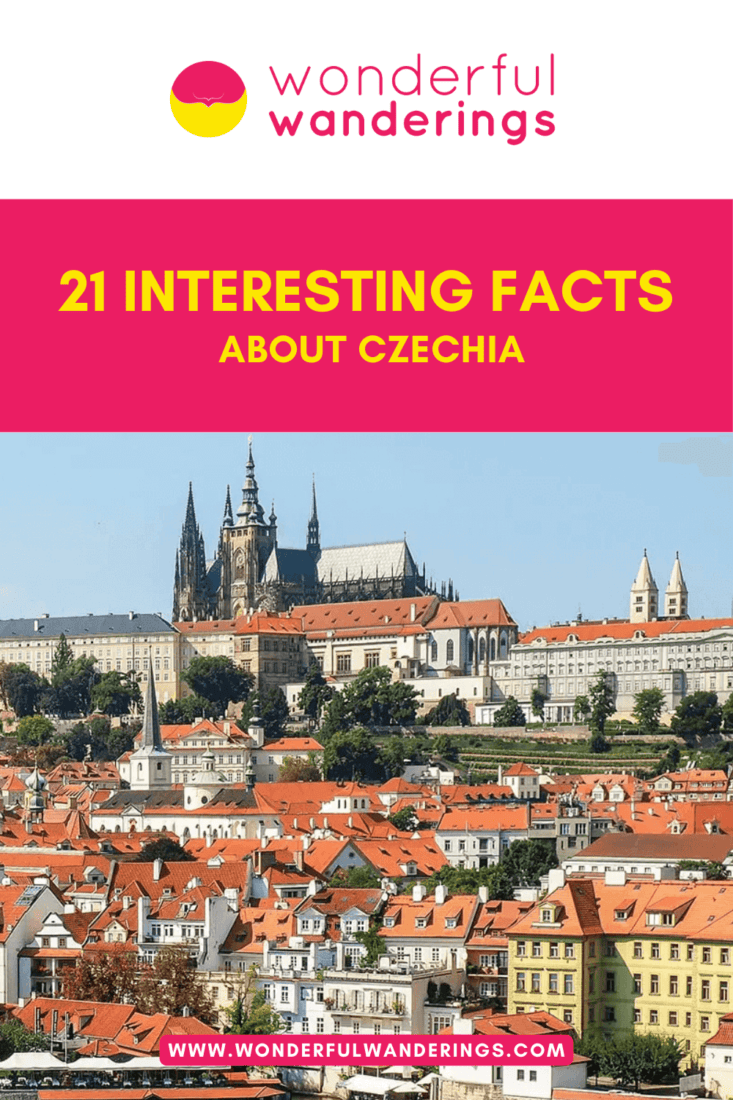
Prague earned the nickname “City of a Hundred Spires” from a skyline of towers, steeples and turrets that survived where most European capitals lost theirs. The count was never literal; the mathematician Bernard Bolzano is usually credited with counting around a hundred in the early 19th century, and modern counts run past 500 depending on what you accept as a spire.

The skyline survived because Prague was not bombed flat. It came through the Second World War with its historic core substantially intact, and the communist decades that followed built their concrete estates on the edges rather than in the middle. The result is a centre where Romanesque, Gothic, Renaissance, Baroque and Art Nouveau layers all stand at once.
The two sets of spires everyone photographs are St Vitus Cathedral inside Prague Castle and the twin Gothic towers of the Church of Our Lady before Týn on Old Town Square. The historic centre of Prague has been a UNESCO World Heritage Site since 1992.
7. Mount Sněžka Is the Highest Point in Czechia
Sněžka is the highest mountain in Czechia at 1,603 m (5,259 ft), standing on the Czech-Polish border in the Krkonoše, the Giant Mountains. The summit is split between two countries, so you can stand with one foot in each, and both sides are national park: Krkonošský národní park in Czechia and Karkonoski Park Narodowy in Poland.

Three buildings share the top. The oldest is the chapel of St Lawrence, built between 1655 and 1681 by the Silesian noble family Schaffgotsch and restored in 1999. Next to it stands Česká poštovna, a working Czech post office in a metal-clad cube that is the highest building in the country. On the Polish side sit the three stacked discs of the meteorological observatory, built in the 1970s and known locally as the flying saucers.
The direct walking route up is from Pec pod Sněžkou on the Czech side. A cabin cable car covers the same ground in two sections with a change at Růžová hora; it was completed at the end of 2013 and has been running since February 2014. The summit weather is genuinely severe, so take a windproof layer even in July.
8. Czech Inventions Include Soft Contact Lenses, Polarography and the Sugar Cube
Czech inventors are behind four things in daily use around the world: the soft contact lens, polarography, the sugar cube and one of the first working lightning conductors. Three of them came out of Bohemia and Moravia rather than out of a large national laboratory.
The soft contact lens is the biggest. The chemist Otto Wichterle made the first hydrogel lenses at Christmas 1961 on a spinning rig he built at home out of a child’s Merkur construction set and a bicycle dynamo, after his institute had taken his equipment away. Jaroslav Heyrovský developed polarography, an electrochemical method of analysis, in 1922 and won the Nobel Prize in Chemistry for it in 1959, the only Czech to win a science Nobel. The sugar cube was patented by Jakub Kryštof Rad in Dačice in South Moravia in 1843, after his wife cut her hand breaking up a sugar loaf.
The fourth is the lightning conductor. The priest Prokop Diviš raised a grounded pole with more than 400 metal points at Přímětice in Moravia on 15 June 1754, working independently of Benjamin Franklin. Which of the two came first is genuinely disputed, and the fair statement is that Diviš arrived at a well-grounded design on his own while Franklin’s version was the one that spread.
9. Czechoslovakia Was the Third Country to Put a Person in Space
Vladimír Remek flew aboard Soyuz 28 to the Salyut 6 space station on 2 March 1978, making Czechoslovakia the third country to send a person into space, after the Soviet Union and the United States. He remains the only Czech to have flown.
The flight came through Interkosmos, the Soviet programme that took cosmonauts from allied countries on short missions. Remek spent just under eight days in orbit. The story most Czechs will tell you about it is the joke that he came back with red hands, because every time he touched anything a Soviet crewmate said “don’t touch that”, which says a good deal about how the mission was seen at home.
Remek’s career carried on well past the Velvet Revolution. He served as a member of the European Parliament and later as Czech ambassador to Russia.
10. The Word “Robot” Is Czech
Every language that uses the word “robot” got it from Czech. It was coined for Karel Čapek’s play R.U.R., short for Rossum’s Universal Robots, which he wrote in 1920 and which premiered in Prague in January 1921. The word comes from robota, the Czech term for the forced labour a serf owed a landowner.
Čapek did not invent it alone. He wanted to call the artificial workers “labori”, and his brother Josef, a painter, suggested “roboti” instead. Čapek said so in print himself, in the newspaper Lidové noviny, when the credit started coming his way.
The robots in R.U.R. are not metal machines. They are manufactured organic people, closer to what later science fiction called androids, and the play ends with them wiping out humanity. Czech has also given English a second word, “pistol”, probably from píšťala, a Hussite hand cannon, and Bohemia gave the world the dollar by way of the Joachimsthaler coins minted at Jáchymov.
11. The Hranice Abyss Is the Deepest Known Underwater Cave on Earth
The Hranice Abyss, Hranická propast, near the town of Hranice in eastern Moravia is the deepest known underwater cave in the world, with a confirmed depth of 519.5 m (1,704 ft). That figure breaks down as 69.5 m (228 ft) of dry shaft above the water and 450 m (1,480 ft) below it.

The measurements were made in stages. A remotely operated vehicle reached 404 m (1,325 ft) below the water in 2016 during an expedition led by the Polish diver Krzysztof Starnawski and supported by National Geographic, taking the world record from Pozzo del Merro in Italy. In 2022 the UX1-Neo robot, built by UNEXMIN Georobotics, reached 450 m (1,480 ft). Neither reached the bottom.
The abyss was not carved by a river from above. It was dissolved from below by warm, mineral-rich, carbon dioxide-laden water rising through limestone, which is why the water is aggressive, cold and low in oxygen, and why geophysical surveys suggest the system may run far deeper than anything measured so far. Diving it requires technical qualifications and permission.
12. Czechia Punches Far Above Its Size in Video Games
Czechia has around 170 game development studios, and games are one of its most successful cultural exports, with roughly 98 percent of industry revenue earned abroad. The industry employed about 2,765 people in 2023 and turned over in the region of 5.6 billion CZK.
Three Czech games are known worldwide. Mafia: The City of Lost Heaven, made in Brno by Illusion Softworks and released in 2002, put narrative-driven open-world crime games on the map before Grand Theft Auto’s own story turn. Kingdom Come: Deliverance, made by Warhorse Studios in Prague and set in 15th-century Bohemia with no dragons and no magic, has passed 10 million copies; its 2025 sequel Kingdom Come: Deliverance II passed 6 million by June 2026. Beat Saber, made by the Prague studio Beat Games, is the best-selling virtual reality game there has been and was bought by Meta in 2019.
Two more studios matter if you follow the medium. Bohemia Interactive in Prague makes the Arma military simulation series and owns the engine that DayZ grew out of, and Amanita Design makes hand-drawn adventure games including Machinarium and Samorost.
13. Czechia Has 17 UNESCO World Heritage Sites
Czechia has 17 properties on the UNESCO World Heritage List, not the 12 that older articles still quote. Five were added between 2019 and 2023, which is why the count in circulation is usually behind.

The long-standing entries are the historic centres of Prague, Český Krumlov and Telč, all inscribed in 1992, followed by the pilgrimage church of St John of Nepomuk at Zelená hora, the historic centre of Kutná Hora, the Lednice-Valtice cultural landscape, the village of Holašovice, the gardens and castle at Kroměříž, Litomyšl Castle, the Holy Trinity Column in Olomouc, the Tugendhat Villa in Brno and the Jewish quarter and St Procopius’ Basilica in Třebíč.
The recent additions are the Erzgebirge and Krušnohoří mining region and the landscape for breeding and training ceremonial carriage horses at Kladruby nad Labem, both from 2019; three of the Great Spa Towns of Europe, Karlovy Vary, Mariánské Lázně and Františkovy Lázně, from 2021; the Czech beech forests in the Jizera Mountains added to the transnational beech forest site, also 2021; and Žatec and the landscape of Saaz hops in 2023, the first hop-growing region anywhere to be inscribed.
14. The Czech Crown Is the Currency, Not the Euro
Czechia uses the Czech crown, koruna česká, written Kč and coded CZK, and has done since 8 February 1993, when the Czechoslovak crown was split after the country separated from Slovakia. Czechia joined the European Union in 2004 and has committed in principle to adopting the euro, but has set no date, and there is no serious political timetable for it.
The Czech National Bank issues the notes and coins. Coins run from 1 to 50 crowns and notes from 100 to 2,000, with a 5,000 note that you will rarely see. The crown floats, and the bank ran a hard exchange rate floor against the euro from 2013 to 2017 to fight deflation, which is the one piece of Czech monetary policy that made international news.
For a visitor, the practical points are that cards work almost everywhere including on trams, that euros are accepted only in tourist-facing places and at bad rates, and that the exchange booths around Wenceslas Square and Old Town Square are best avoided in favour of a bank or an ATM. Our guide to prices in Czechia sets out what things actually cost.
15. Ice Hockey Is the National Sport
Ice hockey is the sport Czechia measures itself by, though football has more registered players. When the national team plays a tournament game, pubs fill, offices empty and the national broadcaster clears its schedule, which happens for no other sport.

The record is the reason. Czechia won Olympic gold at Nagano in 1998 with Dominik Hašek in goal, in the first Olympic tournament open to NHL players, beating Russia in the final after eliminating Canada on penalties. The national team has won the World Championship repeatedly, most recently in 2024 on home ice in Prague. Jaromír Jágr, who was still playing professionally for his home club in Kladno in his fifties, and David Pastrňák of the Boston Bruins are national figures rather than merely famous athletes.
The domestic league is the Extraliga, and the sport reaches down into small towns with their own rinks and club teams. Rising costs have pushed some families towards football and floorball, and Czech floorball is itself one of the strongest national programmes in that sport.
16. The Velvet Revolution Ended Communist Rule Without Bloodshed
The Velvet Revolution ended 41 years of one-party communist rule in Czechoslovakia between 17 November and 29 December 1989, without a single death among the protesters. It began when riot police beat a student demonstration on Národní třída in Prague on 17 November.

Demonstrations grew through late November, reaching several hundred thousand people on Letná plain, and a two-hour general strike on 27 November showed that the country outside Prague had joined in. Civic Forum, formed around the dissident playwright Václav Havel, negotiated with a Communist Party that had lost Soviet backing and had no appetite for shooting. The party gave up its constitutional monopoly on 29 November. Havel was elected president by the Federal Assembly on 29 December.
Free elections followed in June 1990. Czechoslovakia then separated into Czechia and Slovakia on 1 January 1993, a split negotiated by politicians rather than voted on in a referendum, and known as the Velvet Divorce. The anniversary of 17 November is a public holiday, the Struggle for Freedom and Democracy Day.
17. Czech Puppetry Is on the UNESCO Intangible Heritage List
Czech puppetry is recognised by UNESCO, which inscribed puppetry in Slovakia and Czechia on its Representative List of the Intangible Cultural Heritage of Humanity in 2016. It is a living tradition rather than a museum one, with professional companies, a university department and family puppet theatres still in circulation.
Travelling marionette players toured the Czech countryside from the late 18th century, performing in inns and village squares in Czech at a time when public life was conducted in German, which is part of why puppetry attached itself to the national revival. Matěj Kopecký, working in the first half of the 19th century, is the name that stands for that generation. Josef Skupa created Spejbl and Hurvínek, a father-and-son pair who have had their own theatre in Prague since 1930 and are still performing.
You can see it for yourself. The National Marionette Theatre in Prague has run a marionette Don Giovanni for decades, and the specialist companies DRAK in Hradec Králové and Naivní divadlo in Liberec work well beyond children’s theatre.
18. Pilsner Was First Brewed in Plzeň in 1842
The pale lager that most of the world now drinks was first brewed in Plzeň on 5 October 1842 and first poured on 11 November that year. The brewer was Josef Groll, a Bavarian hired by the town’s burghers after they publicly poured 36 barrels of undrinkable beer into the gutter and decided to start again with a new brewery.

What made the beer different was the combination: pale malt kilned by the new English indirect method, the very soft water of Plzeň, Saaz hops from Žatec and Bavarian bottom-fermenting yeast, served in the newly affordable clear glass that showed off the colour. Nothing golden and clear had been widely available before. The style spread across Europe within a decade and now accounts for most beer brewed on earth.
The original brewery still operates in Plzeň as Pilsner Urquell, Plzeňský Prazdroj, and runs tours that end with unfiltered, unpasteurised beer drawn from oak lagering barrels in the cellars. Žatec, the hop region that supplies it, became a UNESCO World Heritage Site in 2023.
19. Semtex Was Invented in Czechoslovakia
Semtex, the plastic explosive, was developed in Czechoslovakia by the chemist Stanislav Brebera with his colleague Radim Fukátko, and went into production in 1964. It is named after Semtín, the district of Pardubice where the plant stands. The manufacturer was VCHZ Synthesia and is now Explosia.
Brebera designed it for mining, demolition and military engineering, and its properties were what made it useful and then notorious: it stays malleable and stable across a wide temperature range, it resists water, and in its original form it had almost no smell. Czechoslovakia exported large quantities to Libya during the 1970s and 1980s, and Semtex was used in attacks including the bombing of Pan Am Flight 103 over Lockerbie in 1988.
Controls changed after 1989. Explosia now adds detection taggants that give the material a vapour signature airport equipment can find, and production runs at a fraction of the Cold War volume, mostly for domestic commercial use. Brebera himself said late in life that he regretted what had been done with it.
20. Mushroom Picking Is a National Pastime
Mushroom picking, houbaření, is something more than 70 percent of Czechs do at least once a year, which makes it one of the most widely shared activities in the country. A household that goes out brings home roughly 7 kg (15 lb) across a season, and the Ministry of Agriculture values the national forest harvest of mushrooms and berries in the billions of crowns.
Czech forest law is what makes it possible: anyone may walk in the forest and pick mushrooms, berries and fallen wood for their own use, whoever owns the land. That right is old, and it is taken seriously enough that proposals to restrict it get nowhere politically.
Knowing what you are doing matters, because Czech woods hold genuinely dangerous species alongside the good ones. The season runs from late spring through autumn and peaks after warm rain in August and September. If you are picking with Czech friends, expect an early start, a wicker basket rather than a plastic bag, and complete silence about where the good spot is.
21. The Oldest University in Central Europe Is in Prague
Charles University in Prague was founded on 7 April 1348 by Charles IV, King of Bohemia and later Holy Roman Emperor, and is the oldest university in Central Europe. Pope Clement VI had issued the bull permitting it on 26 January 1347, and articles that give 1347 or 26 January 1348 as the founding date are mixing the two documents up.

Charles modelled it on Paris and Bologna, gave it the four faculties of a full medieval university, arts, law, medicine and theology, and organised its members into four “nations”: Bohemian, Bavarian, Polish and Saxon. It was the first studium generale north of the Alps and east of Paris, and it predates every other university in Central and Eastern Europe.
It has stayed open through the Hussite wars, the Counter-Reformation, Habsburg rule, Nazi closure of Czech higher education in 1939 and the communist decades. It now teaches around 50,000 students across 17 faculties and remains the country’s leading university.
How did Czechia get its name?
Czechia is the official short name of the country, and the Czech Republic is its formal name; both are correct, and neither has replaced the other. The government registered “Czechia” with the United Nations in 2016 so that the country would have a short name in English the way France has one alongside the French Republic.
The name goes back to the Czechs, a West Slavic people established in the Bohemian basin by the 9th century. The Duchy and then the Kingdom of Bohemia ran from the 10th century until the Habsburgs absorbed it, and when Austria-Hungary broke apart after the First World War, Czechoslovakia was founded in 1918 out of Bohemia, Moravia, Czech Silesia and Slovakia. That state split into Czechia and Slovakia on 1 January 1993.
“Bohemia” is the older outside name and comes from the Boii, a Celtic people who lived there before the Slavs arrived. It survives in English in words like “bohemian”, and in Czech only as Čechy, the name of the western half of the country.
What language do they speak in Czechia?
Czech is the official language, a West Slavic language closely related to Slovak and more distantly to Polish. It is written in the Latin alphabet with diacritics, including the háček, the little wedge over letters like č and š, which the reformer Jan Hus is credited with introducing.
Czech and Slovak speakers understand each other with little effort, a legacy of the shared state, though younger Czechs manage Slovak less easily than their parents. The grammar is hard for English speakers: seven cases, three genders and a sound written ř that has no equivalent in another language.
English is widely spoken by younger people in Prague, Brno and the tourist towns, and much less so in villages and among older people. Learning “dobrý den” for hello, “prosím” for please and “děkuji” for thank you goes a long way, and Czechs are noticeably warmer to visitors who try.
What is the symbol of Czechia?
The main symbol of Czechia is the greater coat of arms, a shield quartered into the arms of the three historic lands. The first and fourth quarters are red with the silver double-tailed lion of Bohemia, crowned in gold. The second quarter is blue with the chequered red and silver eagle of Moravia. The third is gold with the black eagle of Silesia. The design was adopted on 17 December 1992, days before the country came into existence.
The double-tailed lion alone is the everyday emblem, the one on the football shirts, and it goes back to the Přemyslid kings in the 13th century. It has nothing to do with the double cross, which is Slovakia’s symbol and not Czechia’s.
The flag is white over red with a blue wedge at the hoist. White and red are the Bohemian colours from the lion’s arms; the blue wedge was added in 1920 to tell the flag apart from Poland’s. Other national symbols include the small lime tree, the linden, which stands as the Slavic counterpart to the Germanic oak.
Why should you visit Czechia?
Czechia is worth visiting for three things a short trip can actually cover: the architecture, the landscape and the beer. All three are cheap by Western European standards and reachable without a car if you plan around the rail network.
The architecture is the obvious one, and it is not confined to Prague. Český Krumlov, Telč, Kutná Hora and Olomouc all have historic centres that came through the 20th century intact, and Brno has one of the founding buildings of modern architecture in the Tugendhat Villa. The landscape is the underrated one: sandstone rock towns in Bohemian Switzerland and Bohemian Paradise, the Krkonoše ridges, Moravian vineyards near Mikulov and a network of marked hiking trails that is among the densest in the world. The beer needs no argument, but the useful point is that the good stuff is not in the tourist centre; walk fifteen minutes out and order what the locals are drinking.
Prices are the other reason. Czechia costs meaningfully less than Austria or Germany next door, especially outside Prague, and the trains and buses connecting its cities are cheap and punctual. Browse the country on our Czechia hub before you plan a route.
What are some things to do in Czechia?
The four sights below are the ones most first trips are built around, and each is open to the public with a paid interior tour and free grounds. They are listed in the order most people reach them.
- Charles Bridge. Charles Bridge crosses the Vltava in Prague, built from 1357 under Charles IV to replace the Judith Bridge that a flood had destroyed in 1342. It runs 516 m (1,693 ft) long and about 10 m (33 ft) wide on 16 arches, carries 30 mostly Baroque statues of saints and has a tower at the Old Town end and two more on the Lesser Town side. Cross it at six in the morning if you want it to yourself.
- Prague Castle. Prague Castle is the largest ancient castle complex in the world by Guinness World Records, covering about 70,000 square metres (17 acres) on the ridge above the river. Founded around 880, it has been the seat of Bohemian kings, Holy Roman emperors and now Czech presidents. Inside it stand St Vitus Cathedral, which took nearly six centuries to finish, the Old Royal Palace, the Basilica of St George and the Golden Lane.
- Český Krumlov Castle. Český Krumlov Castle is the second largest castle complex in the country after Prague’s, begun in the 1240s above a bend of the Vltava in Český Krumlov. It runs to 40 buildings around five courtyards, mixing Gothic, Renaissance and Baroque work, and includes the multi-storey Cloak Bridge and one of the best-preserved Baroque theatres in Europe, still in its original building with its original machinery.
- Egon Schiele Art Centrum. Egon Schiele Art Centrum at Široká 71 in Český Krumlov holds a permanent exhibition on the painter, whose mother came from the town and who worked there in 1911, alongside changing shows of 20th and 21st century art. It opens Tuesday to Sunday during the season and closes over the winter, so check dates before you build a day around it.
Is the Vyšehrad National Cultural Monument located in Czechia?
Yes, Vyšehrad is in Prague, on a rock above the right bank of the Vltava about 3 km (1.9 mi) upstream of Charles Bridge. It is a national cultural monument and one of the few large open spaces in central Prague that is not crowded.
The site holds the Rotunda of St Martin, an 11th-century Romanesque round church that is among the oldest surviving buildings in Prague, the neo-Gothic Basilica of St Peter and St Paul, and the ramparts of a Baroque fortress built over the medieval castle. Vyšehrad Cemetery and its Slavín tomb hold Dvořák, Smetana, Mucha, Čapek and much of the Czech cultural canon.
Legend makes Vyšehrad the seat of Princess Libuše, who is said to have prophesied Prague’s founding from this rock. Archaeology puts the settlement here later than Prague Castle, but the legend is the reason the place matters to Czechs.
Does Czechia have beaches?
No, Czechia has no sea coast and no sea beaches, because it is landlocked. What it has instead are lake, reservoir and river beaches, several of them sandy, which fill up through July and August.
The main ones are Lipno in South Bohemia, the largest body of water in the country with grass and sand shores under the Šumava mountains; Mácha’s Lake at Doksy, a pond dug in 1366 that now functions as the closest thing Czechia has to a seaside resort; and Lhota, a flooded sand quarry north-east of Prague with genuinely fine pale sand. Prague itself has the Hostivař reservoir and the river lido at Žluté lázně. We cover all of them in our guide to the best beaches in Czechia.
The nearest sea is the Baltic through Poland or Germany, but the sea Czechs actually drive to in August is the Adriatic in Croatia.
Does Czechia have castles?
Yes, Czechia has more than 2,000 castles and chateaux, and three of them account for most visits. Each is reachable from Prague, and two of the three can be done as a day trip by train.
Prague Castle is the largest ancient castle complex in the world and sits inside the capital, so it needs no planning beyond a ticket. Český Krumlov Castle in South Bohemia dates from the 1240s and stands over a UNESCO-listed old town, about three hours from Prague by bus. Karlštejn is the one built for a single purpose: Charles IV founded it in 1348 in the limestone hills of the Bohemian Karst, about 30 km (18.6 mi) south-west of Prague, to hold the imperial and Bohemian crown jewels and a collection of relics, and its Chapel of the Holy Cross has walls set with over 2,000 semi-precious stones. Karlštejn is a 40-minute train ride from Prague and then a walk up.
For the full shortlist, including the ones worth the detour into Moravia, see our guide to the 17 best castles to visit in Czechia.
Is it expensive to visit Czechia?
No, Czechia is one of the cheaper countries in the European Union for a visitor, though Prague is no longer the bargain it was fifteen years ago. Food, drink, transport and museum entry all cost less than in Austria or Germany, and the gap widens as soon as you leave the capital.
The costs that catch people out are all in central Prague: restaurants on Old Town Square, exchange booths with bad rates and hidden commission, and taxis hailed on the street. Avoid all three and the city is affordable. Public transport is the clearest example of the difference, with a day ticket covering trams, metro and buses for the price of a coffee in Vienna.
Brno, Olomouc, Plzeň, Ostrava and Český Krumlov all cost noticeably less than Prague for accommodation and eating out. Our guide to prices in Czechia breaks down what to budget.
What are the most popular holiday dates in Czechia?
Four dates matter most in the Czech calendar: Christmas Eve on 24 December, the Struggle for Freedom and Democracy Day on 17 November, Easter Monday, and New Year’s Day on 1 January. Christmas Eve is the one that shapes a visit, because it is the day everything closes.

Christmas in Czechia happens on the 24th, not the 25th. Families eat fried carp and potato salad in the evening, presents are brought by Ježíšek, the Baby Jesus, rather than by Santa Claus, and midnight mass follows the meal. Shops, restaurants and most attractions close on the 24th, and 25 and 26 December are both public holidays. The Christmas markets on Old Town Square and Wenceslas Square run through Advent and are the reason many people come in December at all.
The 17th of November commemorates both the Nazi closure of Czech universities in 1939 and the student march in 1989 that started the Velvet Revolution, and Czechs lay candles on Národní třída. Easter Monday keeps a genuinely odd tradition, pomlázka, in which boys whip girls lightly with braided willow switches for health and luck, an old custom that some Czechs now find uncomfortable and others defend as harmless. New Year’s Eve, Silvestr, is fireworks and parties, and 1 January doubles as the anniversary of the Czech state’s founding in 1993. Our guide to Czechia during the local holiday dates has the full calendar.
How do you plan a trip to Czechia?
Plan a trip to Czechia around the train network and one or two bases rather than a rolling itinerary, because the country is small and the rail links out of Prague and Brno are good. A week gives you Prague plus two of Český Krumlov, Kutná Hora, Plzeň, Olomouc and the Bohemian Switzerland rock country.

Getting there is usually a flight into Prague, and Trip.com is worth checking against the airline sites for the Václav Havel Airport routes. Once you are in the country, trains and long-distance buses cover almost everything: you can compare trains and buses across Europe in a single search, which is quicker than working through the Czech operator sites in Czech. A car is only worth it for the castle circuits and the mountains, and DiscoverCars compares the Prague airport desks in one go.
One practical thing that trips up visitors from outside the EU: Czech mobile data is cheap for people with an EU contract and expensive for everyone else, because EU roaming rules do not cover US, UK, Canadian or Australian plans. An Airalo eSIM installed before you fly costs less than an airport SIM and works from the moment you land, which matters because Prague’s public transport apps and ticket machines both expect a connection. Use code HARRY5578 for €3 off your first eSIM.

About the author. This guide is written and maintained by the Wonderful Wanderings editorial team. Wonderful Wanderings was founded in 2012 by Sofie Couwenbergh, and the team covers Czechia for independent travellers, from Prague and Český Krumlov to the castles, the beer towns and the Krkonoše, including the tours, rail passes, rental cars and eSIMs worth booking. Every figure on this page is checked against an official or primary source, and we update it when the numbers move.